

Maddy summaryHR 3606 (FLUENT Act) creates a federal grant program to expand family literacy services for English language learner families, targeting caregivers with limited English proficiency. It authorizes $50 million annually (2024-2028) for grants up to $1 million each to organizations providing research-based programs that include interactive caregiver-child literacy activities, adult education, and school collaboration. The program requires grantees to improve children's English language skills, primary language literacy, and caregivers' ability to support education, with measurable outcomes tracked across seven key areas. It prioritizes "hardest-to-reach" families and mandates services for children under age 8 with caregivers aged 16+.
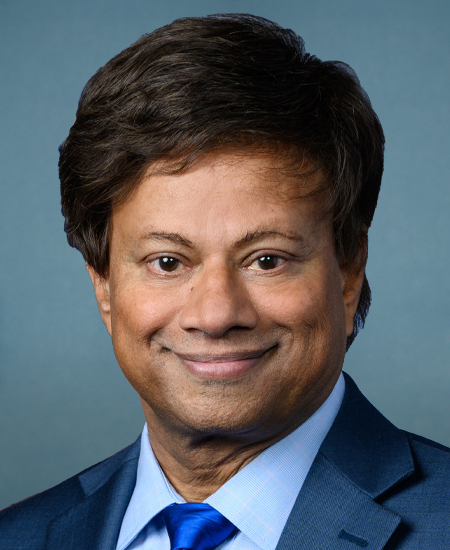
Rep. Shri Thanedar
Sponsored bills
Maddy summaryHR 3582 (Workforce Development Through Post-Graduation Scholarships Act of 2023) makes certain post-graduation scholarship grants tax-exempt under the Internal Revenue Code. It directly affects graduates who receive grants from qualified nonprofits (501(c)(3) organizations) to repay student loans, provided they live and work in communities with below-average bachelor’s degree attainment rates. The bill requires grants to be paid directly to lenders, prohibits grants to the granting organization’s employees, and prevents double tax benefits by excluding related interest from income calculations. It also mandates Treasury and GAO reports on implementation and effectiveness within 3-5 years of enactment.
Maddy summaryThe EVs for All Act of 2023 establishes a Department of Energy grant program to fund electric vehicle (EV) sharing services at public housing projects. Eligible entities - like public housing agencies, local governments, and partner nonprofits - can apply for grants to purchase used EVs, install charging equipment, and run community outreach. Grants prioritize projects in historically marginalized communities with high pollution or limited transportation access, require fair labor practices, and mandate affordable, non-discriminatory charging fees. The program requires grantees to report on usage, emissions reductions, and service costs while ensuring EVs meet domestic content and worker protection standards.
Maddy summaryHR 3548, the Pursuing Equity in Mental Health Act, aims to reduce mental health disparities for racial and ethnic minority groups by directing federal funding and policy changes. It increases annual grants for primary/behavioral health services to $60 million in 2023 and $80 million yearly through 2029, prioritizing entities serving minority communities. The bill requires the NIH to study mental health disparities within 9 months and mandates new training for mental health professionals (including social work and psychiatry) on culturally appropriate care. Additionally, it funds a $15 million annual outreach strategy to combat stigma and improve access to care, requiring materials tailored to cultural and language needs of minority groups.
Maddy summaryThis bill gives the President authority to prohibit new exports of U.S.-produced crude oil and natural gas, with limited exemptions for exports deemed consistent with national interest and the bill’s purpose. It directly affects U.S. fossil fuel producers and exporters by restricting new international shipments of these resources, though exemptions could apply based on export purpose, destination country, or other factors. The President may also restrict coal, petroleum products, and related equipment exports under the same framework. Implementation would follow existing export control procedures, with enforcement under the Export Control Reform Act of 2018. The bill does not affect existing export contracts or historical trade with Canada and Mexico.
Support, Treatment, and Overdose Prevention of Fentanyl Overdoses Act of 2023 or the STOP Fentanyl Overdoses Act of 2023 This bill addresses data collection, treatment, harm reduction, and other issues related to substance misuse and addiction. It particularly focuses on opioids, fentanyl, and related substances. Specifically, the bill expands surveillance of fentanyl and related substances. This includes requiring a study on how to track overdoses by type of drug (including fentanyl) and awarding grants to states for collecting data about fentanyl-involved overdoses. The bill also provides for (1) training on detecting and handling fentanyl for law enforcement, and (2) grants for forensic laboratories to facilitate surveillance of controlled substances seized by law enforcement. Additionally, the bill establishes and modifies requirements to increase access to treatment and prevention services. For example, the Bureau of Prisons must make certain services, including medication-assisted treatments, available to individuals in its custody. The bill also establishes grants and requires other efforts to expand access to medications that temporarily reverse opioid overdoses (e.g., naloxone) and related harm reduction activities. Furthermore, the bill extends, subject to some conditions, liability protections for those who administer aid in an emergency (commonly known as Good Samaritan laws) to individuals who administer opioid overdose reversal drugs and to individuals who seek medical attention for themselves or on behalf of another for a drug overdose. The bill also requires multiple reports, including a report by the Department of State on foreign sources of certain drugs.
Maddy summaryThe Kira Johnson Act (HR 3310) provides $100 million annually from 2024-2028 to fund community-based organizations working to improve maternal health outcomes for racial and ethnic minority groups with elevated rates of maternal mortality, severe maternal morbidity, and health disparities. It requires hospitals to establish respectful maternity care compliance programs allowing patients to report racism or bias, and mandates training for all maternity care employees to address bias, racism, and discrimination. The bill also requires annual reports on program effectiveness and studies to evaluate strategies for reducing bias in maternity care settings. These provisions directly affect hospitals, maternity care providers, community-based organizations, and pregnant and postpartum individuals from racial and ethnic minority groups.
Maddy summaryHR 3312, the Moms Matter Act, establishes a $25 million annual grant program (2024-2027) for community organizations, health providers, and local governments to address maternal mental health and substance use disorders. It prioritizes funding for initiatives in areas with high maternal mortality rates, health disparities, or health professional shortage areas, focusing on evidence-based services like integrated mental health care in prenatal settings, postpartum support, stigma reduction, and provider training. The bill also creates a $15 million annual workforce program (2024-2028) to diversify maternal mental health providers through scholarships, training in bias/racism, and recruitment in underserved communities. These grants directly affect pregnant and postpartum individuals in high-risk demographic groups and aim to improve access to specialized care through concrete program requirements.
Maddy summaryThe Protecting Moms and Babies Against Climate Change Act establishes a federal grant program to help communities address climate change risks that affect pregnant people, new mothers, and infants under 3 years old. It allocates $100 million over four years for community-based organizations to provide climate-related health services, including air conditioning, housing assistance, mental health support, and training for health care providers on climate risks. The bill also creates a grant program for health profession schools to integrate climate change education into medical training and establishes a National Institutes of Health research consortium to study climate impacts on maternal health. All grant recipients must address racial and ethnic disparities, collect data by demographic factors, and prevent negative environmental or housing impacts in their initiatives.
Maddy summary# Comprehensive Summary: Maternal Health and Vaccination Legislation This proposed legislation establishes a comprehensive framework to improve maternal health outcomes across multiple dimensions, with a strong focus on equity and addressing systemic disparities. The bill is organized into 13 titles covering various aspects of maternal health care. ## Key Focus Areas 1. **Maternal Health Equity**: The legislation emphasizes reducing racial and ethnic disparities in maternal health outcomes, with specific provisions targeting communities of color and underserved populations. 2. **Incarcerated Mothers**: Includes provisions to end shackling of pregnant individuals in correctional facilities and establishes programs for maternal health care in prisons and jails. 3. **Technology and Telehealth**: Creates grant programs for telehealth models, technology-enabled collaborative learning, and digital tools to improve access to maternal care. 4. **Climate Change Impact**: Addresses how climate change affects maternal and infant health, with a focus on vulnerable populations. 5. **Public Health Emergencies**: Establishes protocols for maternal care during public health crises like pandemics. 6. **Vaccinations**: Expands maternal vaccination awareness and equity campaigns. ## Major Provisions **Maternal Vaccination Campaign (Title XIII)**: - Expands awareness campaigns to specifically target pregnant and postpartum individuals - Allocates $17 million annually (2024-2028) for vaccination outreach - Includes specific efforts to increase vaccination rates among racial/ethnic minority groups **Technology and Telehealth (Titles IX)**: - $6 million annually for technology-enabled collaborative learning models - $6 million annually for digital tools to promote equity in maternal health - Creates a demonstration project for alternative payment models in maternal care **Climate Change and Maternal Health (Title XII)**: - $100 million for a grant program to protect vulnerable mothers and babies from climate change risks - $5 million for education and training at health profession schools - Establishes a National Institutes of Health Consortium on Birth and Climate Change Research **Incarcerated Mothers (Title VIII)**: - Requires 25% grant reduction for states that don't restrict restraints on pregnant incarcerated individuals - Establishes model programs in Bureau of Prisons facilities for pregnant and postpartum incarcerated individuals - $10 million annually for State and local prison and jail programs **Public Health Emergency Response (Title XI)**: - $100 million for data collection on maternal health during public health emergencies - $30 million for expanding maternal mortality reviews - $45 million for Pregnancy Risk Assessment Monitoring System (PRAMS) - $15 million for research on public health emergencies' impact on maternal health ## Cross-Cutting Themes - **Equity Focus**: Nearly every provision includes specific measures to address racial and ethnic disparities - **Data Collection**: Strong emphasis on collecting and analyzing demographic data - **Community Involvement**: Requires input from community-based organizations and affected populations - **Interagency Coordination**: Mandates collaboration between multiple federal agencies - **Long-Term Investment**: All funding is allocated for 5-year periods (2024-2028) The legislation represents a comprehensive, multi-faceted approach to improving maternal health outcomes in the United States, with particular attention to vulnerable populations and systemic barriers that contribute to poor maternal health outcomes.