

Maddy summaryHRES 1432 designates September 10, 2024, as "National Firearm Suicide Prevention Day" to raise public awareness about firearm suicides and promote safe storage practices. The resolution encourages healthcare professionals to discuss safe firearm storage with patients and supports the day's goals of reducing firearm suicides through education. It directly affects the general public and healthcare providers by highlighting evidence that safe storage lowers suicide risk, referencing statistics like 54.6% of U.S. suicides in 2022 involving firearms. The bill is symbolic, with no new legal requirements, and aligns with existing awareness efforts like Firearm Suicide Prevention Day.
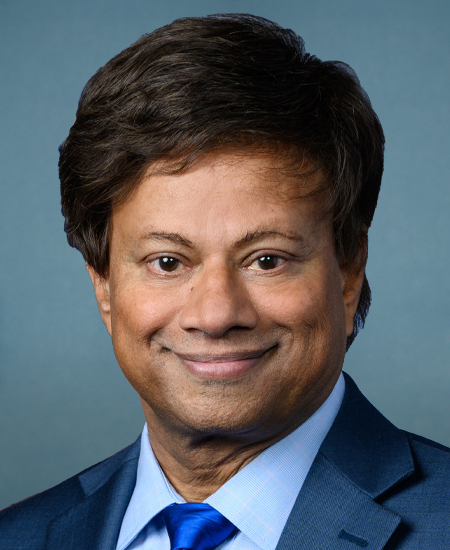
Rep. Shri Thanedar
Sponsored bills
Maddy summaryHRES 1436 is a symbolic resolution (not a law) introduced in the U.S. House of Representatives. It recognizes suicide as a preventable public health crisis by citing statistics from the CDC, VA, and SAMHSA showing rising suicide rates across age groups, including veterans and adolescents. The resolution formally supports designating September as "National Suicide Prevention Month" and September 10, 2024, as "World Suicide Prevention Day." It does not create new policies, allocate funding, or directly affect any individuals - its purpose is solely to express congressional support for suicide prevention awareness and efforts.
Maddy summaryThis bill amends an existing reporting requirement in the 2023 National Defense Authorization Act. It changes the provision to require the Department of Homeland Security to submit annual reports on counter-illicit cross-border tunnel operations, rather than just one report after developing a strategic plan. The bill does not create new programs or alter border security policy; it only modifies the frequency of required reporting. This procedural change directly affects the Department of Homeland Security's reporting obligations.
Maddy summaryHRES 1429 is a non-binding House resolution that congratulates Michigan athletes who competed in the 2024 Paris Olympics and Paralympics. It specifically honors 20 athletes, including basketball player Devin Booker and track and field athlete Grant Fisher, by naming them in the resolution. The resolution does not create new laws or policies but serves as a symbolic gesture recognizing their achievements and the values of the Olympic movement.
Maddy summaryHR 8492 prohibits wildlife killing contests - events where participants kill animals for cash, prizes, or entertainment - on all federal public lands managed by agencies like the National Park Service or U.S. Forest Service. It specifically bans contests targeting species such as coyotes, foxes, and bobcats, except for field trials with hunting dogs, contests for deer/birds (Galliformes/Anatidae), or agency-led invasive species control. The law requires federal agencies to issue implementing regulations within a year of enactment. It directly affects organizers, sponsors, and participants of such contests on federally managed lands, while allowing states to maintain stricter rules.
Maddy summaryHR 8199, the *Increasing Nutrition Access for Seniors Act of 2024*, would make it easier for seniors and disabled individuals in SNAP (food stamp) households to qualify for benefits. It expands certification periods to 36 months for households without earned income and creates a new standard medical deduction: states can automatically deduct $155 monthly (adjusted yearly for inflation) from income for seniors/disabled members who report over $35 in monthly medical expenses. States may also set higher deductions if they provide evidence of higher average medical costs in their area. These changes apply to new certification periods starting 180 days after enactment.
Maddy summaryHRES 1419 is a symbolic resolution recognizing Overdose Awareness Day and committing the House to strengthen efforts against the opioid crisis. It does not create new law but formally: (1) recognizes Overdose Awareness Day, (2) pledges to advance bipartisan policies reducing stigma around substance use disorders, and (3) commits to collaborating with states, communities, and organizations to support prevention, treatment, harm reduction, and recovery services. The resolution highlights the crisis' severity - including 932,000 overdose deaths since 1999 and a $1 trillion annual economic burden - but focuses on shared goals rather than specific policy changes. It directly affects congressional action and public messaging, not individual citizens or programs.
Maddy summaryThis bill requires the Transportation Security Administration (TSA) to direct the Federal Air Marshal Service (FAMS) to create a plan for deploying air marshals beyond flights to cover airport security throughout the entire airport environment (e.g., terminals, gates). The plan must address how marshals, as federal law enforcement officers, will enhance security at specific airports and be submitted to key congressional committees within 180 days of the bill's enactment. It does not change current law but mandates a new process for expanding air marshal duties to airport-wide security.
Maddy summaryThis bill allows veterans with mental health conditions who are transitioning from military (DoD) to VA care to continue seeing their current DoD mental health provider during the switch. The VA must reimburse the DoD for these services, and medical records must be shared to maintain treatment continuity. Veterans can choose a different DoD provider at the same facility if their current provider leaves, or switch to a VA provider if relocation makes continued DoD care impractical. It specifically applies to those enrolling in or transitioning through the VA’s patient enrollment system.
Maddy summaryThis bill amends federal law to prohibit government employees and contractors from giving, receiving, or demanding gratuities exceeding $1,000 related to official actions involving transactions of $5,000 or more. It directly affects federal contractors, state/local government employees, and tribal agency staff handling federal funds. Key changes include raising the maximum penalty to up to 2 years in prison (from 1 year) and clarifying that the $5,000 transaction threshold applies to all covered business dealings. The law targets bribery-like conduct in government contracting and services funded by federal dollars.