

Maddy summaryThis bill establishes a program to designate areas with significant health disparities as "Health Disparity Zones" to improve health outcomes. To qualify, areas must be contiguous (one census tract or ZIP code) and demonstrate documented health disparities, such as lower income, higher rates of certain health conditions, or lower life expectancy. The bill provides key mechanisms including tax incentives for employers hiring workers in these zones, grants for community organizations to implement health initiatives, student loan repayment programs for health care workers, and a 10% increase in Medicare payments for services provided in designated zones. The program would operate for 10 years, with designations expiring after that period.
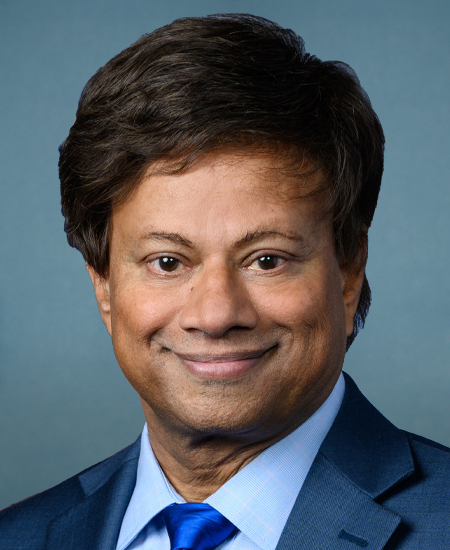
Rep. Shri Thanedar
Sponsored bills
Maddy summaryHR 6407, the Medical Nutrition Therapy Act of 2023, expands Medicare coverage to include medical nutrition therapy for more chronic conditions beyond current limits. It directly affects Medicare beneficiaries with conditions like obesity, hypertension, dyslipidemia, eating disorders, and others not previously covered under Part B. The bill amends Medicare rules to allow coverage for prevention, management, or treatment of these conditions by a wider range of providers, including registered dietitians and clinical psychologists. This change would make medically necessary nutrition services available for conditions listed in the bill, such as diabetes, cardiovascular disease, and HIV, as determined by the Secretary.
Maddy summaryThis bill updates Medicare physician payment rules to improve stability and accuracy. It raises the budget neutrality threshold from $20 million (pre-2025) to $53 million in 2025, with annual indexing after 2026, to prevent excessive payment adjustments. The bill requires the Medicare program to correct budget neutrality payments based on actual service utilization data (not estimates) starting in 2025, and mandates updating direct cost inputs (like staff wages and equipment prices) every 5 years. It also caps annual changes to the physician payment conversion factor at 2.5% to limit sudden payment shifts, directly affecting Medicare physicians and healthcare providers receiving these payments.
Maddy summaryThis bill directs the Architect of the Capitol to create a time capsule for the U.S. Semiquincentennial (250th anniversary of independence). Congressional leadership will determine its contents, including representative materials about the Semiquincentennial, copies of key legislative milestones, and a message to future Congress. The capsule will be sealed on the Capitol's West Lawn by July 4, 2026, and remain unopened until July 4, 2276, when it will be presented to the 244th Congress for their consideration. The bill is procedural and does not affect citizens or change existing laws.
Maddy summaryHR 6283, the DRUG Act, regulates pharmacy benefit managers (PBMs) to prevent practices that may increase prescription drug costs for consumers. The bill prohibits PBMs from earning revenue based on drug prices or discounts, requiring them to charge flat dollar service fees instead of fees tied to drug costs. It bans PBMs from steering patients to pharmacies they own or control, mandates equal reimbursement for affiliated and non-affiliated pharmacies, and prohibits charging different fees for the same drug. These provisions apply to group health plans, health insurance issuers, and PBMs, with enforcement beginning for plan years starting January 1, 2026. Violations would result in $10,000 daily penalties and require disgorgement of improperly received payments.
Maddy summaryThis bill creates a framework for states to develop their own universal health care systems by applying for waivers from certain federal health care requirements. States must demonstrate they can provide comprehensive coverage meeting or exceeding current federal standards (like Medicaid, Medicare, and CHIP) for at least 95% of residents within 5 years, with the federal government redirecting funds that would have gone to federal programs to support state systems. States must include specific protections like reproductive health care coverage and submit regular reports on coverage rates, affordability, and quality. The bill includes special provisions to protect Indian health care services and ensure they remain accessible under state plans. States that fail to meet coverage goals may face consequences, including potential termination of their waiver.
Maddy summaryThis bill amends Medicare, Medicaid, and private insurance rules to improve coverage for drugs treating rare diseases (defined as conditions affecting 200,000 or fewer people in the U.S.). It requires coverage for rare disease drug uses supported by peer-reviewed medical literature and not listed as contraindicated in FDA labeling or medical reference guides. Private insurers must provide expedited review processes for denials of such drugs. The changes apply 30 days after enactment, affecting insurers and patients seeking coverage for rare disease treatments.
Maddy summaryHR 6063, the Empowering Striking Workers Act of 2023, modifies unemployment insurance rules to provide benefits for workers unable to work due to strikes or lockouts. It directs that unemployment compensation begins 14 days after a strike starts, or earlier if permanent replacements are hired, a lockout begins, or the dispute ends. The bill directly affects workers participating in labor disputes by making them eligible for benefits under these specific conditions, rather than requiring them to meet standard job search requirements. This change is implemented through amendments to the Internal Revenue Code and Social Security Act.
Maddy summaryThe Climate Resilience Workforce Act establishes a coordinated federal system to build a workforce for climate resilience, directly affecting workers in climate-related sectors and prioritizing frontline communities (low-income, communities of color, Tribal communities) and populations facing employment barriers (undocumented individuals, formerly incarcerated people). Key mechanisms include grant programs for state and local climate resilience planning, job creation grants requiring 40% of jobs to go to frontline communities and populations facing barriers, and minimum labor standards including $15/hour wages (increasing annually), employer-paid health insurance, and protections against discrimination. The bill creates an Office of Climate Resilience, a Climate Resilience Equity Advisory Board, and a Center for the Climate Resilience Workforce to define climate resilience sectors and ensure equitable hiring practices. It also removes employment barriers through immigration status protections, criminal record reforms, and drug testing policy changes for climate resilience workers.
Maddy summaryThe MORE Act (HR 5601) would federally decriminalize cannabis by removing it from the Schedule I list of controlled substances under the Controlled Substances Act. It requires federal courts to expunge non-violent cannabis convictions and associated arrests, with a focus on addressing racial disparities in cannabis enforcement. The bill creates an Opportunity Trust Fund that would allocate 50% of funds to criminal justice programs, 20% to small business assistance for minority cannabis entrepreneurs, and 20% to community reinvestment grants for individuals impacted by the War on Drugs. It also prohibits federal agencies from denying benefits or security clearances based on cannabis use or past cannabis convictions, and establishes a Cannabis Justice Office to administer these programs.