

Maddy summaryThis bill, HR 1097 (Everett Alvarez, Jr. Congressional Gold Medal Act of 2023), authorizes the award of a Congressional Gold Medal to Everett Alvarez, Jr., in recognition of his service as a U.S. Navy pilot and Vietnam War prisoner of war. It directly honors Alvarez, who was the first U.S. pilot shot down in the Vietnam War, spent over 8.5 years in captivity, and later served in the Peace Corps and Veterans Administration. The bill’s key mechanism is directing the U.S. Mint to strike a gold medal bearing his name and image, with bronze duplicates available for sale to cover costs. It does not create new policies or affect any group beyond the honoree.
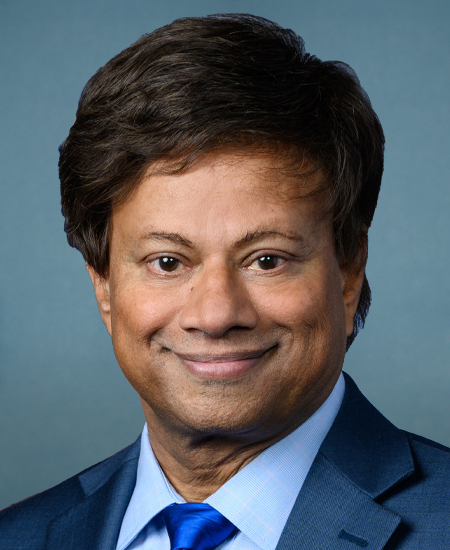
Rep. Shri Thanedar
Sponsored bills
Maddy summaryThis bill creates a task force within Homeland Security to reunite children separated from parents or guardians at the U.S.-Mexico border between January 20, 2017, and January 20, 2021, under the Zero-Tolerance Policy. The task force must identify all affected children, recommend legal pathways for reunification (including parole, visas, or services like mental health support), and consult with affected families and organizations. It must report to Congress every 60 days and will sunset within 120 days of all reunifications or by January 20, 2039, whichever comes first. The bill directly affects children separated during that specific policy period and requires federal agencies to coordinate on practical solutions.
Maddy summaryThis bill (HR 10237) requires U.S. Customs and Border Protection (CBP) to create new guidelines within 180 days for handling personal belongings of individuals arrested, restrained, or confined by CBP. The guidelines must ensure detainees can keep as much property as operationally feasible, return all stored items upon release, and specify essential categories like medical devices, IDs, phones, and legal documents that must remain with or be returned to the individual. CBP must also provide written receipts for stored items, detail circumstances for discarding property, and track compliance through annual reports to Congress. The bill mandates consultation with advocacy groups and includes oversight by the Comptroller General to review implementation and effects on CBP operations.
Maddy summaryThis bill extends Medicare payment adjustments for physicians and other practitioners through 2025 instead of ending in 2024. It specifically adds a 4.73% payment increase for services provided between January 1, 2025, and January 1, 2026. The legislation modifies existing Medicare payment rules to stabilize practice revenues during transition periods. It directly affects doctors and healthcare providers who bill Medicare for patient services. The key change is the extended timeframe and the defined 4.73% rate for the 2025-2026 period.
Maddy summaryThis bill requires Medicare providers to inform patients about breast reconstruction coverage before performing a mastectomy. Specifically, it mandates that providers must tell patients their Medicare coverage includes breast reconstruction surgery following a medically necessary mastectomy (covered under Medicare's existing national policy 140.2) and document this discussion in the patient's medical record. The requirement applies to all mastectomies performed on or after one year after the bill's enactment. It directly affects Medicare beneficiaries undergoing mastectomies and the healthcare providers who perform these procedures, ensuring patients are aware of existing coverage options. The bill does not change Medicare's coverage rules but ensures patients receive clear information about available benefits.
Maddy summaryHR 9881 establishes "American Dream Accounts" for eligible young Americans. Each covered individual (U.S. citizen or naturalized before age 18 with a Social Security number) receives an initial $5,000 deposit, plus a $10,000 bonus for 12+ months of Peace Corps/AmeriCorps service. Accounts are invested in U.S. stock index funds, with disbursements available as a lump sum, monthly payments, or Roth IRA rollovers upon turning 18-25, provided they have a high school diploma or equivalent. The bill exempts account balances and disbursements from federal benefit eligibility calculations and requires new financial literacy education in schools.
Maddy summaryThe Comprehensive Dental Reform Act of 2024 would expand dental coverage under Medicare and Medicaid by adding "oral health services" as a covered benefit. Starting in 2025, Medicare would cover 100% of preventive dental services and 80% of other services. Medicaid would require states to cover oral health services for adults (with some exceptions), including mobile dental services to overcome access barriers, and would increase federal funding for these services by 15 percentage points. The bill also creates new programs to expand the dental workforce through training, loan repayment, and partnerships with dental schools, with specific provisions for veterans, prisoners, and Indian Health Service.
Maddy summaryThe Steel Modernization Act of 2024 provides financial assistance and tax credits to U.S. steel manufacturers adopting technologies that reduce greenhouse gas emissions from steel production. It requires recipients to produce "near-zero emissions intensity steel" by 2035, report emissions data, and implement community benefits plans that address local environmental and economic concerns. The bill also imposes a tariff on imported steel based on its emissions intensity, with revenues funding clean energy programs and administrative costs. This affects steel manufacturers, workers, and communities near steel facilities by promoting cleaner production while supporting domestic steel industry competitiveness.
Maddy summaryThe Health Over Wealth Act requires private equity firms that own or control health care entities (including hospitals, clinics, nursing facilities, and mental health providers) to submit detailed annual reports to the government about their financial structure, staffing practices, political spending, and patient care metrics. It establishes a task force to monitor private equity's impact on health care access and quality, and creates new requirements for hospitals planning to close or discontinue services, including advance notice and mitigation plans. The bill also prohibits certain real estate transactions that could weaken health care entities and mandates licensing for private equity firms investing in health care, with penalties for non-compliance.
Maddy summaryThe Patient Debt Relief Act requires Medicare-participating hospitals to establish clear financial assistance policies by January 2026, including publicly available eligibility criteria and 30-day pre-payment screening for charity care. It prohibits hospitals from placing home liens, garnishing wages, or selling debt to collectors without offering income-based repayment plans (capping payments at 4% of gross monthly income) and eliminates interest for patients earning under 250% of the poverty line. Hospitals failing to comply face civil penalties up to $1 million per violation. The bill also creates a $100 million grant program to fund nonprofits that discharge medical debt for individuals meeting income thresholds (5% of income or under 400% of poverty line), with quarterly reporting requirements. These provisions apply directly to hospitals and low-income patients with medical debt.