

Maddy summaryThe MIL FMLA Act expands the Family and Medical Leave Act to provide military families with additional leave options. It allows eligible employees to take up to 26 workweeks of leave during a 12-month period to care for a covered servicemember (active duty member or veteran), regardless of the employee's family relationship to the servicemember. The bill adds new definitions to include domestic partners, grandparents, siblings, and other extended family members as eligible caregivers, and creates a new "veteran leave" provision for employees who are covered servicemembers needing leave due to service-related serious injury or illness. These changes aim to better support military families by providing more comprehensive leave options for caregiving needs related to military service.
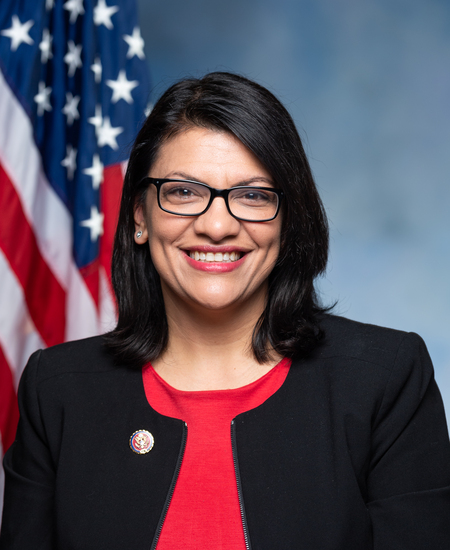
Rep. Rashida Tlaib
Sponsored bills
Maddy summaryHR 3299, the Restroom Access Act of 2025, requires retail establishments to allow customers with specific medical conditions to use their private restrooms under defined conditions. It directly affects customers with eligible medical conditions (such as inflammatory bowel disease, ostomy use, or pregnancy) who cannot access public restrooms. The bill mandates that stores permit restroom use if the customer presents a Labor Department-issued ID card, two employees are present, the restroom isn't in a high-risk area, and no public restroom is available. The Secretary of Labor must establish the ID card system within 180 days of the bill's enactment. This creates a concrete policy change for retail restroom access for individuals with qualifying medical needs.
Maddy summaryHR 3243, the Therapeutic Fraud Prevention Act of 2025, bans the provision of paid conversion therapy aimed at changing a person's sexual orientation or gender identity, and prohibits advertising such therapy as effective, safe, or without risk. It directly affects LGBTQ+ individuals and their families who might be targeted by these practices, as professionals have determined conversion therapy is ineffective and harmful. The law treats violations as deceptive acts under consumer protection laws, empowering the Federal Trade Commission and state attorneys general to enforce it through civil actions. It explicitly excludes legitimate gender transition support and non-discriminatory counseling from the ban.
Maddy summaryThe American Privacy Restoration Act (HR 3245) would repeal the USA PATRIOT Act and restore federal privacy and surveillance laws to their state on October 25, 2001 - the day before the PATRIOT Act took effect. This means provisions expanded under the PATRIOT Act, such as enhanced surveillance powers for law enforcement, would revert to their pre-2001 legal framework. The bill directly affects federal law enforcement agencies, which would lose expanded surveillance authorities, and individuals whose privacy rights were modified by the PATRIOT Act's provisions. Its key mechanism is the repeal of the PATRIOT Act and the restoration of pre-2001 legal standards for data collection and privacy protections.
Maddy summaryThis bill creates annual emergency grants for farm workers affected by covered disasters. It directly helps migrant and seasonal farm workers who lose income or cannot work due to events like hurricanes, wildfires, pandemics, or extreme weather. Grants fund immediate relief (food, shelter), rebuild community capacity, and support long-term resilience against future disasters. Eligible organizations, including farm worker groups or qualified nonprofits, receive funds to distribute aid without time limits.
Maddy summaryThis bill grants federal recognition to the Grand River Bands of Ottawa Indians of Michigan, a tribe that has sought recognition since filing a petition in 2000. It affirms their status as a federally recognized tribe, making them eligible for all federal services and benefits (including social services, education, housing, and elder care) regardless of reservation status or member location. Key provisions include requiring the tribe to submit a membership roll within 18 months and authorizing the Secretary of the Interior to acquire land in specified Michigan counties for the tribe’s trust. The bill addresses decades-long delays in recognition that prevented the tribe from accessing federal resources.
Maddy summaryHR 3246, "Violet’s Law," amends the Animal Welfare Act to require federal research facilities to create plans for placing eligible animals (dogs, cats, nonhuman primates, guinea pigs, hamsters, or rabbits) no longer needed for research. It directs federal departments and agencies operating such facilities to develop standards within one year of enactment to facilitate adoption or placement with qualified organizations like animal rescue groups, sanctuaries, or shelters. Animals must be certified by a licensed veterinarian as free of infectious disease or physical issues endangering health before release. This applies directly to all U.S. federal agencies conducting animal research, mandating concrete steps to transition animals out of research settings into permanent care.
Maddy summaryHR 3218, the Reproductive Data Privacy and Protection Act, requires law enforcement and government agencies to swear under oath that they will not use reproductive or sexual health information in investigations or legal proceedings. It amends federal wiretap laws (18 U.S.C. § 2518) and communication disclosure rules (18 U.S.C. § 2703) to mandate this protection. The bill defines "reproductive or sexual health information" broadly to include details about abortion, contraception, IVF, pregnancy, sexual health conditions, and related medical services. This directly affects law enforcement, courts, and service providers by legally restricting how sensitive health data can be used in investigations. The law aims to prevent government use of such data to target individuals seeking or providing reproductive care.
Maddy summaryHR 3184, the PFAS Alternatives Act, funds research to develop turnout gear (firefighter safety clothing) without harmful PFAS chemicals, directly affecting firefighters who wear this gear. It authorizes $25 million annually (2025-2029) for grants to eligible organizations to research and test PFAS-free gear, requiring partnerships with firefighting groups to translate findings into practice. The bill also allocates $2 million yearly (2027-2031) for training programs on safe gear use and decontamination. Its goal is to reduce firefighters' exposure to chemicals linked to occupational illnesses during operations.
Maddy summaryHRES 380 is a symbolic resolution supporting the designation of May 5-9, 2025, as "Teacher Appreciation Week." It does not create new laws or funding but formally recognizes teachers' contributions to education. The resolution affirms teachers' role in shaping students' futures and calls for including teachers in education policymaking at all levels. It highlights teacher survey data showing broad support for policies like equitable school funding and culturally responsive teaching, though the resolution itself only expresses support for the week's designation. This is a non-binding gesture with no direct impact on affected individuals or policies.