

Maddy summaryThis bill reauthorizes federal funding for diabetes programs targeting Type 1 diabetes. It extends annual funding of $160 million for fiscal years 2026 through 2030, continuing existing support for research, treatment, and prevention initiatives. The funds remain available until expended, directly supporting programs serving people with Type 1 diabetes and the organizations delivering these services. The bill makes no changes to program eligibility or structure, only extending current funding levels.
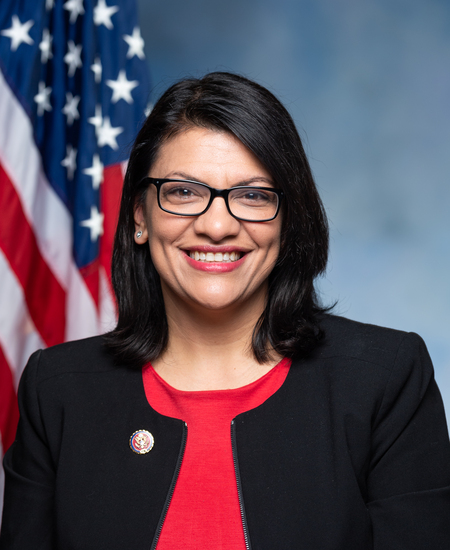
Rep. Rashida Tlaib
Sponsored bills
Maddy summaryHR 5476, the PARA Educators Act, provides federal grants to states to help recruit and retain school support staff (paraprofessionals) in public elementary, secondary, and preschool programs. It allocates funds based on previous Title I education funding, requiring states to prioritize schools serving high numbers of low-income students or those meeting specific poverty criteria. States can use the funds for proven programs like mentoring for paraprofessionals, professional development, helping staff earn credentials (e.g., special education or English learner certificates), and increasing wages or offering retention bonuses. The law mandates annual reporting on wage baselines, paraprofessional employment, and program outcomes. This bill directly affects paraprofessionals and the schools they support, particularly in high-poverty communities.
Maddy summaryThis bill prohibits new fossil fuel infrastructure by banning greenhouse gas emissions from new power plants, blocking new LNG terminals, and banning hydraulic fracturing (effective January 1, 2029). It also prohibits exports of domestically produced crude oil and natural gas, with limited exceptions for Canada, Mexico, and temporary shipments. These provisions directly affect energy companies planning new power plants, LNG projects, and oil/gas extraction firms. The bill requires a "just transition" for workers through labor union partnerships and environmental justice considerations. It does not impact existing fossil fuel operations or infrastructure.
Maddy summaryThis bill increases federal funding for state and tribal wetlands programs under the Clean Water Act. It authorizes $300 million annually for fiscal years 2026-2030 (up from $75 million previously), with at least $100 million each year specifically dedicated to state, tribal, and municipal wetlands protection, management, and restoration programs. Additionally, it allocates $500 million annually for state management assistance starting in 2026. The bill directly affects states, tribes, and municipalities by providing new funding streams for wetlands initiatives.
Maddy summaryThis bill requires a GAO study to evaluate early detection methods for pediatric liver disease, including adding bilirubin measurement to newborn screening panels and assessing trends in transplant wait-list mortality. It also mandates a public education program to inform families about early signs of liver disease and the safety of living liver donation, using existing HHS resources without new funding. The law directly affects infants and children with liver conditions like biliary atresia and liver cancer, aiming to improve early intervention. Key provisions include a study on cost-effective screening and a program to educate pediatric providers and families about warning signs.
Maddy summaryHJRES 122 proposes a constitutional amendment that would grant Congress and states explicit authority to regulate campaign contributions and spending intended to influence elections. It would allow for reasonable, viewpoint-neutral limits on how much money candidates and others can raise or spend, as well as enable public financing systems to reduce private wealth's influence in campaigns. The amendment would permit distinguishing between individuals and corporations in campaign finance rules, potentially banning corporate spending to influence elections. It explicitly states this amendment would not affect the freedom of the press.
Maddy summaryThe Billionaires Income Tax Act (HR 5427) would require high-net-worth individuals with annual income over $100 million or assets over $1 billion to pay taxes annually on investment gains rather than deferring taxes until assets are sold. It eliminates the "buy, borrow, die" tax strategy by implementing annual mark-to-market taxation of investment assets and closing loopholes that allow tax-free transfers of appreciated assets to heirs. The bill applies to individuals meeting specific income or asset thresholds, as well as applicable trusts and entities with significant ownership interests, with provisions taking effect for taxable years beginning after December 31, 2025.
Maddy summaryThis bill creates a 70% tax credit for eligible small businesses to cover costs of installing diaper changing stations and dispensers in restrooms. It applies to businesses with annual gross receipts under $5 million or fewer than 100 full-time equivalent employees. To qualify, businesses must ensure both men’s and women’s restrooms at each location have accessible diaper changing stations (free to use) and diaper dispensers. The credit is capped at $10,000 per business location annually and applies to expenses like station installation, labor, and restroom renovations meeting the "family bathroom requirement." The credit begins for tax years starting after December 31, 2025.
Maddy summaryThis bill requires the 988 Suicide Prevention Lifeline to establish a dedicated "Press 3" option (via IVR) for LGBTQ+ youth seeking crisis support, directly affecting LGBTQ+ youth who face a four times higher suicide risk than peers. It mandates that at least 9% of funds allocated for the lifeline's services be reserved specifically for these specialized LGBTQ+ youth services. The bill amends existing law to formalize this dedicated resource, building on current services that handled over 1.5 million contacts from LGBTQ+ youth in 2025. This creates a concrete policy change for accessing tailored crisis support without altering other lifeline operations.
Maddy summaryThe FAMILY Act would establish a national paid family and medical leave insurance program that provides wage replacement benefits for workers needing time off for caregiving or medical reasons. It defines "qualified caregiving" to include caring for a family member with a serious health condition, personal medical needs, or recovery from violence (including domestic violence, sexual assault, or stalking). Benefits would be calculated based on earnings, with a minimum monthly benefit of $580 and maximum of $4,000, administered by a new Office of Paid Family and Medical Leave within the Social Security Administration. Eligible individuals would need to have worked for at least 8 quarters in the previous year and file an application with required documentation, while existing state paid leave programs would continue to operate alongside this federal program.