

Maddy summaryThis bill, the Supplemental Security Income Restoration Act of 2026, updates eligibility rules and benefit amounts for the Supplemental Security Income (SSI) program, which provides financial assistance to low-income elderly, blind, and disabled individuals. Key changes include raising income and resource limits to help more people qualify, adjusting benefit calculations to better reflect poverty guidelines, and extending the program to U.S. territories like Puerto Rico and Guam. The legislation also removes certain financial penalties, excludes retirement accounts and tribal welfare payments from eligibility calculations, and clarifies how state tax credits are treated when determining income.
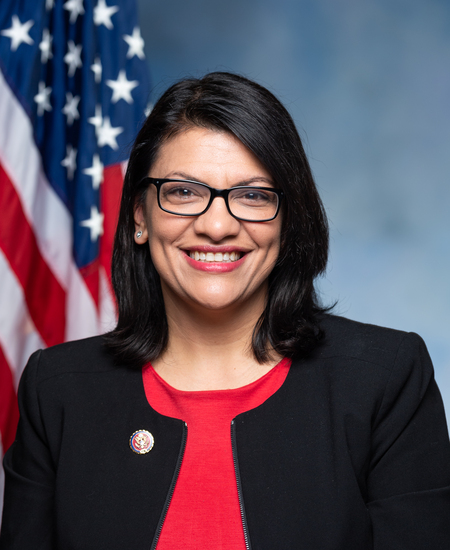
Rep. Rashida Tlaib
Sponsored bills
Maddy summaryHR 7856, the Fair Housing for Survivors Act of 2026, amends the Fair Housing Act to explicitly prohibit housing discrimination based on being a survivor of domestic violence, sexual assault, or severe trafficking in persons. It adds "survivor of domestic violence, sexual assault, or severe trafficking" as a protected class in the law, alongside existing categories like race or national origin. This means landlords, housing providers, and programs cannot deny housing, evict, or otherwise discriminate against individuals due to their status as a survivor. The bill directly affects survivors who face housing barriers, including those with protective orders, shelter histories, or past evictions linked to abuse.
Maddy summaryThis bill creates a business tax credit for companies that purchase zero-emission electric lawn, garden, and landscaping equipment. The credit equals 40 percent of the equipment's cost, with annual limits of $25,000 and a ten-year aggregate cap of $100,000 per business. Eligible equipment includes electric-powered mowers, trimmers, and other landscaping tools powered by solar, batteries, fuel cells, or grid electricity, as well as batteries and generators used to power them. The credit applies to equipment placed in service after December 31, 2024, and expires five years after the bill is enacted.
Maddy summaryThis bill requires the Secretary of Energy to conduct a study on how data centers impact communities of color and low-income communities, working with agencies like the EPA and the Council on Environmental Quality. The study will examine specific issues including water and energy consumption, air and soil quality, effects on property values and local tax revenue, and public health risks related to pollution and heat. The Secretary must consult with local governments and Indian Tribes during the study and submit a report to Congress within 18 months that includes a map of data center locations relative to affected communities, along with recommendations for mitigating potential harms.
Maddy summaryHRES 1106 is a non-binding House resolution honoring the life and legacy of Rev. Jesse Louis Jackson, Sr., a prominent civil rights leader and activist. The resolution recognizes his lifelong work in advancing equality through organizations like Operation PUSH, his leadership in the anti-apartheid movement, and his historic presidential campaigns in 1984 and 1988. It expresses condolences to his family and calls on all Americans to continue his legacy of promoting civil rights and unity. As a commemorative resolution, it does not create new laws or affect any policies.
Maddy summaryThis bill, known as the Direct File Act of 2026, would establish a government-run online system allowing taxpayers to prepare and file their individual income tax returns for free. The legislation prohibits the Treasury Department from entering into agreements that restrict its ability to provide tax preparation or filing services, and it voids any existing contracts with such restrictions. The program would use IRS data to simplify filing, include customer support, be available in multiple languages, and allow users to file even if they are not required to. It also enables taxpayers in participating states to file state and local returns alongside their federal returns, with funding provided to states that meet certain standards.
Maddy summaryThe DISCLOSE Act of 2026 aims to increase transparency in election spending and prevent foreign influence. It expands the ban on foreign money to cover federal, state, and local elections, including ballot initiatives and judicial nominations, and criminalizes using corporations to conceal these funds. The bill mandates that organizations spending over $10,000 on campaign-related activities, such as independent expenditures or judicial nomination advocacy, disclose their beneficial owners and top donors. Additionally, it establishes new "Stand By Every Ad" disclaimers for political communications, requiring the highest-ranking official to approve the message and, for certain ads, list their top funders. These provisions directly affect non-candidate organizations, individuals involved in political and judicial nomination spending, and foreign nationals.
Maddy summaryHR 7803, the "Save Medicare Act," renames Medicare Advantage plans to "Alternative Private Health Plan" for all federal references, including in the Social Security Act. It requires health plans to stop using "Medicare" in their titles after enactment, imposing a $100,000 civil penalty per violation. The change applies to all Part C Medicare plans and mandates a full transition by October 15, 2023, with a temporary period allowing both terms to be used during the switch. This bill directly affects private health insurers offering Medicare Part C plans and federal agencies managing Medicare programs. The policy change is solely about terminology, not benefits or coverage.
Maddy summaryThe Stop Militarizing Law Enforcement Act reforms the Department of Defense's 1033 program, which transfers surplus military equipment to federal, state, and local law enforcement agencies. The bill prohibits the transfer of specific military-grade items, including controlled firearms (like automatic weapons), ammunition, grenades, mine-resistant ambush-protected vehicles, and silencers. For any permitted transfers, non-federal agencies must notify their local community, get approval from their local governing body, and certify the equipment's necessity for specific public safety or emergency purposes. The bill also mandates increased accountability for all transferred property, prohibits agencies from taking ownership, and requires the return of equipment if an agency is involved in widespread civil liberties abuses using that property.
Maddy summaryThis bill, titled the Parks to People Active Transportation Act, directs the U.S. Department of Transportation to create a competitive grant program for building and improving greenway paths that connect communities. Eligible organizations such as state and local governments, regional planning councils, and Indian Tribes can apply for funding to construct hard-surfaced walkways, bikeways, or shared-use paths that cross jurisdictional lines and link to public transit. The program prioritizes projects that reduce vehicle congestion, improve safety for pedestrians and cyclists, and address disparities in access to jobs, schools, and recreational opportunities for low-income and minority communities. Grants may cover up to 80 percent of project costs, with higher funding levels available for rural areas and communities with high poverty rates, and the legislation authorizes $300 million annually from 2027 through 2031 to support these initiatives.