

Maddy summaryThis bill is a House resolution that formally honors the Grandassa Models, a group of African-American women who emerged in 1962 Harlem to challenge Eurocentric beauty standards and promote natural Black beauty during the civil rights era. The resolution recognizes their role in the Black is Beautiful movement, noting how they used fashion and public appearances to advance cultural pride and confront colorism. It also acknowledges the continued legacy of the Grandassa Association, which works to preserve their history and support the Black community in New York City through education and cultural programs.
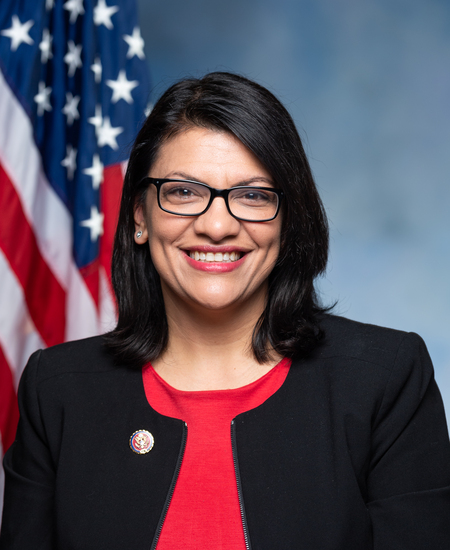
Rep. Rashida Tlaib
Sponsored bills
Maddy summaryThis bill, known as the BETS OFF Act, would make it illegal for anyone to place, accept, or facilitate bets on specific events such as acts of terrorism, assassinations, wars, or government actions that are not primarily financial in nature. The law defines these prohibited events as those where the outcome is controlled by a person or known in advance, while explicitly excluding standard insurance products and federal risk programs from the ban. In addition to criminalizing the betting activity itself, the bill updates existing federal gambling laws to include these prohibited wagers under current anti-gambling statutes and prevents financial exchanges from clearing or trading contracts based on these specified events. The measure takes effect 30 days after it is signed into law and would be enforced through civil actions brought by the Attorney General.
Maddy summaryThis bill creates a new commemorative military service medal called the Agent Orange Veterans Service Medal to honor veterans who received compensation for herbicide exposure during the Vietnam War. The medal will be designed by the Department of Defense and issued to living veterans or provided to next-of-kin for deceased veterans who meet specific eligibility criteria. Eligible recipients include those who receive compensation under existing Vietnam-era herbicide exposure laws or who are officially recognized as Vietnam-era herbicide-exposed veterans. The bill establishes an application process for veterans and their families to request the medal through the Department of Defense.
Maddy summaryThe HELP Act of 2026 creates a federal database to track evictions from housing units receiving federal assistance, requiring landlords and local agencies to report detailed information about tenants facing eviction proceedings. The bill establishes a grant program to provide free legal assistance to low-income tenants at risk of eviction, prioritizing organizations with experience serving vulnerable populations and ensuring rural areas receive proportional support. Additionally, the act modifies the Fair Credit Reporting Act to include eviction records in consumer reports and requires landlords to provide tenants with written information about their eviction rights and available local resources. These measures aim to improve data collection on housing instability, increase access to legal representation for tenants, and enhance tenant awareness of their rights under federal and state laws.
Representing our Seniors at VA Act of 2025 This bill expands the membership of the Geriatrics and Gerontology Advisory Committee within the Veterans Health Administration by requiring the addition of one representative from the National Association of State Veterans Homes who holds a professional license in nursing home administration. Additionally, the committee must consult with the National Association of Veterans State Homes with respect to matters concerning the association.
Maddy summaryThis resolution expresses support for recognizing April as National Language Access Month to highlight the importance of language services for individuals with limited English proficiency. It directly affects millions of Americans who speak languages other than English at home and rely on translation and interpretation services to access public services. The bill does not create new laws or funding but serves as a symbolic gesture to raise awareness about existing federal requirements for language access in areas like healthcare, employment, and voting. It encourages federal agencies, state and local governments, and community organizations to promote awareness of language access rights and resources during the designated month.
Maddy summaryThis resolution formally acknowledges historical and ongoing injustices in women's healthcare, particularly affecting marginalized groups such as Black, Indigenous, immigrant, LGBTQ+, disabled, and low-income women. It highlights specific issues including dismissed pain, lack of bodily autonomy, and past medical abuses like non-consensual sterilization and coercive contraceptive testing. The bill calls for patient-centered care, expanded research, and stronger protections for reproductive and gynecological health, while urging the federal government to address systemic bias in medical settings.
Maddy summaryThis bill directs the Secretary of Health and Human Services to conduct a study on barriers that prevent patients from accessing pain management during gynecologic procedures. The study will examine factors such as insurance coverage, provider training, and resource availability, and will include input from patients, medical professionals, and health equity experts. Within 24 months of enactment, the Secretary must submit a report with findings and recommendations to relevant congressional committees. The bill does not change current laws or funding but establishes a research requirement to inform future policy decisions.
Maddy summaryThis bill would create a federal paid leave program allowing employees to take up to 96 hours of paid time off each year for reproductive health needs, including menstrual care, endometriosis, fertility treatments, and pregnancy-related procedures. It applies to private employers with at least five employees and certain government workers, requiring employers to grant this leave upon request without requiring employees to find replacements during their absence. The legislation prohibits retaliation against employees who use this leave and establishes enforcement mechanisms through the Department of Labor, including civil penalties for violations. Employers with existing paid leave policies that already cover these reproductive health reasons would not need to provide additional leave under this bill.
Maddy summaryThis bill directs the National Institutes of Health to expand research into Premenstrual Dysphoric Disorder, a severe mood and physical condition affecting 5 to 8 percent of women and people assigned female at birth. It requires the agency to collect data on PMDD prevalence, economic impact, and treatment barriers while ensuring diverse populations are included in studies. The legislation also funds public awareness campaigns and grants to train healthcare professionals in diagnosing and treating the condition. Additionally, the bill mandates a report to Congress within two years detailing progress on research, education, and access to care.