

Maddy summaryThis bill, titled the No Presidential Self-Serving Lawsuits Act of 2026, prevents the current or former President of the United States from filing civil lawsuits against the federal government. It specifically invalidates an existing settlement agreement between a former President and the Internal Revenue Service and bars the use of federal funds to create compensation for such lawsuits. Additionally, the legislation authorizes the Treasury Secretary to recover any money already spent in violation of these new restrictions. The primary goal is to stop a President from using taxpayer money to settle legal disputes with the government they lead.
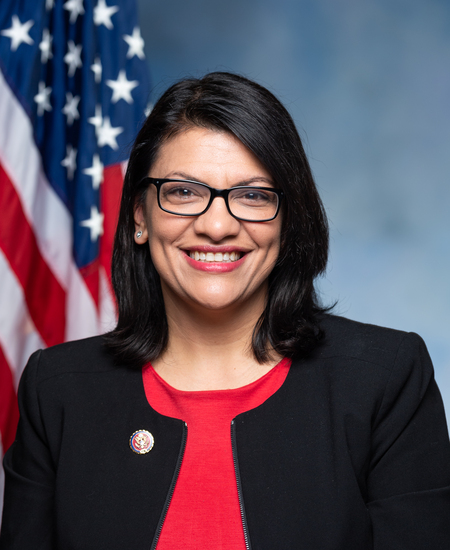
Rep. Rashida Tlaib
Sponsored bills
Maddy summaryThis bill would add pharmacist services to Medicare Part B coverage for beneficiaries, specifically covering pharmacist-led testing and treatment for illnesses like flu, COVID-19, or strep throat during public health emergencies. It defines covered services as those performed under state law, often requiring collaboration with a physician, and sets payment at 80% of the lesser of the actual charge or 85% of physician payment rates. Pharmacists would be prohibited from balance billing for these services, ensuring Medicare beneficiaries pay only their standard copayment. The changes would take effect January 1, 2026.
Maddy summaryThe Federal Death Penalty Prohibition Act bans the imposition of the death penalty for any federal crime committed after the law takes effect. It also requires that individuals currently sentenced to death under federal law be resentenced to a different punishment. This legislation directly affects the federal criminal justice system by eliminating capital punishment as a sentencing option.
Maddy summaryThis bill nullifies a specific decision made by the Endangered Species Committee regarding oil and gas operations in the Gulf of America. It immediately cancels any exemptions previously granted to these activities under the Endangered Species Act and bars federal agencies from using funds to enforce the canceled order. For a three-year period starting when the bill is enacted, the committee is prohibited from issuing any new exemptions for Gulf oil and gas projects. Consequently, all standard environmental protections required by the Endangered Species Act will continue to apply fully to these activities.
Maddy summaryHRES 1028 is a non-binding House resolution expressing the House's position that the U.S. must address billionaire economic and political influence. It calls for halting corporate tax breaks and subsidies, increasing taxes on the wealthy and corporations, and redirecting funds toward public services like healthcare, housing, and climate initiatives. As a resolution, it does not create new laws but states the House's view that concentrated wealth undermines democracy and requires policy changes to prioritize working people. It specifically references actions like breaking up corporate monopolies and expanding union support as part of this vision.
Maddy summaryThis bill increases federal reimbursement for states operating summer nutrition programs. It requires the Secretary of Agriculture to pay states 90% of monthly administrative costs for two programs: the summer electronic benefits transfer program for children (under the School Lunch Act) and the Supplemental Nutrition Assistance Program (SNAP). This directly affects states that administer these programs, providing them with significantly more federal funding to cover operational expenses. The key change is raising the reimbursement rate from previous levels to 90% for both programs' administrative costs during fiscal years they are operated.
Maddy summaryHR 4114, the EVEST Act, automatically enrolls recently separated veterans into the VA healthcare system. It requires the VA to enroll eligible veterans (discharged or separated on or after 90 days before the bill's enactment) within 60 days of receiving discharge information from the military. The VA must provide notice via mail and electronic methods (including texts) with clear opt-out instructions and instructions for later enrollment. By August 2026, veterans must also be able to access an electronic certificate of eligibility and opt-out mechanism online. The bill also mandates reports on implementation challenges and best practices for notice delivery.
Maddy summaryHR 3183, the SAFE STEPS for Veterans Act of 2025, establishes a new Office of Falls Prevention within the Department of Veterans Affairs (VA) to coordinate and improve falls prevention efforts for veterans. The bill mandates that VA healthcare facilities conduct annual falls risk assessments and provide fall prevention services by licensed physical or occupational therapists for veterans at risk, and requires biennial staff training on safe patient handling techniques. It also creates a pilot program to test home modifications for fall prevention and directs the VA to report on current falls prevention practices, including screening methods, home modification grants, and medication management risks. This legislation directly affects veterans at risk of falls, VA healthcare facilities, and providers delivering care under VA programs.
Maddy summaryThis bill reauthorizes and strengthens the Civil Rights Cold Case Records Collection program. It establishes that all federal, state, and local government records related to historical civil rights cases must carry a presumption of immediate public disclosure, with full access intended for public understanding. Key provisions include allowing the Review Board to reimburse state/local governments for digitizing or copying records to add to the national collection, removing an exception that previously blocked state records from being included, and extending the Review Board's term from 7 to 11 years. The bill directly affects government agencies holding these records and the public seeking historical transparency about civil rights cases.
Maddy summaryThis bill protects funding and staffing at the Department of Veterans Affairs (VA). It prevents the government from holding back or redirecting VA funds without new law, and requires the VA to notify Congress if funding shortfalls approach. The bill exempts the VA from hiring freezes through 2029, mandates reinstating veterans fired between 2025 and the bill’s enactment, and requires special legal authorization for layoffs (including probationary employees). The VA must also submit annual compliance reports to Congress.