

Maddy summaryThis bill restricts warrantless surveillance of U.S. persons by amending the Foreign Intelligence Surveillance Act. It limits who can conduct queries of U.S. person data (capping at five personnel per FBI field office), prohibits using such queries for law enforcement without proper authorization, and requires documentation of all queries. The bill creates exceptions for emergencies, consent, and cybersecurity, but prohibits using metadata results to access protected communications. It also limits how information acquired under Section 702 can be used in criminal proceedings, requiring specific approvals for such use.
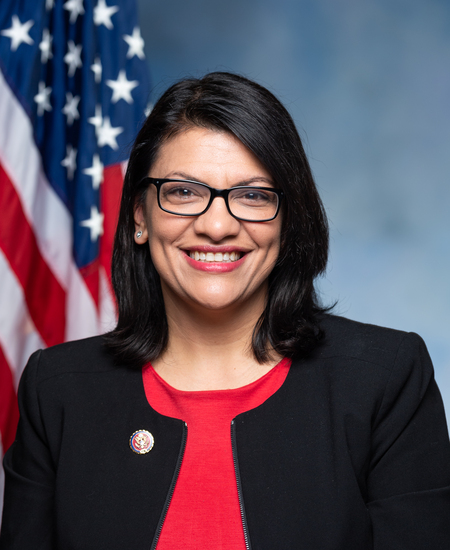
Rep. Rashida Tlaib
Sponsored bills
Maddy summaryHR 6567 establishes a new FEMA program to improve disaster recovery in U.S. territories like Puerto Rico, Guam, and the U.S. Virgin Islands. The program will identify and address recurring challenges - such as outdated infrastructure, remote locations, language barriers, and limited staff - that delay recovery after hurricanes and other disasters. FEMA must provide tailored technical assistance, develop training courses, and create best practices for territories applying for federal disaster funding. The bill authorizes $50 million annually (2024-2028) for this program and requires biennial reports to Congress on progress and recommendations for continuation. It directly affects territories struggling with slow recovery due to unique geographic, economic, and administrative hurdles.
Maddy summaryHR 6654, the Farewell to Foam Act of 2023, bans the sale and distribution of expanded polystyrene foam food containers, packaging peanuts ("loose fill"), and coolers starting January 1, 2026. It directly affects food service providers (like restaurants and schools), manufacturers, distributors, and retailers who sell these foam products. The bill prohibits selling these items, with enforcement starting with a written warning for first violations, followed by escalating civil penalties ($250 for a second violation, up to $1,000 for fourth+ violations), while exempting small businesses with low annual revenue from repeated penalties within a 7-day period.
Maddy summaryThis bill authorizes the posthumous presentation of a Congressional Gold Medal to honor Marshall "Major" Taylor, a pioneering Black cyclist who broke racial barriers in the late 19th and early 20th centuries. It recognizes his athletic achievements, including world records and international championship wins, as well as his advocacy for equality in sports. The medal, designed by the Treasury Secretary, will be presented to Taylor's great-granddaughter, Karen Donovan, following the congressional authorization. As a commemorative act with no policy changes, it serves solely to honor Taylor's legacy as a trailblazer and role model.
Maddy summaryThe ARMAS Act of 2023 transfers regulatory control of certain firearm exports from the Department of Commerce to the Department of State. It designates Mexico, Guatemala, Honduras, El Salvador, Haiti, Jamaica, and other Caribbean nations as "covered countries" requiring special oversight for firearm exports. The bill requires the State Department to develop strategies to disrupt illegal firearm trafficking to these countries, implement tracking systems for firearms, and submit annual reports on exports. It establishes certification requirements for exports to covered countries, including detailed reporting to Congress about proposed exports. The law aims to improve tracking of firearms used in violence and reduce illegal trafficking that fuels crime and violence in the region.
Maddy summaryThe Poverty Line Act of 2023 updates how the federal poverty line is calculated to better reflect current costs of basic needs. It requires annual revisions using detailed data on food, housing (adjusted for regional Fair Market Rents), childcare, and health costs (including premiums and out-of-pocket expenses), with adjustments for household size and geographic location. This revised line will directly affect households applying for federal assistance programs like SNAP, Medicaid, and housing subsidies, as it determines eligibility thresholds. The bill mandates regional poverty line variants and a public lookup tool, with implementation beginning three years after enactment. The changes aim to align the poverty measure with actual household spending patterns rather than the current methodology.
Maddy summaryThe Inclusive Democracy Act of 2023 protects voting rights for people with criminal convictions in federal elections, ensuring they can register and vote while incarcerated, on probation, or on parole. It requires states to notify individuals about their voting rights at key points (during conviction, on probation/parole, and in carceral settings), and mandates carceral settings to provide voter registration forms, absentee ballot applications, and voting information. The bill establishes procedures for transmitting registration and ballot applications with expedited processing near election deadlines, requires states to accept applications and ballots postmarked within 2 days of deadlines, and prohibits prosecution for voting in non-federal elections when registered for federal elections. The law applies to federal elections starting with the 2024 general election.
Maddy summaryHR 6616, the College Athlete Right to Organize Act, redefines college athletes receiving athletic scholarships or stipends as "employees" under labor law, granting them the right to form unions and negotiate collectively with their schools and athletic conferences. The bill amends the National Labor Relations Act to allow multi-school bargaining units within athletic conferences (e.g., all teams in the Big Ten), enabling athletes to collectively address terms like pay, safety, and working conditions. It directly affects scholarship athletes at both public and private universities who compete in intercollegiate sports, excluding only non-compensated athletes. The bill explicitly states it will not change tax treatment of scholarships or eligibility for federal financial aid.
Maddy summaryThe Workers POWER Act (HR 6634) strengthens federal labor enforcement by expanding staffing and resources for the Department of Labor's Wage and Hour Division and Occupational Safety and Health Administration (OSHA). It creates new paid student positions (5 in Washington, DC, plus 2 per regional office), establishes child labor fellowships (5 per agency), and increases student loan repayment benefits for eligible employees. The bill also authorizes performance-based bonuses, retention incentives, and $250 million annually in grants to states to improve their labor enforcement capacity. These changes directly affect Department of Labor enforcement staff and state/local labor agencies working to address wage theft, child labor, and workplace safety violations.
Maddy summaryThis bill would impose a tax on hedge funds and large real estate investors who own more single-family homes than a gradually decreasing threshold (starting at 90% of their previous year's holdings and phasing down to 0% after 9 years). The tax would be $50,000 per excess property for each year they exceed their limit. Revenue from the tax would fund a down payment assistance program that prioritizes families buying homes from these investors. The bill aims to limit large-scale investment in single-family homes by these entities while providing financial assistance to homebuyers.