

Maddy summaryHR 7770, the Rosie the Riveter Commemorative Coin Act, authorizes the U.S. Mint to produce and sell three commemorative coins honoring women who worked on the U.S. home front during World War II. It specifies $5 gold coins (max 50,000), $1 silver coins (max 400,000), and half-dollar coins (max 750,000), all to be issued between January 1, 2025, and December 31, 2025. Each coin sale includes a surcharge ($35 for gold, $10 for silver, $5 for half-dollar), with all surcharge funds directed to the Rosie the Riveter Trust for maintaining the Rosie the Riveter WWII Home Front National Historical Park and educational programs. The coins will feature designs reflecting the legacy of diverse women workers and must meet specific weight, diameter, and composition standards.
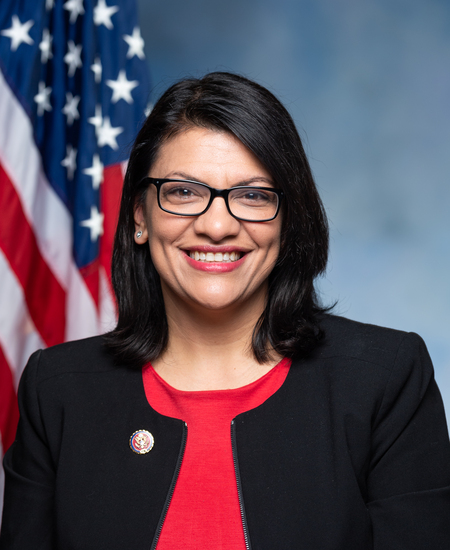
Rep. Rashida Tlaib
Sponsored bills
Maddy summaryHR 7771 designates March 21 as National Rosie the Riveter Day to honor the over 6 million American women who joined the workforce during World War II. The bill requests the President issue an annual proclamation encouraging all levels of government to observe the day with ceremonies and educational programs. It does not create new programs or funding but formally recognizes these women's contributions to the war effort and their legacy of empowerment. This procedural resolution directly affects the President and government entities through ceremonial recognition, not policy changes.
Maddy summaryThe Great Lakes Mapping Act requires the National Oceanic and Atmospheric Administration (NOAA) to complete high-resolution mapping of all Great Lakes lakebeds by December 31, 2029. This includes creating detailed depth maps, collecting bathymetric data, developing data processing methods, and building a public digital system to catalog and share all collected information. NOAA must make preliminary map sections available during the project and release the full map with supporting data within 180 days of completion. The bill authorizes $200 million to fund this effort, which directly affects NOAA, Great Lakes bordering states, and the public through increased access to lakebed data.
Maddy summaryThis bill establishes a federal grant program to fund projects restoring native kelp forests, directly affecting eligible entities like fishing industry members, tribes, universities, nonprofits, and state/local governments. It requires projects to address the greatest kelp declines, focus on ecosystem resilience (including natural predator-prey relationships), integrate Indigenous knowledge, and avoid commercial harvesting. The program allocates $5 million annually (2024-2028), with at least $750,000 reserved for tribal projects, and mandates that federal funds cover up to 85% of project costs (with possible waivers). Grants prioritize areas identified in tribal or government restoration plans and require monitoring plans to measure project effectiveness.
Maddy summaryHR 5247, the Expedited Hiring for VA Trained Psychiatrists Act of 2023, allows the Veterans Health Administration (VA) to hire psychiatrists who complete VA-residency programs without following standard civil service hiring rules. The bill permits immediate appointment after residency completion (or before, if the process begins early) for positions that have remained unfilled for at least 35 days. This directly affects VA psychiatrists completing specific residency programs and streamlines their hiring into VA clinical roles.
Maddy summaryThe PTO Act establishes a standard for paid annual leave, requiring most employers to provide employees with 1 hour of paid leave for every 25 hours worked, up to a maximum of 80 hours per 12-month period. It directly affects private sector employees and certain government workers, including those at the Government Accountability Office, Library of Congress, and federal agencies covered under the Congressional Accountability Act. The bill prohibits employers from interfering with employees' use of leave for any reason, requires clear notice of leave policies, and protects employees from retaliation for taking leave. It includes enforcement mechanisms through the Department of Labor, allowing employees to file complaints or lawsuits for violations of their leave rights. The Act takes effect 180 days after enactment, with specific provisions for collective bargaining agreements.
Maddy summaryHR 7763, the Living Wage for Musicians Act of 2024, establishes a new Artist Compensation Royalty Fund to provide payments to musicians based on streaming activity. Streaming platforms (service providers) must charge subscribers an additional $4-$10 fee per subscription (50% of the subscription fee, subject to min/max limits), with 10% of non-subscription revenue also contributed to the fund. Funds are distributed as follows: 90% to "featured artists" (e.g., lead singers) based on their share of qualifying streams, and 10% to "non-featured artists" (e.g., session musicians) via existing union funds. The bill directly affects streaming services (which collect the fee) and musicians (who receive payments based on verified streaming data).
Maddy summaryThis bill would create a new wealth tax on individuals with significant assets, targeting those with net assets exceeding $50 million. It would tax assets between $50 million and $1 billion at 2%, and assets above $1 billion at 3% (potentially increasing to 6% if certain health care legislation is enacted). The tax would apply to individuals, married couples treated as a single taxpayer, and certain trusts, with specific valuation and reporting requirements for assets. The bill also includes $70 billion in funding over 10 years for the IRS to enforce this new tax and related reporting requirements.
Maddy summaryThis bill establishes federal support for worker-owned cooperative businesses - entities owned and controlled by their employees. It creates the United States Council on Worker Cooperatives (under the Department of Labor) to coordinate agency efforts, identify regulatory barriers, and develop a national strategy. Covered agencies (like the SBA, Treasury, and Agriculture) must remove obstacles, provide capital access, offer education, and integrate cooperatives into federal programs. The bill also expands a small business lending pilot program for cooperatives with increased funding ($60 million annually through 2034) and requires multilingual outreach materials. The Council will operate for 10 years, reporting annually to Congress on progress and challenges.
Maddy summaryHCONRES 99 is a symbolic congressional resolution honoring Wadee Alfayoumi, a 6-year-old Palestinian-American boy murdered in a hate crime on October 14, 2023, after being stabbed 26 times by a perpetrator who made anti-Muslim and anti-Palestinian remarks. The resolution recognizes Congress's condemnation of hate crimes, Islamophobia, and anti-Palestinian discrimination, while affirming the United States' "zero tolerance" for such violence. As a procedural resolution (not a law), it does not create new policies but formally honors Wadee and his family, emphasizing the need to reject dehumanizing rhetoric targeting religious or ethnic groups.