

Maddy summaryThis bill establishes minimum nurse-to-patient ratios for registered nurses in hospital units (such as 1:1 in trauma units, 2:1 in critical care units, and 3:1 in emergency rooms), requiring hospitals to develop and maintain staffing plans that meet these standards. It mandates transparency in documenting staffing levels, ensures hospitals verify nurses' competence for specific units, and enforces compliance through Medicare and Medicaid programs with penalties for violations. The bill protects nurses who refuse unsafe assignments due to staffing concerns and includes initiatives to improve nurse retention and address staffing shortages. It directly affects hospitals, nurses, and patients by aiming to improve patient safety and care quality through standardized staffing requirements. The bill applies to all hospitals, with extended implementation timelines for rural facilities.
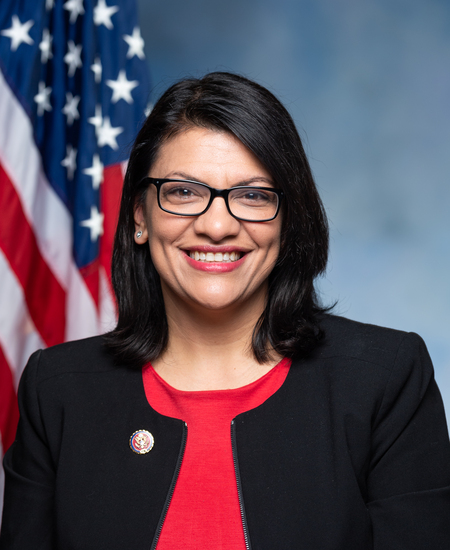
Rep. Rashida Tlaib
Sponsored bills
Maddy summaryThe PROTECT 340B Act of 2023 prohibits pharmacy benefit managers (PBMs), health insurance plans, and health insurance issuers from discriminating against healthcare providers participating in the 340B drug pricing program. It specifically bans these entities from paying less for 340B drugs than they would for similar drugs dispensed by non-340B providers, imposing special requirements on 340B providers, or requiring identification of 340B drugs in billing. The bill establishes civil penalties of up to $5,000 per violation per day for PBMs that violate these protections and requires the Health Resources and Services Administration to create implementing regulations. It directly affects safety-net hospitals, clinics, and health centers that serve low-income patients, particularly those in rural areas, by protecting their ability to use 340B drug discounts to provide affordable care.
Maddy summaryThe End Child Poverty Act would establish a new universal child assistance program providing monthly payments to children under 19 who reside in the United States and meet citizenship or immigration status requirements. Payments would equal 1/12 of the annual poverty guideline difference between a two-person household and a single individual, calculated using current federal poverty standards. The bill would repeal the existing Child Tax Credit and Earned Income Tax Credit while creating two new refundable tax credits: a $600 credit for adult dependents (over 18) and a $600 credit for adults and families (with a $1,200 amount for joint returns). The program would be administered by a new Office of Universal Child Assistance within the Social Security Administration, with automatic enrollment for eligible children unless they opt out.
Maddy summaryThis bill would require Medicare to cover FDA-approved blood tests that screen for multiple cancers simultaneously (like breast, lung, or colorectal cancer) for beneficiaries. It directly affects Medicare recipients aged 65+ who could access these new screenings once per year, without prior authorization. The key provision adds "multi-cancer early detection screening tests" to Medicare's covered services under Part B, defining them as blood tests analyzing cell-free DNA, while maintaining existing coverage for standard screenings like mammograms. The bill does not change current coverage for individual cancer screenings but ensures Medicare keeps pace with new medical technology.
Maddy summaryThe Housing Is a Human Right Act of 2023 creates federal grant programs to address homelessness and housing instability, prioritizing people who are homeless, housing unstable, or cost-burdened, including members of populations at higher risk of homelessness such as people of color, veterans, and justice system-involved individuals. It establishes a CDBG Plus program to fund permanent supportive housing, infrastructure for basic needs like public restrooms, and alternatives to criminalizing homelessness, while requiring community involvement and non-discrimination protections in program implementation. The bill creates new taxes on luxury real estate transactions and large landlords to fund these initiatives, and includes provisions to improve voting access for homeless individuals. It defines key terms like "homeless" and "housing unstable" to guide eligibility and requires programs to follow a Housing First approach that provides housing without preconditions like sobriety or treatment requirements.
Maddy summaryThe E-BIKE Act establishes a 30% tax credit for individuals purchasing qualified electric bicycles, with a maximum credit of $1,500 per bicycle (30% of the $5,000 cost limit). To qualify, bicycles must meet specific safety standards including speed limits (20 mph for classes 1-2, 28 mph for class 3), pedal assistance requirements, and safety certifications like UL 2849. The credit phases out for higher-income taxpayers, beginning at $150,000 modified adjusted gross income for single filers, $225,000 for heads of household, and $300,000 for joint filers. The bill also includes a provision allowing retailers to claim the credit directly when selling qualifying bicycles, reducing the upfront cost for consumers.
Maddy summaryHR 1610 would modernize Medicare coverage for chiropractic care by removing the current restriction that limited beneficiaries to one chiropractic service per visit. It expands coverage to include all services provided by licensed chiropractors within their state-authorized scope, aligning Medicare with VA, military, and private insurance practices. The bill requires chiropractors to complete a Secretary-approved educational webinar to cover non-spinal services, while still allowing payment for spinal manipulation treatments without this requirement. This directly affects Medicare beneficiaries seeking chiropractic care and chiropractors seeking Medicare reimbursement for their services.
Maddy summaryThe Affordable Insulin Now Act (HR 1488) requires health insurance plans and issuers to cover specific insulin products with cost-sharing capped at $35 per 30-day supply or 25% of the negotiated price, whichever is lower, starting in 2024. It directly affects people with diabetes who rely on insulin by limiting out-of-pocket costs for covered products. The bill mandates coverage of all insulin types (rapid-acting, long-acting, etc.) and dosage forms (vials, pumps, etc.) as selected by the plan. This applies to both group and individual health insurance plans under the Public Health Service Act, Internal Revenue Code, and ERISA, with cost-sharing counting toward annual deductibles.
Maddy summaryHR 1407, the Financing Lead Out of Water Act, modifies tax rules to help communities replace lead water pipes. It clarifies that using tax-exempt bonds to replace privately-owned sections of lead service lines connected to public water systems does not count as "private business use" under federal tax law. This change allows public water systems to more easily finance lead pipe replacements through tax-exempt bonds, which are typically restricted from funding private business activities. The bill directly affects public water systems and local governments managing drinking water infrastructure, making it simpler to secure funding for compliance with federal lead regulations.
Maddy summaryThis bill makes permanent Medicare coverage for cardiac and pulmonary rehabilitation services delivered via telehealth in patients' homes, which were temporarily allowed during the pandemic. It removes geographic restrictions that previously required in-person visits or limited services to specific locations like clinics. The change directly affects Medicare beneficiaries needing heart or lung rehabilitation and healthcare providers offering these programs. It ensures home-based telehealth visits for cardiac, intensive cardiac, and pulmonary rehabilitation receive the same coverage as in-clinic services under Medicare.