

Improving Seniors' Timely Access to Care Act of 2022 This bill establishes several requirements and standards relating to prior authorization processes under Medicare Advantage (MA) plans. Specifically, MA plans must (1) establish an electronic prior authorization program that meets specified standards, including the ability to provide real-time decisions in response to requests for items and services that are routinely approved; (2) annually publish specified prior authorization information, including the percentage of requests approved and the average response time; and (3) meet other standards, as set by the Centers for Medicare & Medicaid Services, relating to the quality and timeliness of prior authorization determinations.
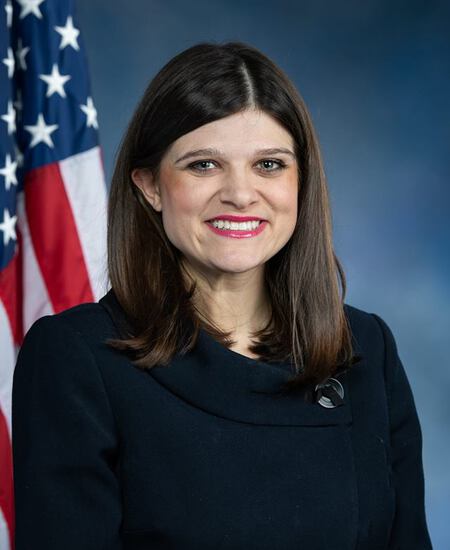
Rep. Haley M. Stevens
Sponsored bills
This resolution condemns Azerbaijan's September 2022 military attack on Armenia and Nagorno-Karabakh and calls for an end to all U.S. assistance to Azerbaijan.
Microelectronics Research for Energy Innovation Act or the Micro Act This bill directs the Department of Energy (DOE) to carry out a cross-cutting program of research, development, and demonstration of microelectronics relevant to the mission of DOE and in the service of the nation's global competitiveness in the field of microelectronics. In carrying out such program, DOE shall award financial assistance to eligible entities, such as national laboratories, to carry out research projects in, among other things, foundational science areas and methods for leveraging artificial intelligence. The Office of Science within DOE shall establish up to four Microelectronics Science Research Centers to conduct mission-driven research to address foundational challenges in the design, development, and fabrication of microelectronics and to facilitate the translation of research results to industry. The Office of Science, in coordination with the Office of Technology Transitions, shall implement partnerships with industry groups to facilitate the translation and transfer of research results produced by the centers.
Madeleine K. Albright Democracy in the 21st Century Act This bill establishes programs to promote democracy abroad, authorizes Department of State and U.S. Agency for International Development (USAID) democracy programs from FY2023 through FY2027, and addresses related issues. The State Department must establish programs (1) to defend democracy globally, including by enhancing the ability of the State Department and USAID to respond quickly and flexibly to democratic openings and backsliding; (2) to support efforts to enhance government transparency and other activities related to reducing corruption; and (3) for democracy research and development, such as activities to drive innovation in State Department, USAID, and National Endowment for Democracy (NED) responses to complex challenges to democracy. The bill establishes the Democracy in the 21st Century Fund, to be administered by the State Department, to support the programs established by this bill and other related activities. U.S. government assistance for democracy programs shall not be subject to the prior approval of any foreign government. The bill also protects the identities of implementing partners of certain State Department, USAID, and NED assistance programs in countries that are undemocratic or have engaged in gross violations of civil and political rights, including by exempting the names of partners for democracy programs in such countries from Freedom of Information Act requests. The President must report to Congress a comprehensive strategy to promote democracy abroad.
Keep Kids Fed Act of 2022 This bill provides funding for and makes changes to school meal programs and the Child and Adult Care Food Program (CACFP). It also rescinds certain funds provided under the American Rescue Plan Act of 2021; the Consolidated Appropriations Act, 2021; and the Coronavirus Aid, Relief, and Economic Security Act (CARES Act). Specifically, the bill increases the reimbursement rate for school lunches by 40 cents and for school breakfasts by 15 cents for the school year beginning in July 2022. Further, the bill changes income eligibility for school meal programs for the school year beginning in July 2022. The bill extends the authority of the Department of Agriculture (USDA) to waive certain requirements for the school meal programs and the CACFP to address COVID-19, including by extending authority through September 30, 2022, for USDA to grant waivers related to summer food service programs. The bill authorizes USDA to establish a nationwide waiver of statutory and regulatory requirements under child nutrition programs for the 2022-2023 school year. Additionally, the bill increase the reimbursement rate for meals and snacks under the CACFP by 10 cents for the school year beginning in July 2022. Further, the bill increases the reimbursement of tier II family or group day care homes to tier I amounts for the 2022-2023 school year. The bill rescinds certain funding provided to USDA, the Department of Education, and the Small Business Administration.
Harriet Tubman Bicentennial Commemorative Coin Act This bill directs the Department of the Treasury to mint and issue 50,000 $5 gold coins, 400,000 $1 silver coins, and 750,000 half-dollar clad coins emblematic of the legacy of Harriet Tubman as an abolitionist. The Secretary may issue coins under this bill only during the period of January 1, 2024, through December 31, 2024. All surcharges received by Treasury from the sale of such coins must be paid equally to the National Underground Railroad Freedom Center in Cincinnati, Ohio, and The Harriet Tubman Home, Inc. in Auburn, New York, for the purpose of accomplishing and advancing their missions.
National World War II Memorial Commemorative Coin Act This bill directs the Department of the Treasury to mint and issue up to 50,000 $5 coins, 400,000 $1 silver coins, and 750,000 half-dollar clad coins in commemoration of the National World War II Memorial in the District of Columbia. The design of the coins shall be emblematic of the memorial and the service and sacrifice of American soldiers and civilians during World War II. All surcharges received from the sale of such coins shall be paid to the Friends of the National World War II Memorial to support the National Park Service in maintaining and repairing the memorial, and for educational and commemorative programs.
Assault Weapons Ban of 2022 This bill makes it a crime to knowingly import, sell, manufacture, transfer, or possess a semiautomatic assault weapon (SAW) or large capacity ammunition feeding device (LCAFD). The prohibition does not apply to a firearm that is (1) manually operated by bolt, pump, lever, or slide action, except for certain shotguns; (2) permanently inoperable; (3) an antique; (4) only capable of firing rimfire ammunition; or (5) a rifle or shotgun specifically identified by make and model. The bill also exempts from the prohibition the following, with respect to a SAW or LCAFD: importation, sale, manufacture, transfer, or possession related to certain law enforcement efforts, or authorized tests or experiments; importation, sale, transfer, or possession related to securing nuclear materials; and possession by a retired law enforcement officer. The bill permits continued possession, sale, or transfer of a grandfathered SAW, which must be securely stored. A licensed gun dealer must conduct a background check prior to the sale or transfer of a grandfathered SAW between private parties. The bill permits continued possession of, but prohibits sale or transfer of, a grandfathered LCAFD. Newly manufactured LCAFDs must display serial number identification. Newly manufactured SAWs and LCAFDs must display the date of manufacture. The bill also allows a state or local government to use Edward Byrne Memorial Justice Assistance Grant Program funds to compensate individuals who surrender a SAW or LCAFD under a buy-back program.
Susan Muffley Act of 2022 This bill restores the full vested monthly benefits for eligible participants of certain pension plans that were sponsored by Delphi Corporation and terminated as a result of General Motors' bankruptcy in 2009. The Pension Benefit Guaranty Corporation (PBGC) must recalculate and adjust each plan participant's monthly benefits payment. The PBGC must also apply the recalculation to previously-made monthly payments and make a lump-sum payment for any additional benefits based on the recalculation. The bill establishes and provides appropriations to a fund for the payment of these benefits and specifies how the lump-sum payments are treated for tax purposes. Finally, the bill requires the PBGC to report on recommendations to ensure the long-term solvency of its insurance programs.
Keeping Girls in School Act This bill authorizes the U.S. Agency for International Development (USAID) to enter into agreements to address social, cultural, health, and other barriers that adolescent girls face in accessing quality secondary education. The USAID shall seek to ensure that such activities meet various requirements related to monitoring and evaluating outcomes, collecting data, and using specified indicators and methodologies for international basic education. The Department of State shall periodically update and report to Congress a publicly available U.S. global strategy to empower adolescent girls, and the USAID shall periodically report to Congress on the activities initiated under this bill and efforts to monitor and evaluate such activities.