

Maddy summaryHRES 341 is a symbolic House resolution expressing support for Earth Day, not a substantive bill. It urges the President to issue an Earth Day proclamation, encourages Americans to address environmental challenges (like climate change and litter), and calls for rejoining the Paris Agreement - though these are non-binding recommendations with no legal force. The resolution references historical environmental legislation (like the Clean Air Act) but does not create new policies, allocate funds, or change regulations. It directly affects no specific group, as it solely serves to affirm environmental values through symbolic recognition. (Note: The document header incorrectly lists "Federal Water Pollution Control Act" as the bill text, but this is a formatting error; the actual resolution is about Earth Day.)
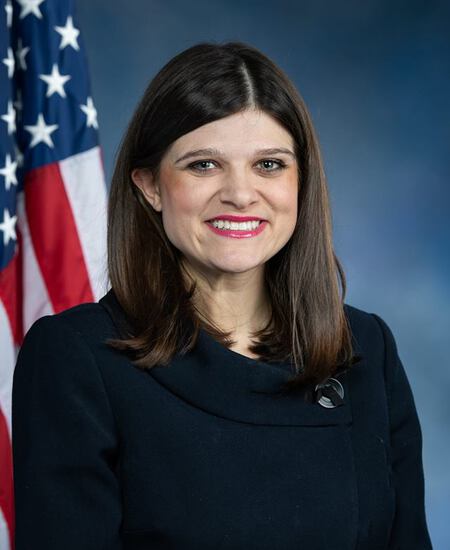
Rep. Haley M. Stevens
Sponsored bills
Maddy summaryThe Hunger-Free Future Act of 2025 amends the SNAP program to require that any update to the thrifty food plan must not increase food insecurity. It mandates that adjustments to the diet cost must continue following existing rules while explicitly ensuring updates do not worsen food insecurity, defined as households lacking adequate food due to insufficient money or resources. This directly affects SNAP beneficiaries by setting a new standard for how the program's cost calculations are reviewed. The bill changes the procedural requirement for SNAP re-evaluations without altering benefit amounts or eligibility rules.
Hot Foods Act of 2025 This bill expands the Supplemental Nutrition Assistance Program (SNAP) to permit the use of SNAP benefits to purchase hot foods or hot food products ready for immediate consumption.
Maddy summaryThis bill, HR 2936 (the ABC-ED Act), aims to reduce emergency department crowding by requiring real-time tracking of hospital bed capacity and related metrics like patient wait times. It allows federal grants to modernize public health data systems that monitor emergency department boarding rates, bed availability, and ambulance offload times, with results displayed on a public dashboard (while protecting privacy). The bill also adds two new Medicare Innovation Center pilot programs: one focused on improving care for older adults (through staffing, infrastructure, and senior care coordination) and another for psychiatric crisis care (including dedicated units and faster facility transfers). Finally, it mandates a one-year study by the Government Accountability Office to evaluate best practices for these data systems and their impact on emergency department efficiency.
Maddy summaryThis bill amends the Elementary and Secondary Education Act to explicitly include accounting education as part of a well-rounded K-12 curriculum. It requires schools to develop and strengthen programs teaching accounting, including increasing access to high-quality accounting courses for students from groups historically underrepresented in accounting careers. The key provision inserts specific language into existing law, directing schools to promote accounting career awareness and expand course availability through grade 12. This directly affects K-12 students, particularly those from underrepresented backgrounds, by making accounting education a recognized component of career-focused learning.
Maddy summaryThis bill prevents the U.S. government from diverting, delaying, or reassigning federal funds specifically designated for the National Weather Service and Great Lakes programs without new congressional approval. It directly affects NOAA’s operations in these areas by requiring that existing appropriations cannot be altered without explicit new legislation referencing this bill. The law mandates annual certification from NOAA’s Administrator to five congressional committees confirming compliance with these funding protections. This is a procedural measure focused on safeguarding current funding streams, not creating new programs or altering weather service operations.
Maddy summaryHR 2897 expands eligibility for Small Business Administration disaster loans to cover damages from prolonged power outages. It defines a "prolonged power outage" as affecting at least 25 homes or businesses in a county (with 40% property damage) or requiring 48+ hours of power loss. Borrowers can use loan funds to purchase energy resilience systems (like solar panels or generators) or replace lost food/drinks due to the outage. This directly affects small businesses in areas impacted by extended power disruptions meeting the specified criteria.
Maddy summaryThis resolution (HRES 315) is a purely commemorative measure that formally recognizes the 159th anniversary of the Civil Rights Act of 1866. It acknowledges the historical significance of the 1866 Act as the first federal law defining citizenship and affirming equal legal protection for all Americans, regardless of race. The resolution highlights the Act's role as a foundational precedent for the Thirteenth and Fourteenth Amendments. As a ceremonial resolution, it has no legal effect or policy impact on any individuals or groups.
Maddy summaryThis resolution (HRES 250) is procedural, designed to expedite the House's consideration of H.R. 1101. It waives standard rules to allow immediate debate on H.R. 1101, which would prohibit unlawful access to the Treasury's payment systems. The resolution sets one hour of debate (equally divided between leadership and the minority) and waives all amendments or procedural objections. It directly affects House procedures for this specific bill, not the policy itself.
Maddy summaryThe House Expansion Commission Act (HR 2797) creates a 13-member commission to study whether and how to increase the size of the U.S. House of Representatives. The commission will examine current district sizes (averaging 800,000 constituents per district), historical context for the 1929 cap, potential expansion methods, and logistical costs like office space and staffing. It must submit a report with recommendations to Congress within two years, but the bill itself does not change the House size or require immediate action. This study aims to inform future decisions about representation, without altering current congressional structure.