

Maddy summaryHCONRES 4 is a symbolic resolution expressing Congress's support for tax-exempt fraternal benefit societies (like mutual aid organizations). It recognizes these groups, which have over 7 million members nationwide, as historically and currently providing critical community benefits - including life/health insurance, charitable work, and volunteer services - valued at over $3.8 billion annually. The resolution affirms that their tax-exempt status under Section 501(c)(8) of the Internal Revenue Code remains beneficial and should continue to be promoted. This is a non-binding expression of congressional sentiment, not a policy change.
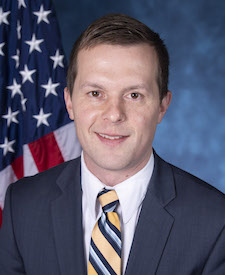
Rep. Jared F. Golden
Sponsored bills
Maddy summaryThis resolution expresses the House of Representatives' position that Congress should take steps to prevent the privatization of the United States Postal Service (USPS), ensuring it remains a federal independent agency. It highlights USPS’s constitutional role, self-sustaining nature (relying on service revenue, not taxpayer funds), and critical functions - serving 168 million addresses daily, supporting rural communities, and underpinning e-commerce. The resolution opposes privatization, noting it would raise prices, reduce services, and harm the $1.9 trillion mailing industry. As a non-binding resolution, it reflects the House’s stance but does not create new law or policy.
Maddy summaryHR 764, the Global Health, Empowerment and Rights Act, removes two barriers for foreign nongovernmental organizations (NGOs) seeking U.S. foreign assistance. It ensures these organizations cannot be denied funding solely because they provide health services (like counseling and referrals) using non-U.S. government funds, as long as those services comply with local laws. The bill also requires that foreign NGOs face the same rules on using non-U.S. funds for advocacy and lobbying as U.S. NGOs receiving similar aid. This directly affects international health-focused NGOs working in countries where U.S. aid is provided.
Maddy summaryHR 674 prohibits new commercial offshore wind energy development in Lobster Management Area 1 (a specific fishing zone in the Gulf of Maine critical to the New England lobster and seafood industry). The bill directly affects commercial fishermen, seafood processors, and coastal communities dependent on this area’s fisheries, which support thousands of jobs and generate over $500 million annually in lobster harvest alone. Key provisions include banning new wind energy leases in the area and requiring a federal study within 120 days to evaluate how current environmental reviews for Gulf of Maine wind projects consider impacts on marine life, fishing industries, and coastal communities. The study will assess existing agency processes for reviewing wind projects, not change those processes.
Maddy summaryThis bill amends the legal definition of "firearm silencer" and "firearm muffler" under federal law. It clarifies that these terms include any device designed to reduce firearm noise, as well as the outer tube or primary housing component that serves as the main structure for noise-reduction parts. The definition specifically covers devices intended to attach to a firearm (directly or via mounts) and excludes other firearms. This change affects how silencers are legally categorized under federal regulations, not who can own them. It does not create new restrictions but refines the scope of existing definitions.
Maddy summaryHR 514 (the SWAMP Act) requires most federal agencies to move their headquarters out of the Washington, D.C., metropolitan area (encompassing DC, parts of Maryland and Virginia) within one year of enactment. It prohibits new headquarters in this area and restricts existing headquarters (already located there) from renovating, renewing leases, or signing new leases after the law takes effect. The bill mandates a competitive bidding process where states or local areas can propose relocation sites, with selection based on economic impact, relevant expertise, and national security considerations. Notably, agencies like Defense, Homeland Security, and intelligence agencies (including NSA and CIA) are explicitly excluded from this requirement.
Maddy summaryHR 502, the Protecting Infrastructure Investments for Rural America Act, modifies the rural surface transportation grant program under Title 23, U.S. Code. It redefines "small community" as areas outside urbanized zones with populations of 5,000 or less (down from 200,000), and requires that 5% of annual program funds support projects in these communities. The bill increases the federal share for eligible projects in small communities to 90% and mandates that projects must benefit economic development or quality of life in the community. These changes directly affect rural areas and small towns by prioritizing infrastructure funding for the smallest communities.
Maddy summaryHR 505 would require the President to impose a 10% ad valorem tariff (based on the value) on all imported goods starting in the year the bill is enacted. For subsequent years, the tariff would automatically increase by 5% if the U.S. had a trade deficit in the previous year, or decrease by 5% if there was a trade surplus (but never below 0%). This bill directly affects importers and consumers, as these tariffs would raise costs on imported goods. The tariff applies in addition to any existing duties on the same goods.
Maddy summaryHR 524, the "NO GOTION Act," blocks U.S. green energy tax credits for companies tied to specific countries. It amends tax law to deny benefits under sections like 30C, 45, and 48 to any "disqualified company" - defined as entities created in, controlled by, or linked to China, Russia, Iran, or North Korea. The law directly affects corporations with ties to these nations that seek federal tax incentives for clean energy projects. The policy takes effect for tax years after the bill's enactment, removing eligibility for these companies without altering other tax rules.
Maddy summaryHR 507, the Veterans Member Business Loan Act, amends the Federal Credit Union Act to explicitly include loans made to veterans as qualifying "member business loans" under credit unions. This change directly affects veterans seeking business financing through federal credit unions, allowing them to access these loans under the same framework as other small business borrowers. The key mechanism is adding a new definition category ("made to a veteran") to the existing eligibility criteria for business loans, using the standard military definition of "veteran" from Title 38, U.S. Code. The bill does not create new funding or programs but expands existing credit union lending options to include veterans. This definition change takes effect six months after the bill's enactment.