

Maddy summaryThe Stronger Communities through Better Transit Act establishes a new federal grant program to improve public transportation service. It provides funding to urban areas, states, and Indian tribes to cover up to 50% of public transit operating costs (up to 80% in persistent poverty areas and 100% for Indian tribes), with requirements to report on service frequency, access to jobs, and conduct community surveys. The program mandates that a majority of funds must benefit underserved communities and areas of persistent poverty, defined as census tracts with high poverty rates or minority populations. Recipients must maintain their transit funding levels and report on improvements in access to essential services. The bill authorizes $20 billion annually for fiscal years 2024-2027.
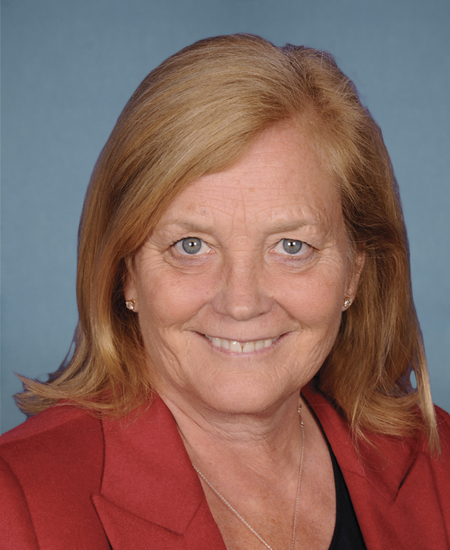
Rep. Chellie Pingree
Sponsored bills
Maddy summary# Summary of "Protecting Communities from Plastics Act" (Title II) This comprehensive legislation addresses the environmental, health, and environmental justice impacts of plastics production and use. Key provisions include: ## Environmental Justice Protections - Requires environmental justice assessments for permits of "covered facilities" (plastics manufacturing facilities) - Mandates consultation with "fenceline communities" (communities near facilities) including: * Prompt notification in multiple languages * Public hearings with translation services * Community benefit agreements - Establishes a 45-day waiting period before approving permits after public hearings ## Regulatory Requirements - Amends Clean Air Act to establish new source performance standards for plastics facilities - Requires continuous monitoring of air emissions (benzene, nitrogen oxides, etc.) - Amends Clean Water Act to prohibit discharge of plastic pellets in wastewater - Requires financial assurance for facility closure and emergency response - Prohibits new facility permits within 5 miles of community buildings (schools, hospitals, etc.) ## Research and Monitoring - Requires study of microplastics in food (including fish, meat, fruits, vegetables) - Mandates research on microplastics in human bodies (urine, breastmilk, stool) - Establishes a pilot program to test technologies for microplastic removal - Requires inventory of plastics manufacturing and distribution ## Additional Provisions - Temporary permitting moratorium on new plastics facilities (during "temporary pause period") - Requires listing of discarded polyvinyl chloride as hazardous waste - Limits National Recycling Strategy to exclude chemical recycling technologies - Creates grants to reduce single-use plastics in agricultural packaging - Requires biodegradable alternatives to plastic weed barriers The legislation aims to address the disproportionate environmental and health impacts of plastics production on vulnerable communities while establishing comprehensive regulatory frameworks for plastics manufacturing and disposal.
Maddy summaryHR 5970, the SNAP Tribal Food Sovereignty Act of 2023, allows federally recognized tribes to manage their Supplemental Nutrition Assistance Program (SNAP) benefits locally through contracts or compacts with the USDA. Tribes must request this option via a tribal resolution, replacing the current federal administration of SNAP for tribal members. The agreements would follow the same rules as existing tribal self-determination contracts under the Indian Self-Determination Act. This change aims to support tribal self-governance over nutrition assistance programs.
Maddy summaryHR 5973, the Continuous Improvement and Accountability in Organic Standards Act (CIAO Act), requires the USDA to regularly review and update organic standards. It mandates that the Secretary publish a public request for input every 5 years (starting 180 days after enactment) on which regulations should be prioritized for revision. Based on this input and recommendations from the National Organic Standards Board, the USDA must propose specific changes, seek public comment, and finalize updates within 5 years. This process directly affects organic farmers, processors, and the USDA, ensuring organic standards evolve using the latest environmental, market, and scientific data.
Maddy summaryThis bill restores visa eligibility for immigrants who had diversity visas allocated for fiscal years 2017-2022 but were denied entry due to specific travel restrictions (like Executive Orders 13769/13780 or related proclamations) or pandemic-related delays. The State Department must notify affected individuals within 90 days of the bill’s enactment, giving them one year to confirm they wish to proceed with their visa applications. Unused visas from those years can be reallocated without counting against current annual limits, and applicants who fail to respond or are denied for standard reasons (like education requirements) lose eligibility. The policy directly affects individuals impacted by these specific past barriers to immigration.
Maddy summaryThis bill increases financial support for farmers and ranchers adopting water-saving agricultural practices. It allows the USDA to pay up to 85% of costs for drought-resilient or water-conserving methods, such as reducing irrigation use or improving rainwater absorption on eligible land. It also expands eligibility for payments to include perennial production systems (like agroforestry and perennial crops) and adds requirements to enhance soil health through outreach and soil testing. Payments are capped at $200,000 over any five-year period per farm operation. The changes apply to existing USDA conservation programs under the Food Security Act of 1985.
Maddy summaryHR 3650, the Opportunities in Organic Act of 2023, amends the Farm Security and Rural Investment Act of 2002 to create a new "Opportunities in Organic" program. It provides federal reimbursement for organic certification costs (up to $1,500 per producer, with higher amounts possible for socially disadvantaged farmers or in high-cost regions) and establishes new funding for nonprofits to support farmers transitioning to organic practices. The bill directly affects socially disadvantaged farmers, small/mid-sized farms, and eligible nonprofit organizations by covering transition costs like soil testing, equipment, land access barriers, and technical assistance. Key provisions include $50 million annually for fiscal years 2024-2025, increasing to $100 million by 2027, with specific requirements for reporting on program outcomes and participant demographics.
Maddy summaryThis bill amends the Food and Nutrition Act of 2008 to remove a requirement that state agencies include photographs on electronic benefit transfer (EBT) cards used for the Supplemental Nutrition Assistance Program (SNAP). Specifically, it eliminates the provision allowing states to mandate photo identification on SNAP EBT cards, stating that "a State agency may not require that an electronic benefit card contain a photograph." The change directly affects SNAP recipients who previously might have been required to provide a photo for their benefits card. The amendment takes effect 180 days after enactment, with existing certification periods unaffected.
Maddy summaryThe NO TIME TO Waste Act establishes an Office of Food Loss and Waste within the Department of Agriculture to coordinate national efforts to reduce food loss and waste. It creates a grant program for states, local governments, and tribal entities to collect data on food waste reduction policies and develop model policies, while requiring federal contractors to report on their food waste reduction efforts. The bill sets a goal to reduce food loss and waste by 50% by 2030 compared to 2016 levels, with annual reports tracking progress to Congress. It also establishes regional coordinators to facilitate food recovery and partnerships between government, food businesses, and nonprofits, and mandates a national education campaign to teach consumers about food preservation, safety, and composting. Funding is authorized for fiscal years 2024-2028 to support these initiatives.
Maddy summaryThis bill creates a new USDA program to directly connect fresh produce producers with community food programs serving low-income individuals. It requires the Secretary of Agriculture to contract with eligible entities (like farms, distributors, and nonprofits) to buy U.S.-grown fresh produce - ensuring at least seven varieties per delivery, locally sourced when possible, and aligned with dietary guidelines - and distribute it to qualifying organizations (such as food banks, schools, and tribal programs) facing food insecurity. The program prioritizes contracts with beginning farmers, socially disadvantaged farmers, veteran farmers, and small/mid-sized family farms, while mandating 30% upfront payment and requiring annual reports on distribution metrics and program effectiveness to Congress. It aims to strengthen local food supply chains, reduce farm waste, and improve access to fresh produce for vulnerable communities.