

Maddy summaryHRES 1074 is a symbolic House resolution reaffirming congressional support for a two-state solution to the Israel-Palestine conflict. It explicitly states the House supports Israel's right to exist as a Jewish, democratic state and recognizes Palestinians' right to sovereignty through a separate state. The resolution identifies a two-state solution as the best path to lasting peace and condemns efforts opposing this approach. As a non-binding resolution, it does not create new law or policy but formally expresses the House's position on this issue. It was introduced by multiple House members on March 12, 2024.
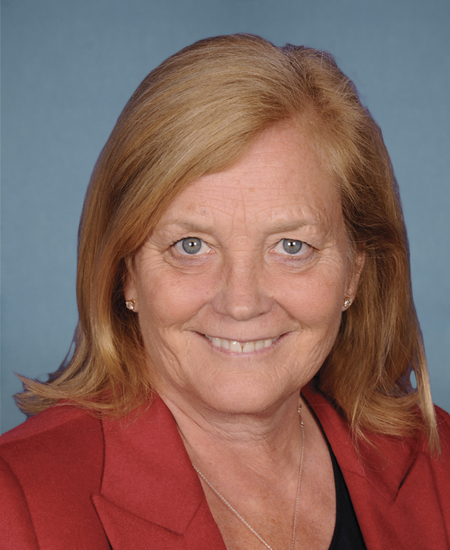
Rep. Chellie Pingree
Sponsored bills
Maddy summaryHR 886, the Save Our Seas 2.0 Amendments Act, updates administrative and structural provisions of the Marine Debris Foundation and its programs. It clarifies that "tribal organization" refers to entities defined under the Indian Self-Determination Act, enabling direct tribal participation in marine debris initiatives. The bill modifies board appointment rules (requiring Commerce Secretary approval for some roles), reclassifies the Foundation as a corporation, and sets a 24-month limit on using federal funds for salaries. It also expands eligible grant recipients to include Indian tribes, international NGOs, and foreign governments, while requiring the Foundation to develop tribal outreach best practices. These changes streamline operations and broaden collaboration without altering core marine debris reduction programs.
Maddy summaryThis bill requires states to immediately stop Medicaid recovery claims against beneficiaries' estates. Specifically, it mandates that states withdraw all existing liens within 90 days of enactment and notify affected individuals or their estates about the withdrawal. The law also prohibits states from initiating, maintaining, or collecting any future Medicaid recovery claims for benefits correctly paid. It directly affects Medicaid recipients and their heirs who were previously subject to state recovery efforts. The key mechanism is the 90-day deadline for states to remove existing liens and cease all new recovery actions.
Maddy summaryThe Stop CMV Act of 2024 requires hospitals and healthcare entities caring for infants under 21 days old to administer congenital Cytomegalovirus (CMV) screening tests. It mandates states to establish screening standards within two years of enactment, with federal oversight by the Advisory Committee on Heritable Disorders if states fail to act. The bill allocates federal grants to states for implementing screening, improving data systems, and funding research on CMV diagnostics, prevention, and treatments through the National Institutes of Health. These provisions directly affect newborns, hospitals, and state health agencies by standardizing early CMV detection and supporting related public health efforts.
Maddy summaryHR 7481 establishes a new CDC program to address social determinants of health - such as housing, food access, and transportation - that impact community health outcomes. It authorizes $100 million annually (2025-2029) to fund grants for state/local health agencies, nonprofits, and universities to design and implement community-based strategies tackling unmet health needs. Grantees must collaborate with health systems, housing organizations, and local stakeholders to collect data, develop evidence-based solutions, and monitor impacts on health equity and healthcare costs. The bill requires annual reporting and a national evaluation after five years to assess program effectiveness.
Maddy summaryHRES 1048 is a non-binding House resolution calling on the Department of Homeland Security (DHS) to establish a humanitarian parole program for Cameroonians fleeing violence in their home country. It specifically targets Cameroonians who arrived in the U.S. after October 5, 2023 - after the expiration of temporary protected status (TPS) that covered earlier arrivals - and who face risks of deportation to Cameroon amid ongoing conflicts, human rights abuses, and discriminatory treatment in U.S. immigration enforcement. The resolution cites over 6,000 deaths from violence in Cameroon since 2016, 1.7 million needing humanitarian aid, and DHS’s existing authority under Section 212(d)(5)(A) of the Immigration and Nationality Act to create such a program. It emphasizes that no African nation has ever received a humanitarian parole program under this mechanism, highlighting systemic gaps in U.S. immigration policy.
Maddy summaryThe Increasing Access to Mental Health in Schools Act creates a federal grant program to increase mental health staff in low-income schools. It provides funding for partnerships between low-income schools (where at least 20% of students are from families below the poverty line) and graduate programs in school counseling, psychology, and social work. Grant funds can cover training costs, salary support for new mental health providers, recruitment of underrepresented students, and student loan repayment for mental health staff working in qualifying schools. The bill sets target ratios for staff-to-student ratios (like 1 counselor per 250 students) and requires annual reporting on program outcomes. The program is authorized for $200 million annually to address mental health staffing shortages in schools serving high-poverty communities.
Maddy summaryHRES 1032 is a symbolic resolution designating the week of February 26-March 1, 2024, as "Public Schools Week" in the U.S. House of Representatives. It expresses congressional support for public education, highlighting its role in preparing students and communities. The resolution has no legal effect or funding provisions - it solely serves as a formal expression of backing for public schools. It directly affects no individuals or entities but aims to raise awareness about public education. This is a non-binding gesture, not a policy change.
Maddy summaryThis resolution proposes creating a Permanent Select Committee on Aging in the U.S. House of Representatives. The committee would study issues affecting older Americans - such as income security, healthcare, housing, and long-term care - without having the power to pass laws. It would review existing government and private programs, develop coordination strategies for aging-related services, and assess recommendations from the President or the White House Conference on Aging. The committee’s work would inform future policy discussions but would not directly change legislation.
Maddy summaryHR 7384, the Creating Hope Reauthorization Act of 2024, extends the deadline for issuing priority review vouchers to pharmaceutical companies developing treatments for rare pediatric diseases. The bill amends the Federal Food, Drug, and Cosmetic Act to push the program’s expiration from 2024 to 2028 and adjusts another related deadline to 2030. This directly affects drug manufacturers seeking faster FDA review for new treatments targeting rare childhood illnesses. The extension ensures continued incentives for developing these critical therapies without altering the core voucher mechanism.