

Maddy summaryThe LET'S Protect Workers Act increases civil penalties for employers who violate labor and workplace safety laws. It significantly raises fines for child labor violations (up to $700,000 for serious injuries/deaths), wage and hour violations (up to $50,000 per violation for repeated/willful violations), and workplace safety violations (up to $800,000). The bill also increases penalties for farmworker protections (to $30,000), mine safety violations, and unfair labor practices (up to $100,000). New provisions require employers to pay penalties, with withdrawal orders for mines that fail to pay fines. These changes apply to violations occurring on or after January 1, 2025, with some provisions taking effect immediately.
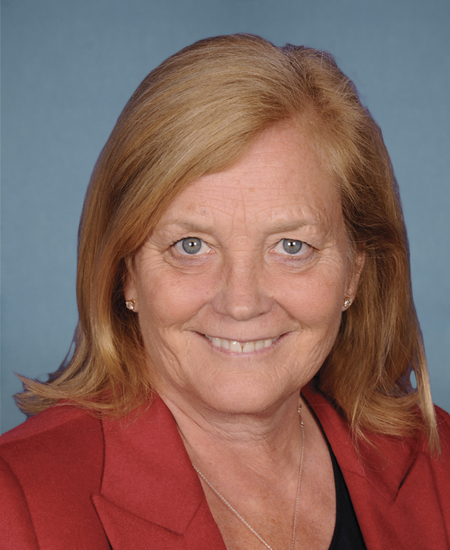
Rep. Chellie Pingree
Sponsored bills
Maddy summaryH.J. Res. 193 proposes a constitutional amendment to eliminate legal immunity for federal officials, including the President, from criminal prosecution for actions taken while performing official duties. It also prohibits the President from granting a pardon to themselves. The amendment would apply to all federal officers (such as the President, Vice President, and members of Congress) except for Congress members acting in their legislative role as defined in the Constitution. If ratified by 38 states, this change would become part of the U.S. Constitution, requiring no further congressional action.
Maddy summaryHRES 1385 designates the week of August 4-10, 2024, as "National Farmers Market Week" to recognize the economic and community role of farmers markets. The resolution highlights that farmers markets generated $1.7 billion in income for U.S. farmers in 2020, supported 8,771 markets nationwide by 2019, and connect urban and rural communities while promoting sustainable farming and nutrition access. It does not create new laws or funding but formally acknowledges these markets’ contributions to local economies, public health, and community engagement. The resolution aims to raise awareness of farmers markets’ importance, directly affecting farmers, vendors, and consumers who rely on these venues.
Maddy summaryThis resolution designates September 2024 as "PCOS Awareness Month" to highlight polycystic ovary syndrome (PCOS), a hormonal condition affecting an estimated 5-10 million U.S. women and girls. It recognizes PCOS as a serious health issue linked to infertility, type 2 diabetes, heart disease, mental health challenges, and other related conditions. The resolution urges increased public and medical education about PCOS, improved diagnosis, and research into better treatments, without creating new laws or funding. It directly supports women and girls living with PCOS by promoting awareness of its wide-ranging health impacts.
Maddy summaryHRES 1349 is a symbolic House resolution recognizing the success of the Food for Peace Act, which provides U.S. humanitarian food aid to global populations facing hunger. It does not create new policy or funding but formally acknowledges the program’s impact - such as reaching 53 million people with emergency aid in 2022 - and highlights global hunger statistics (e.g., 783 million people hungry in 2022). The resolution urges continued U.S. funding prioritization for the program but has no binding effect or direct policy changes. It directly affects no new groups, as it solely expresses congressional support for an existing aid program.
Maddy summaryHR 8978, the Voluntary Sustainable Apparel Labeling Act, establishes a voluntary EPA-run program for apparel companies to display standardized sustainability labels on products. The labels must show a numerical summary of full life cycle greenhouse gas emissions (from farming to disposal) and include a QR code linking to detailed data, all verified using international environmental standards. Participating apparel manufacturers and retailers (not end consumers) directly affect the labeling requirements, though participation is optional. The program mandates clear disclosure of who reports specific emission data (manufacturer vs. retailer) and requires EPA verification to prevent misleading claims. The bill also includes penalties for fraudulent label use and requires the EPA to publish effectiveness reports every 5 years.
Maddy summaryHRES 1332 is a symbolic resolution recognizing June as LGBTQIA+ Pride Month. It encourages the celebration of Pride Month to honor the historical struggles and achievements of LGBTQIA+ people in the United States, while acknowledging the ongoing challenges they face. This resolution does not create new laws or policies, but serves as a formal recognition of LGBTQIA+ rights as human rights and highlights their integral role in American history. The resolution was introduced by multiple members of Congress and passed by the House of Representatives.
Maddy summaryThis bill would allow Americans to safely import prescription drugs from Canada, the UK, EU, and Switzerland under specific safety and quality standards. It creates a certification process for foreign pharmacies and distributors, requires imported drugs to match FDA-approved versions in active ingredients and strength, and mandates safety testing through approved laboratories. The law permits individuals to import up to a 90-day supply of qualifying drugs with a valid prescription, while requiring importers to report drug prices and manufacturing details to the FDA. It also prevents drug manufacturers from charging higher prices to foreign sellers who import drugs into the U.S.
Maddy summaryThis bill creates a federal framework for "extreme risk protection orders" (ERPOs) that temporarily remove firearms from individuals who pose a risk of harming themselves or others. Family members or law enforcement officers can petition a federal court for a temporary order (up to 14 days) based on probable cause, followed by a hearing within 72 hours to determine if a longer-term order (up to 180 days) is warranted. The bill requires clear and convincing evidence of risk at the hearing and mandates respondents to surrender firearms to law enforcement within 48 hours. It also includes provisions for reporting, training law enforcement on ERPOs, and a federal grant program to support state ERPO implementation, without preempting state laws.
Maddy summaryHR 8830, the High Court Gift Ban Act, sets strict limits on gifts federal judges may accept. It prohibits judges from receiving gifts valued over $50 from a single source in a year, unless the total from that source stays under $100 annually. Key exceptions include gifts paid for by the judge, gifts from relatives, honorary degrees from educational institutions, and public opportunities available to all federal employees. The bill also outlines enforcement mechanisms, requiring the Judicial Conference to refer violations to the Attorney General for civil or criminal penalties. This directly affects all federal judges, including Supreme Court justices and lower court judges, by restricting gifts from sources that may have business before them.