

Maddy summaryHR 9578, the Ranked Choice Voting Act, would require all states to use ranked choice voting for elections of U.S. Senators and Representatives (including primaries and general elections) starting with the 2027 elections. The bill specifies that voters would rank candidates in order of preference, with ballots tabulated by eliminating the lowest-ranked candidate in each round until a winner emerges with a majority. States would receive federal funds based on registered voters to implement the system, and the bill prohibits separate runoff elections for these federal offices. This legislation would fundamentally change how federal congressional elections are conducted across all states, while not affecting state or local elections.
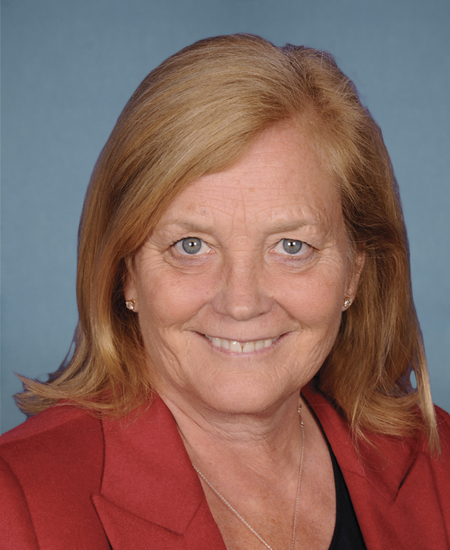
Rep. Chellie Pingree
Sponsored bills
Maddy summaryThis bill creates a federal grant program to fund supportive services for residents in affordable housing properties. It provides 5-year competitive grants to non-profit organizations or tribes managing properties assisted by programs like the low-income housing tax credit or Section 8 housing. Grantees must use at least 25% of funds for staff salaries/benefits and can cover services including health access, education, financial literacy, aging-in-place support, and disability services - though residents cannot be required to accept these services. The program targets residents of qualifying affordable housing properties, focusing on improving health, economic stability, and community integration.
Maddy summaryHRES 1432 designates September 10, 2024, as "National Firearm Suicide Prevention Day" to raise public awareness about firearm suicides and promote safe storage practices. The resolution encourages healthcare professionals to discuss safe firearm storage with patients and supports the day's goals of reducing firearm suicides through education. It directly affects the general public and healthcare providers by highlighting evidence that safe storage lowers suicide risk, referencing statistics like 54.6% of U.S. suicides in 2022 involving firearms. The bill is symbolic, with no new legal requirements, and aligns with existing awareness efforts like Firearm Suicide Prevention Day.
Maddy summaryHR 8611, the Save Our Small Farms Act of 2024, amends crop insurance and assistance programs to better support small-scale and diversified farms. The bill creates a voluntary transition program from noninsured crop disaster assistance to whole farm revenue insurance with tiered premium discounts (25% for the first year, 50% for subsequent years) and streamlines application processes for urban, small-scale, and direct-to-consumer farming operations. It allows use of IRS Schedule F for revenue history, establishes remote appraisal options for crop loss assessments, and creates a new single index insurance policy to protect against weather-related income losses. These changes directly affect limited resource, beginning, veteran, and socially disadvantaged farmers, as well as producers of hand-harvested or rapidly-deteriorating crops.
Maddy summaryHR 8300, the Food and Nutrition Delivery Safety Act of 2024, requires the Food and Nutrition Service to establish standards for SNAP (Supplemental Nutrition Assistance Program) benefits used online or for delivery. It mandates safe digital privacy and cybersecurity rules for online SNAP transactions and sets delivery standards ensuring food safety, secure handling during transport, and fair wages for delivery workers. Retailers or food concerns using SNAP benefits for online sales or delivery must comply with these standards, reporting their adherence to the government. Failure to comply results in losing SNAP authorization, though they may reapply once standards are met. This directly affects SNAP-authorized retailers offering online or delivery services using government benefits.
Maddy summaryHR 8305, the Loggers Economic Assistance and Relief Act, provides financial relief to timber harvesting and hauling businesses that suffer significant revenue losses due to major disasters. It authorizes payments equal to 10% of a business's gross revenue during a 30-day period or quarter if revenue drops by at least 10% compared to the same period in the previous year, including losses from insect infestations declared as disasters. Payments must be used solely for operating expenses and are funded with $50 million annually for fiscal years 2024 and 2025. The program targets small timber businesses directly impacted by events like wildfires or pest outbreaks, with the USDA administering the payments and reporting recipient details to Congress.
Maddy summaryThe Protecting Communities from Plastics Act of 2024 establishes new environmental standards for plastic production facilities, including a temporary moratorium on new permits for covered facilities during a "temporary pause period." It requires environmental justice assessments for permits affecting fenceline communities (low-income communities and communities of color near plastic facilities) and sets specific targets to reduce single-use plastics by 25% and increase reusable/refillable packaging by 30% by 2034. The bill mandates comprehensive reporting on plastic production and distribution, including a national inventory of plastic manufacturing, and requires continuous air and water quality monitoring near plastic facilities. This legislation directly affects plastic producers, manufacturers, and communities located near plastic production facilities, particularly those disproportionately impacted by plastic pollution.
Securing and Understanding our National Renewable Agriculture Yields for Energy Act or the SUNRAY for Energy Act This bill requires the Department of Agriculture (USDA) to conduct a study, research, and demonstration regarding agrivoltaic systems. The bill defines agrivoltaic system as a system under which solar energy production and agricultural production, including crop or animal production, occur in an integrated manner on the same piece of land through the duration of a project. Specifically, the bill directs USDA to study agrivoltaic systems, which includes conducting a review of current research and identifying research gaps. USDA must also develop a five-year plan for using USDA's research, extension, outreach, conservation, and renewable energy activities to better support agrivoltaic systems that do not displace agricultural production. USDA must also develop a definition for agrivoltaic system for the purposes of incorporating these systems into federal agriculture and energy programs, and investment tax credits. In addition, the Agricultural Research Service must establish and maintain a network of agrivoltaic systems research and demonstration sites in multiple U.S. regions to investigate increasing agricultural productivity and profitability, enhancing agricultural resilience and the capacity to mitigate and adapt to climate change, protecting biodiversity, and increasing economic opportunities in rural communities. Further, the Natural Resources Conservation Service must develop national and regional guidance on best practices for the protection of soil health and productivity during the siting, construction, operation, and decommissioning of solar energy systems on agricultural land. The guidance must be updated at least every two years.
Maddy summaryThis bill would require the federal government to cover 100% of state agencies' costs for SNAP program staff salaries, hiring, and training. It sets minimum wage standards for SNAP workers at the same rate as federal employees, with annual updates tied to federal pay increases. States must submit detailed wage plans for federal approval. The policy aims to improve staffing stability and retention for SNAP operations.
This resolution supports the designation of National FFA Week. It also (1) recognizes the important role of the National FFA Organization (Future Farmers of America) in developing the next generation of globally conscious leaders who will change the world; and (2) celebrates the 10th anniversary of the Give the Gift of Blue program, which has donated more than 17,000 FFA blue jackets to FFA members in need.