

Maddy summaryThe End Oil and Gas Tax Subsidies Act of 2025 would eliminate several tax benefits currently available to oil and gas companies, including credits for enhanced oil recovery, deductions for intangible drilling costs, and percentage depletion allowances. It would also prohibit major integrated oil companies (defined as those meeting specific production and revenue thresholds) from using last-in, first-out accounting for inventory purposes. These changes would take effect for taxable years beginning after December 31, 2024, directly affecting oil and gas producers who currently claim these tax benefits. The legislation removes specific tax advantages that have been available to the oil and gas industry, potentially increasing their tax burden.
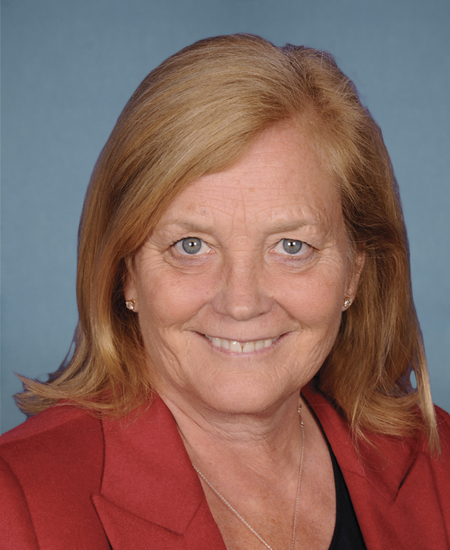
Rep. Chellie Pingree
Sponsored bills
Maddy summaryThe Proxy Voting for New Parents Resolution (HRES 23) would allow U.S. House Members who have given birth or whose spouse has given birth to appoint another Member as a proxy to cast their vote or record their presence in the House and committees for up to 12 weeks after childbirth. To use this, the new parent must submit a signed letter to the Clerk detailing the birth or medical condition and naming the proxy; the proxy must vote exactly as instructed and announce the vote as "by proxy." The proxy vote does not count toward quorum, and the new parent can revoke the proxy at any time by submitting a new letter or casting their own vote. This resolution applies to all House Members, including Delegates and the Resident Commissioner, though they cannot cast votes for the House itself.
Maddy summaryThis bill increases healthcare affordability for low- and middle-income people by expanding eligibility for premium tax credits under the Affordable Care Act. It removes the previous 400% of poverty level cap for subsidy eligibility and replaces it with a new sliding scale based on income tiers, ranging from 0% to 8.5% of household income for coverage costs. The scale adjusts linearly across income levels, with households earning 300-400% of poverty paying 6.0%-8.5% of income (up from the prior fixed 400% cap), while lower-income households pay progressively less. These changes apply to tax years beginning after December 31, 2025, directly affecting individuals purchasing health insurance through marketplace plans.
Maddy summaryThis bill amends the tax code to create a special rule for deducting losses of uncut timber (timber not yet cut for sale) from disasters like fires, storms, pests, or drought. It requires taxpayers to base deductions on the timber's pre-loss appraised value minus salvage value, using a certified appraiser's assessment within one year. Crucially, taxpayers must reforest the affected area with hardwoods or softwoods within five years to keep the tax benefit; failure to reforest results in recapturing the deduction. The rule applies only to timber held for sale in an active business, excluding passive activities. This changes how businesses can claim tax deductions after timber losses while linking the benefit to reforestation efforts.
Maddy summaryHR 82, the Social Security Fairness Act of 2023, repeals two provisions that reduce Social Security benefits for certain government workers. It eliminates the Government Pension Offset (GPO), which cuts spousal or survivor benefits for people with pensions from jobs not covered by Social Security (like federal or state government roles), and the Windfall Elimination Provision (WEP), which lowers retirement benefits for those with similar pensions. The law takes effect for benefits paid after December 2023, requiring the Social Security Administration to adjust benefit calculations to remove these reductions. This change directly affects public-sector employees who previously had their Social Security benefits reduced due to their government pensions.
Maddy summaryThis bill extends funding for the Gabriella Miller Kids First Pediatric Research Program at the National Institutes of Health (NIH) through 2028, replacing the previous 2014-2023 authorization. It directs NIH to administer pediatric research funds through its Division of Program Coordination (instead of the "Common Fund") and requires NIH to coordinate pediatric cancer and disease research while prioritizing projects that avoid duplicating existing NIH work. The bill also mandates a report to Congress within five years detailing funded pediatric research projects and their advancements. This directly affects NIH's pediatric research funding structure and oversight, focusing on cancer and other childhood diseases.
Maddy summaryHR 40 would establish a 15-member commission to study the legacy of slavery and systemic discrimination against African Americans in the United States, and develop proposals for reparations. The commission would examine historical and ongoing effects of slavery, discriminatory policies (including redlining and educational disparities), and recommend remedies through education and potential reparations. Composed of members appointed by the President, House Speaker, and Senate President pro tempore, the commission would have 18 months to submit a report to Congress, with $20 million authorized for its work. This legislation creates a study process but does not provide reparations directly.
Washington, D.C. Admission Act This bill provides for the establishment of the State of Washington, Douglass Commonwealth, and its admission into the United States. The state is composed of most of the territory of the District of Columbia (DC), excluding a specified area that encompasses the U.S. Capitol, the White House, the U.S. Supreme Court building, federal monuments, and federal office buildings adjacent to the National Mall and the U.S. Capitol. The excluded territory shall be known as the Capital and serve as the seat of the government of the United States, as provided for in Article I of the Constitution. The state may not impose taxes on federal property except as Congress permits. The bill provides for the DC Mayor to issue a proclamation for the first elections to Congress of two Senators and one Representative of the state. The bill eliminates the office of Delegate to the House of Representatives. The bill applies current DC laws to the state. DC judicial proceedings and contractual obligations shall continue under the state’s authority. The bill also provides for specified federal obligations to transfer to the state upon its certification that it has funds and laws in place to assume the obligations. These include maintaining a retirement fund for judges and operating public defender services. The bill establishes a commission that is generally comprised of members who are appointed by DC and federal government officials to advise on an orderly transition to statehood.
Maddy summaryThe Treat and Reduce Obesity Act of 2023 expands Medicare coverage for obesity treatment by allowing a wider range of healthcare providers - including nurse practitioners, dietitians, psychologists, and community-based counseling programs - to deliver intensive behavioral therapy for obesity, provided they coordinate with primary care providers. It also adds Medicare Part D coverage for medications used to treat obesity or for weight loss management in overweight individuals with related health conditions like diabetes or high blood pressure. These changes directly affect Medicare beneficiaries, particularly older adults (65+), who face higher obesity rates and associated costs, including $50 billion annually in Medicare spending for obesity-related care. The bill requires annual reports to Congress on implementation to improve coordination of obesity care across federal health programs.
Maddy summaryThe Autism CARES Act of 2024 reauthorizes and enhances federal programs supporting individuals with autism spectrum disorder. It requires the National Institutes of Health to expand research to include more fields like gerontology and psychiatry, and to ensure research reflects the full range of needs of people with autism, including those with co-occurring conditions. The bill mandates regular reports to Congress on progress, mental health needs, and transition services for young adults with autism, while increasing funding for autism-related programs from fiscal year 2025 through 2029. This legislation directly affects individuals with autism, their families, caregivers, and healthcare providers by improving access to evidence-based services and research.