

Maddy summaryHRES 885 is a symbolic resolution designating November 15, 2025, as "America Recycles Day" to raise public awareness about recycling and promote national discussion on advancing a circular economy. It does not create new laws or funding but formally expresses congressional support for recycling efforts and acknowledges the sector's economic impact (contributing $168 billion and supporting 500,000 jobs). The resolution encourages Americans to "reduce, reuse, and recycle" while highlighting recycling's benefits for environmental sustainability, job creation, and supply chain resilience. It directly affects the public, recycling stakeholders (including communities, businesses, and governments), and the broader recycling industry by elevating public engagement with existing practices.
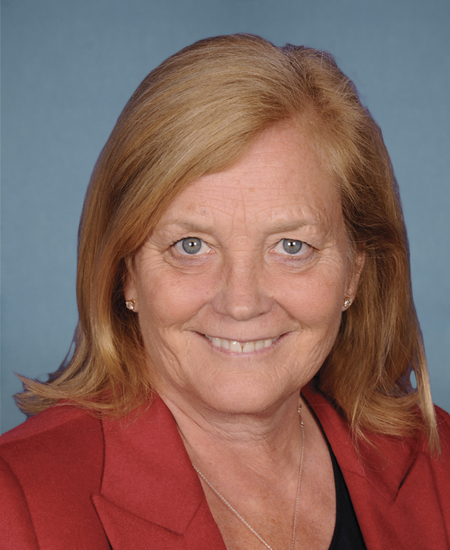
Rep. Chellie Pingree
Sponsored bills
Maddy summaryHR 6056, the International Human Rights Defense Act of 2025, establishes a permanent Special Envoy at the State Department to lead U.S. foreign policy efforts addressing discrimination and violence against LGBTQI+ people globally. The bill requires the U.S. government to develop and update a biannual global strategy to prevent criminalization and violence against LGBTQI+ individuals, mandate detailed reporting on such abuses in annual country reports, and ensure all U.S. foreign assistance programs include inclusive nondiscrimination policies. This legislation directly affects U.S. foreign policy implementation, federal agencies receiving funding, and LGBTQI+ communities facing persecution worldwide. The bill aims to coordinate U.S. government efforts across departments and with international partners to advance LGBTQI+ rights globally through concrete policy mechanisms.
Maddy summaryHRES 876 is a non-binding House resolution calling on the U.S. government to formally recognize Israel's actions in Gaza as genocide under the Genocide Convention. It directs the U.S. to cease arms transfers to Israel where genocide is suspected, ensure Israel complies with International Court of Justice orders, investigate potential genocide-related crimes, and support UNRWA funding. The resolution specifically cites findings from the UN Commission of Inquiry, the International Association of Genocide Scholars, and major human rights organizations regarding Israel's conduct. It affects U.S. foreign policy and military aid decisions toward Israel, requiring the administration to take concrete steps to fulfill U.S. legal obligations under the Genocide Convention. The resolution does not alter U.S. law but sets a policy stance for congressional action.
Maddy summaryHR 5941, the Restoring Access for Detainees Act, requires U.S. Immigration and Customs Enforcement (ICE) to provide immigration detainees in DHS custody with specific communication access. It mandates 200 free monthly minutes for general outgoing calls, unlimited free minutes for contacting legal counsel, courts, consulates, or oversight offices, and special initial contact provisions during arrival or transfer. Detention facilities must allow uninterrupted legal communication time, cannot restrict minutes for legal calls, and must provide private spaces for confidential legal discussions. The bill also requires facilities to establish clear, publicly available communication policies that comply with these requirements.
Maddy summaryHR 5940, the Seniors Deserve SMARTER Care Act of 2025, prohibits the implementation of the Medicare WISeR model (described in a July 2025 federal notice). The bill specifically blocks the Secretary of Health and Human Services from using the WISeR model, which would have required prior authorization for certain medical services under Medicare. This directly affects Medicare beneficiaries and healthcare providers who would have been subject to the model's requirements. The key provision is a clear ban on implementing WISeR or any substantially similar payment model, preventing changes to Medicare's service authorization process. The bill does not create new programs but stops a specific proposed Medicare policy change.
Maddy summaryThis bill ensures continuous funding for SNAP (food assistance) and WIC (nutrition program for mothers/children) during government funding gaps. It authorizes emergency Treasury funds to cover SNAP/WIC benefits and reimburse states for costs if Congress fails to pass regular appropriations for the Department of Agriculture by September 30, 2025. The funding covers missed payments retroactively from September 30, 2025, through the bill’s enactment date, and continues until either regular appropriations pass or September 30, 2026. It directly affects low-income households relying on these programs and state agencies administering them during funding lapses.
Maddy summaryThis bill, HR 5973, requires federal immigration enforcement personnel to follow strict limits on force use, including proportional application, mandatory de-escalation efforts, and prohibitions on equipment like flash bangs or rubber bullets except for specific public safety threats. It mandates body-worn and vehicle cameras for all operations, with footage retained for one year (three years for force incidents or complaints), and grants affected individuals the right to inspect recordings. The law also requires annual training on force policies, First Amendment compliance, and racial bias avoidance, while demanding detailed quarterly reports to Congress on force usage, assaults on agents, and equipment approvals. These provisions directly affect all federal immigration agents conducting enforcement actions, aiming to increase transparency and accountability during operations.
Maddy summaryHRES 846 is a symbolic resolution designating October 2025 as National Domestic Violence Awareness Month. It expresses the House's support for raising awareness about domestic violence and its impacts, and calls for continued congressional attention to ending domestic violence through existing programs. The resolution does not create new laws, allocate funding, or directly affect any specific groups - it is purely a statement of support. It references statistics on domestic violence prevalence but focuses on awareness rather than policy changes.
Maddy summaryThe American Energy Independence and Affordability Act extends multiple clean energy tax credits that were set to expire between 2025 and 2026. It specifically extends residential clean energy credits through 2034, clean electricity investment credits for wind and solar through 2032, and clean vehicle credits for electric vehicles through 2032. The bill also reinstates special rates for sustainable aviation fuel and modifies requirements for energy-efficient home improvements. These provisions directly affect homeowners installing solar panels, businesses investing in clean energy infrastructure, and manufacturers producing clean energy equipment.
Maddy summaryThe FARM Act requires farm equipment manufacturers (OEMs) to provide owners and independent repair shops with repair parts, tools, software, documentation, and farm equipment data on "fair and reasonable terms." This means OEMs cannot impose unreasonable restrictions (like forcing repairs through authorized dealers) or charge excessive fees for these materials. The law also prohibits manufacturers from disabling safety features or enabling modifications that would violate emissions or safety standards. The Federal Trade Commission enforces these requirements, with penalties up to $5,000 per day for violations.