IDEA Full Funding Act This bill provides permanent, mandatory funding for the grant program that assists states and outlying areas in providing special education and related services to children with disabilities.
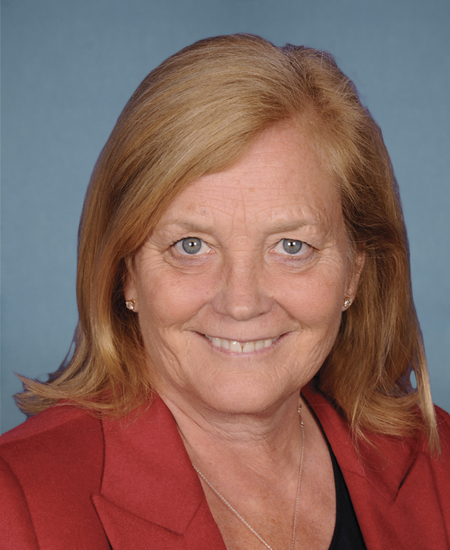
Rep. Chellie Pingree
Sponsored bills
Honoring Our Promises through Expedition for Afghan SIVs Act of 2021 or the HOPE for Afghan SIVs Act of 2021 This bill authorizes the Department of State and the Department of Homeland Security (DHS) to postpone the medical exam requirement for qualifying citizens or nationals of Afghanistan seeking entry into the United States as special immigrants. Specifically, this bill applies to an existing program that provides special immigrant status to an individual (or the spouse or child of such an individual) who (1) faithfully performed sensitive and trusted duties for the U.S. government or the International Security Assistance Force in Afghanistan on or after October 7, 2001, and (2) has experienced or is experiencing an ongoing serious threat due to the performance of those duties. Under this bill, the State Department and DHS may jointly issue a blanket waiver of any requirement for such individuals to undergo a medical exam before admission into the United States. DHS shall ensure, to the greatest extent practicable, that individuals admitted under such a waiver undergo medical exams no later than 30 days after admission into the United States. Such an individual shall be admitted as a conditional permanent resident. DHS shall remove the conditions once the individual receives and passes a medical examination.
Greyhound Protection Act of 2021 This bill modifies the federal criminal statute commonly known as the Wire Act. Currently, the Wire Act contains four prohibitions on the use of a wire transmission facility (e.g., the telephone or internet) for certain gambling activities. All four prohibitions apply to sports gambling. However, there have been conflicting interpretations of the applicability of the prohibitions to nonsports gambling (e.g., state lotteries). This bill amends the Wire Act to expressly state that the statute does not authorize the use of wire communications to gamble on commercial greyhound racing or permit the transport of animals for commercial dog racing or related activities.

York River Wild and Scenic River Act of 2021 This bill designates specified segments of the main stem and the tributaries of the York River in Maine as a recreational river. The Department of the Interior may enter into cooperative agreements to provide for the long-term protection, preservation, and enhancement of the river segments. No land or interest in land within the watersheds of the river segments may be acquired by condemnation.
Ending the Monopoly of Power Over Workplace Harassment through Education and Reporting Act or the EMPOWER Act This bill makes it an unlawful labor practice for an employer to enter into, or attempt to enforce, a contract with an employee or job applicant that contains a nondisparagement or nondisclosure clause that covers workplace or sexual harassment, including retaliation for participating in a workplace harassment proceeding. The bill exempts certain settlement or separation agreements from such prohibition. The bill also requires the Securities and Exchange Commission to promulgate a regulation that requires any issuer of securities to submit a report for the most recent five-year period with respect to workplace and sexual harassment. The commission must provide for the development and dissemination of training programs and information regarding workplace and sexual harassment. The bill denies a tax deduction for amounts related to judgments and expenses in connection with litigation related to workplace or sexual harassment. It also excludes from gross income, for income tax purposes, any amount received in connection with a claim or settlement related to workplace or sexual harassment, or other unlawful discrimination.
White House Conference on Food, Nutrition, Hunger, and Health Act This bill directs the President to convene a conference to make policy recommendations for ending hunger, creating sustainable markets for agricultural producers, and improving nutrition and the resiliency of the food system. The bill also requires specified congressional committees to hold hearings on the conference recommendations and on the status of hunger, nutrition security, and food systems.
Pets Belong With Families Act This bill prohibits public housing agencies from imposing breed restrictions on pets owned by residents of public housing units. The bill continues to allow public housing agencies to prohibit ownership of dangerous animals in public housing, but prohibits classification as dangerous by breed and requires that any such classification be based on specific behaviors or actions of the animal.
Help Ensure Lower Patient Copays Act or the HELP Copays Act This bill requires health insurance plans to apply certain payments made by, or on behalf of, a plan enrollee toward a plan's cost-sharing requirements. Specifically, plans must apply third-party payments, financial assistance, discounts, product vouchers, and other reductions in out-of-pocket expenses toward the requirements.
Expanding Access to Diabetes Self-Management Training Act of 2021 This bill expands Medicare coverage of diabetes outpatient self-management training. It also requires the Center for Medicare and Medicaid Innovation to test a model in which such training is provided virtually.
Servicemembers and Veterans Empowerment and Support Act of 2021 This bill modifies and implements policies and procedures related to Department of Veterans Affairs (VA) health care and benefits for veterans who have experienced military sexual trauma (MST), which is generally defined as physical assault of a sexual nature, battery of a sexual nature, or sexual harassment that occurred while the veteran was serving in the military. The VA must revise its regulations to update the definition of MST to include matters relating to technological abuse. In the case of any veteran who claims that a covered mental health condition (e.g., post-traumatic stress disorder) based on MST was incurred or aggravated by active service, the VA must accept specified diagnoses and evidence as proof of service-connection. The VA may not deny a veteran's claim of compensation for a covered mental health condition based on MST without first (1) advising the veteran that nonmilitary evidence and behavioral evidence may constitute credible corroborating evidence, and (2) allowing the veteran an opportunity to furnish the corroborating evidence or advise the VA of potential sources of such evidence. The Veterans Benefits Administration must conduct an annual special focus review on the accuracy of the processing of claims for disability compensation for disabilities relating to MST. Additionally, the bill (1) expands access to mental health care at VA facilities for survivors of MST, and (2) requires the VA and the Government Accountability Office to report on access to such care for MST survivors.