

Maddy summaryHR 2725, the "Do No Harm Act," amends the Religious Freedom Restoration Act (RFRA) to clarify that RFRA does not apply when federal laws protect against discrimination or promote equal opportunity. It specifically exempts protections under the Civil Rights Act, Americans with Disabilities Act, workplace benefits like leave, child labor safeguards, and healthcare access from RFRA challenges. The bill also clarifies that RFRA does not block private lawsuits between individuals, applying only to cases involving government entities. This amendment ensures that existing federal civil rights and workplace protections remain enforceable under RFRA.
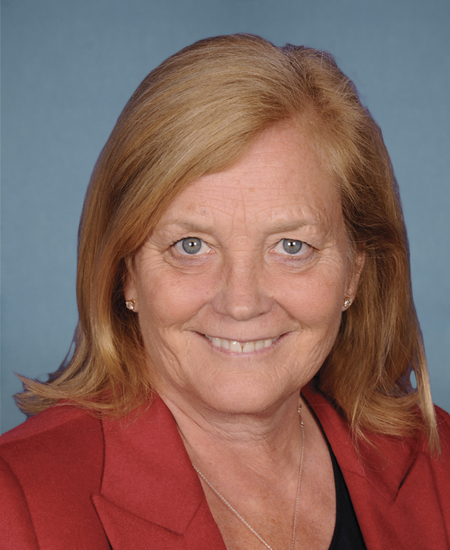
Rep. Chellie Pingree
Sponsored bills
Maddy summaryThe Latonya Reeves Freedom Act of 2023 strengthens the Americans with Disabilities Act's requirement that individuals with disabilities receive long-term services and supports in community settings rather than institutions. It defines "community-based" services to include specific housing options where individuals with disabilities can live independently with maximum control over their lives, including access to integrated housing, employment, and community participation. The bill requires states to develop transition plans to move people from institutional settings to community-based services within 12 years, with measurable annual targets for reducing institutionalization. It establishes enforcement mechanisms through the Department of Justice and Department of Health and Human Services to ensure compliance with these requirements.
Return to Prudent Banking Act of 2023 This bill generally separates the activities of commercial banks and investment banks. Specifically, the bill prohibits an insured depository institution from affiliating with any person or firm engaged principally in, among other things, issuing or selling stocks, bonds, notes, or other securities. Officers, directors and employees of securities firms are prohibited from simultaneously serving as an officer, director, or employee of a depository institution, except in specified circumstances. No entity issuing or selling stocks, bonds, or other securities may engage in the business of receiving deposits, which includes the establishment and maintenance of transaction accounts. The bill declares that Congress ratifies the interpretation by the Supreme Court in Investment Company Institute v. Camp (ICI) of specified statutory language regarding permissible activities of banks and securities firms. It further declares that the reasoning of the Court in that case shall continue to apply to the limitations placed upon security affiliations as enacted by this bill. No federal banking agency or federal court shall issue an interpretation regarding such security affiliations that is narrower than that of the Court in ICI.
Maddy summaryHR 1645 establishes a national biochar research network with up to 20 research sites to study how biochar (a charcoal-like soil additive) affects soil health, carbon storage, and crop production across different conditions. The network will test various biochar types, production methods, and applications to provide region-specific guidance for farmers, ranchers, foresters, and urban land managers on sustainable use. It authorizes $50 million annually (2023-2028) for USDA-administered research, focusing on soil carbon sequestration, climate mitigation, and practical farming applications. The research aims to develop science-based recommendations for improving soil health, reducing emissions, and supporting farm profitability through biochar integration.
Maddy summaryThe Puppy Protection Act of 2023 sets new standards for businesses that sell dogs (dealers), directly affecting pet stores and breeders operating under the Animal Welfare Act. It requires specific housing with space allowances based on dog size (e.g., 12-30 square feet per dog), temperature control (45-85°F), clean food twice daily, and daily exercise or socialization with humans/dogs for at least 30 minutes. The bill also mandates annual veterinary exams including dental care, strict breeding limits (e.g., age restrictions, maximum 2 litters in 18 months), and efforts to place retired breeding dogs in homes instead of selling them to other breeders. Regulations must be finalized within 18 months of enactment.
Maddy summaryThis bill allows the Department of Veterans Affairs (VA) to use existing funds more flexibly to assist homeless veterans and veterans in HUD housing programs. It authorizes the VA to provide immediate needs like food, shelter, transportation for appointments, and communication devices (e.g., phones, tablets) to support veterans' stability and health. The law expands how VA funds can be applied beyond traditional housing assistance, focusing on urgent, practical support. It directly affects homeless veterans and those in HUD's housing assistance program by enabling faster, more adaptable aid. The bill amends existing VA law to improve responsiveness to veterans' immediate survival and health needs.
Maddy summaryThe Optimizing Postpartum Outcomes Act of 2023 requires the Health and Human Services Secretary to issue guidance within one year on covering pelvic health services (like pelvic floor exams and physical therapy) during the postpartum period under Medicaid and CHIP programs. This guidance will include best practices for payment models, financing options, and standardized terminology to improve access for postpartum women. It also mandates a GAO study on coverage gaps for postpartum services and funds a new CDC-led education campaign to train healthcare providers and inform postpartum women about pelvic health care. The bill directly affects postpartum women enrolled in Medicaid or CHIP, aiming to standardize and expand access to these specific health services.
Maddy summaryHR 2441, the Servicemembers and Veterans Empowerment and Support Act of 2023, improves support for veterans who experienced military sexual trauma by reforming disability claims processing and expanding access to mental health care. The bill establishes new standards for evaluating claims involving military sexual trauma, requiring specialized VA teams to process these claims and creating clearer guidelines for evidence and communication with veterans. It expands eligibility for counseling and treatment to include all former reserve members and creates a pilot program providing interim mental health care when veterans face wait times exceeding 14 days for residential treatment. The legislation also mandates a Comptroller General study on access to care and requires the VA to provide better communication and support throughout the claims process.
Maddy summaryHR 1351, the "Save Oak Flat From Foreign Mining Act," repeals Section 3003 of the 2015 National Defense Authorization Act, which had mandated transferring 2,422 acres of Oak Flat in Arizona’s Tonto National Forest to foreign-owned Resolution Copper for mining. The bill withdraws this land from all mining activities, preventing Resolution Copper from using destructive block cave mining that would destroy the sacred site and harm water resources. Oak Flat, a National Register-listed Traditional Cultural Property sacred to Indigenous tribes, would be protected from a mine projected to deplete 775,000 acre-feet of groundwater over 40 years and create a 4,000-acre toxic waste dump. The legislation directly affects Resolution Copper (owned by Rio Tinto and BHP) and aims to halt the project that would obliterate cultural resources and exacerbate regional water shortages.
Maddy summaryHR 2630, the Safe Step Act, requires group health plans and health insurance issuers to establish a clear, transparent process for patients or their doctors to request exceptions to medication step therapy protocols. These protocols typically force patients to try cheaper drugs first before covering more expensive alternatives. The bill mandates that plans must approve exceptions when prior treatments failed, delay would cause serious harm, a treatment is unsafe, or a patient is stable on a previously approved drug, with strict 72-hour (or 24-hour in emergencies) decision timelines. It also requires plans to publish the exception process online and limit documentation requests to only necessary medical information. This law directly affects health insurers, employers offering health plans, and patients using step therapy for prescription drugs.