

Maddy summaryHR 4052, the National Infrastructure Bank Act of 2023, would establish a federally chartered National Infrastructure Bank to address the estimated $2.6 trillion infrastructure financing gap identified by the American Society of Civil Engineers. The bank would provide loans, loan guarantees, and blended financing for infrastructure projects in transportation, energy, environmental systems, broadband, and community development, with a total loan limit of $5 trillion. Projects must demonstrate public benefits including economic growth, job creation, environmental improvements, and community development, with priority given to disadvantaged communities and projects meeting specific criteria. The bank would be capitalized with up to $500 billion through the purchase of Treasury securities and other means, operating under a 25-member Board of Directors with oversight mechanisms to ensure accountability.
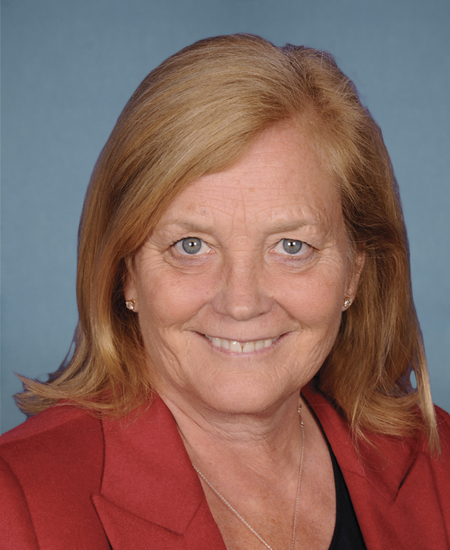
Rep. Chellie Pingree
Sponsored bills
Maddy summaryHR 3946, the FASD Respect Act, establishes a new federal program within the Department of Health and Human Services (HHS) to address fetal alcohol spectrum disorders (FASD). The bill creates FASD Centers for Excellence to build state, tribal, and national capacity for prevention, identification, and support services - directly affecting individuals with FASD, their families, and healthcare providers. Key provisions include developing standardized diagnostic guidelines, expanding screening and training for medical professionals, creating a national resource directory for FASD services, and promoting culturally informed interventions. The program requires HHS to report to Congress on progress within four years. This legislation restructures existing HHS authority to focus comprehensively on FASD across the lifespan, replacing older terminology with consistent "FASD" references.
Maddy summaryHR 4184 repeals legal protections for gun manufacturers and sellers under the Protection of Lawful Commerce in Arms Act. It allows victims of gun violence to use gun trace data from the ATF's Firearms Trace System in civil court cases. This data, previously protected from discovery, can now be subpoenaed, admitted as evidence, and relied upon in lawsuits against gun sellers or manufacturers. The bill directly affects victims seeking legal recourse and gun industry defendants in civil litigation.
Northern Border Regional Commission Reauthorization Act of 2023 This bill makes changes to the authorities and programs of regional economic and infrastructure development commissions. Specifically, the bill reauthorizes the Northern Border Regional Commission (NBRC) and establishes and expands NBRC grant programs. Regional commissions may make grants for the planning, construction, equipment, and operation of health, nutrition, and child care projects. The bill also authorizes these regional commissions (as part of economic and infrastructure development grants) to promote the production of housing to meet economic development and workforce needs. Each commission may accept transfers of funds from other federal agencies. Discretionary grants made by a commission to implement significant regional initiatives, to take advantage of special development opportunities, or to respond to emergency economic distress may be made without regard to specified percentage limitations. The bill limits the aggregate amount of discretionary grants.
Maddy summaryHR 4166, the Support UNFPA Funding Act, authorizes annual U.S. funding for the United Nations Population Fund (UNFPA) over five years. It directly supports UNFPA’s global programs serving women and girls in over 150 countries, particularly focusing on reducing preventable maternal deaths, expanding access to contraception, ending gender-based violence, and addressing harmful practices like female genital mutilation and child marriage. The bill specifically directs funding toward UNFPA’s core work in developing nations, humanitarian crises (such as in Ukraine and Yemen), and rebuilding health systems post-pandemic, without altering UNFPA’s existing operations or policies.
Maddy summaryThe American Dream and Promise Act of 2023 would create two pathways to permanent residency for certain immigrants. The "Dream Act" portion would provide conditional permanent resident status to individuals who entered the U.S. as children, have lived continuously in the U.S. since January 1, 2021, and meet educational requirements (such as completing high school, earning a degree, or enrolling in education programs). The "American Promise Act" portion would provide permanent residency to individuals eligible for Temporary Protected Status (TPS) or Deferred Enforced Departure (DED) as of specific dates (January 1, 2017, or January 20, 2021). The bill includes provisions for background checks, fee exemptions for low-income applicants, and processes for removing conditional status after meeting specific criteria like completing higher education or earning income.
Maddy summaryHJRES 72 proposes a constitutional amendment to remove the exception in the Thirteenth Amendment that allows slavery and involuntary servitude as punishment for a crime. If ratified, this amendment would ban the use of forced labor in prisons as a criminal penalty, directly affecting how the U.S. criminal justice system handles sentencing. The resolution clarifies it does not interfere with voluntary work programs in correctional facilities, existing employment protections for incarcerated people, or community service alternatives. This change aims to eliminate a historical loophole that has disproportionately impacted Black Americans since the 1860s.
Maddy summaryThe Tax on Wall Street Speculation Act would impose a tax on certain financial transactions involving securities like stocks, bonds, and derivatives. The tax rate would vary depending on the security type, ranging from 0.005% for derivatives to 0.5% for stocks and bonds. Transactions occurring on U.S. trading facilities or involving U.S. persons would be subject to the tax, with payment responsibilities falling on trading facilities, brokers, or parties to the transaction. The bill also includes a credit against income tax for eligible individuals who pay the transaction tax, with income limits of $50,000 for single filers. The tax would apply to transactions after December 31, 2023.
Maddy summaryThe College for All Act of 2023 would create a federal-state partnership to eliminate tuition and required fees for eligible students at public community colleges and 4-year institutions. It would provide federal funding to cover tuition costs for students from families earning up to $125,000 annually (or $250,000 for married couples) at public institutions, with states gradually increasing their financial contribution over time. The bill also includes provisions to support historically Black colleges and universities, minority-serving institutions, and expands Pell Grant eligibility to include Dreamers. States would be required to maintain funding levels for higher education and implement specific reforms to improve student outcomes, including transfer pathways and support services.
Maddy summaryThis bill requires federal research agencies to develop guidelines addressing financial instability for graduate and postdoctoral researchers at institutions receiving federal funding. It mandates agencies to consider increasing stipends (adjusted for location and cost of living), improving access to healthcare, housing, transportation, and childcare, and reducing food insecurity. The bill also directs data collection on researcher financial struggles (disaggregated by demographics), funds a National Academies study on these issues, and requires a GAO report on agency implementation within three years. These provisions directly affect thousands of graduate students and postdocs conducting federally funded research across U.S. universities.