

Maddy summaryThe Stop Corporate Capture Act requires agencies to disclose conflicts of interest when industry-funded studies or research are submitted for rulemaking consideration. It mandates that such studies be made publicly available and requires agencies to assess the social equity impacts of proposed rules. The bill creates an Office of the Public Advocate to help improve public participation in rulemaking, particularly for historically excluded groups. These provisions aim to increase transparency in regulatory decision-making and ensure rulemaking considers broader public interests beyond corporate interests.
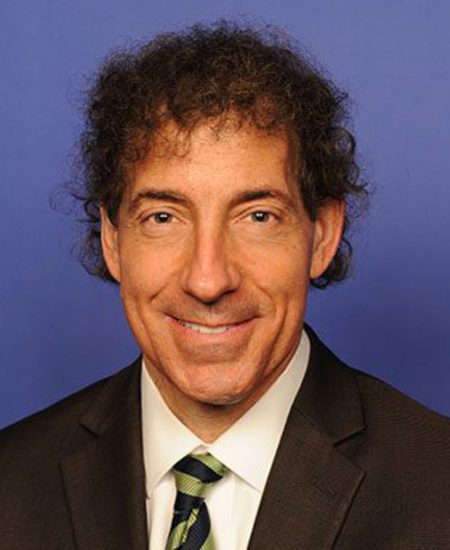
Rep. Jamie Raskin
Sponsored bills
Maddy summaryHR 1483 repeals multiple tax provisions benefiting oil and gas companies, effective for taxable years beginning after December 31, 2022. It eliminates credits for marginal wells, enhanced oil recovery, and intangible drilling costs; ends percentage depletion allowances for oil/gas; and prohibits LIFO accounting for major integrated oil producers (defined as companies with >500,000 barrels daily crude production). The bill also removes deductions for tertiary injectants, special passive loss rules, and qualified business income deductions for oil/gas activities. These changes directly affect oil and gas producers by reducing their tax advantages, without creating new taxes or subsidies.
Maddy summaryHR 1269, the Healthy Meals Help Kids Learn Act of 2023, increases federal funding for school meals. It adds 45 cents per lunch and 28 cents per breakfast served by school food authorities (like school districts) starting July 1, 2023, covering all meal types (free, reduced-price, and full-price). The extra payments are adjusted annually beginning July 1, 2024, based on inflation. This directly affects schools serving meals under the National School Lunch and Child Nutrition programs, providing them with additional funding to support meal costs.
Maddy summaryHRES 213 is a symbolic resolution supporting the designation of March 2023 as National Colorectal Cancer Awareness Month. It does not create new laws or policies but expresses congressional support for public awareness efforts around colorectal cancer prevention and screening. The resolution encourages Americans to participate in educational activities during March to highlight the importance of early detection and screening for this highly preventable cancer. It references statistics about colorectal cancer's impact but focuses solely on raising public awareness, not on changing healthcare access or funding.
Maddy summaryThis bill expands the use of 529 college savings accounts to cover career training and credentialing costs. It allows funds to pay for tuition, fees, books, and testing expenses related to recognized postsecondary credential programs (like vocational certifications) that meet specific standards under the Workforce Innovation and Opportunity Act. The change directly affects workers seeking industry-recognized credentials - such as nursing certifications or IT certifications - instead of traditional degrees. It treats these expenses the same as traditional college costs for 529 account withdrawals, making it easier to save for career-focused training. The provision applies to expenses paid after the bill's enactment date.
Philippine Human Rights Act This bill imposes limitations on providing assistance to the police or military of the Philippines. No federal funds may be used to provide such assistance until the Philippines government has taken certain actions, including (1) investigating and successfully prosecuting members of its military and police forces who have violated human rights; (2) withdrawing the military from domestic policing activities; and (3) establishing that it effectively protects the rights of journalists, civil society activists, and certain other groups. The President shall also direct U.S. representatives at multilateral development banks to vote against providing loans to the police or military of the Philippines.
Maddy summaryThe TRUE EQUITY Act of 2023 aims to address educational inequities by providing federal grants to states that commit to educational equity goals. The bill establishes grant programs for early childhood education, teacher development, college and career readiness pathways, and student support services, requiring states to create independent State Oversight Boards to monitor progress and hold agencies accountable. States receiving funds must meet specific educational equity goals and provide matching funds (200% for most programs), with potential withholding of funds for failure to meet targets. The legislation includes significant annual funding allocations totaling over $2.7 billion across 10 fiscal years to support these initiatives. The bill directly affects states, local school districts, and students, particularly those from underrepresented racial and socioeconomic backgrounds who have experienced persistent achievement gaps.
Maddy summaryHR 1387, the Civics Learning Act of 2023, amends the Elementary and Secondary Education Act to strengthen civics education in public schools. It requires states to prioritize innovative civics teaching - including lessons on the Constitution, civil rights history, and community engagement - and allocates $70 million for grants to schools, with specific funding targets (30% for elementary, 30% for middle, max 40% for high school). The bill directly affects public elementary, middle, and high schools, particularly those serving high-need communities, by mandating new curriculum activities like service learning, student governance participation, and after-school programs. Grants must include reporting on how schools meet civics education goals, with the Department of Education required to submit annual progress reports to Congress.
Maddy summaryThe Farm System Reform Act of 2023 establishes a moratorium on new large concentrated animal feeding operations (CAFOs) and requires existing large CAFOs to cease operations by January 1, 2040. It creates a voluntary debt forgiveness and transition assistance program to help AFO owners pay off construction and operational debts while transitioning to alternative agricultural activities. The bill also amends the Packers and Stockyards Act to require packers to purchase 50% of livestock through spot market sales from nonaffiliated producers and prohibits certain unfair pricing practices. Additionally, it restores mandatory country of origin labeling for beef and pork and expands labeling requirements to include dairy products, requiring "Product of U.S.A." labels only when meat is exclusively derived from animals born, raised, and slaughtered in the United States.
Maddy summaryThis bill establishes requirements for large industrial agricultural operations (defined as those owning or controlling significant numbers of livestock) to create disaster mitigation plans, register with a new Office of High-Risk AFO Disaster Mitigation and Enforcement, and report depopulation activities. It prohibits certain inhumane depopulation methods like ventilation shutdown and sodium nitrite poisoning, and requires covered operators to cover costs of depopulation, disposal, and compensation for workers and neighboring communities affected by disasters. The bill also sets new labor standards including health insurance coverage and severance pay for workers involved in disaster mitigation events, improves transport standards for livestock, and requires humane treatment of nonambulatory animals. It includes funding for additional OSHA and FSIS inspectors to enforce these requirements, directly affecting large industrial agricultural operators, their workers, and neighboring communities.