

Maddy summaryHRES 1074 is a symbolic House resolution reaffirming congressional support for a two-state solution to the Israel-Palestine conflict. It explicitly states the House supports Israel's right to exist as a Jewish, democratic state and recognizes Palestinians' right to sovereignty through a separate state. The resolution identifies a two-state solution as the best path to lasting peace and condemns efforts opposing this approach. As a non-binding resolution, it does not create new law or policy but formally expresses the House's position on this issue. It was introduced by multiple House members on March 12, 2024.
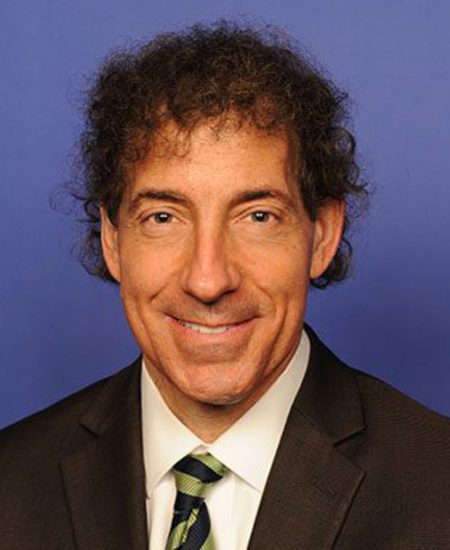
Rep. Jamie Raskin
Sponsored bills
Maddy summaryThis resolution recognizes the 65th anniversary of the March 10, 1959, Tibetan uprising and condemns the Chinese government's human rights violations related to a hydropower dam project in Derge, Tibet. The resolution specifically highlights that the dam would displace approximately 2,000 Tibetans and destroy six historical monasteries with religious artifacts, including 13th-century murals. It also condemns the February 2024 detention of over 1,000 Tibetans who protested the dam project. The resolution calls on the Biden administration to demand China halt the dam construction, release detained protesters, and respect Tibetan cultural rights and development input as required by U.S. law.
Maddy summaryThe DEFIANCE Act of 2024 creates a federal civil remedy for individuals whose intimate images are disclosed without consent or who are victims of digital forgeries (computer-generated or altered images appearing authentic). It allows victims to sue in federal court for up to $150,000 in damages, attorney fees, and court orders to stop further disclosure, provided the act occurred in interstate commerce. The law includes privacy protections like pseudonyms and sealed court filings, and sets a 10-year statute of limitations from the date of discovery or the victim’s 18th birthday. It explicitly preserves state laws that offer stronger protections for victims.
Maddy summaryHR 7550, the Washington, DC, Area Helicopter Noise Information Exchange Act, requires the Federal Aviation Administration (FAA) to create a public website sharing helicopter noise complaint data within 180 days of enactment. Helicopter operators in the Washington, DC, area (defined as within a 30-mile radius of Reagan National Airport) must submit noise complaint data to the FAA through this system. The data includes location, event times, aircraft description, and airport name, but excludes personal identifiers of complainants. This bill establishes a mechanism for information sharing based on a 2021 GAO report, directly affecting FAA operations, helicopter operators, and the public seeking noise complaint details.
Maddy summaryHRES 1054 is a symbolic House resolution recognizing the historical contributions of military animals (such as dogs, horses, and pigeons) and their handlers in U.S. military service since World War I. It acknowledges that these animals, who have served in conflicts and peacekeeping operations, currently lack an official U.S. medal for their bravery. The resolution specifically supports creating a formal annual process to nominate military animals for the "Medal of Bravery" and "Distinguished Service Medal," building on existing efforts by the nonprofit Animals in War & Peace program. This resolution does not create new laws or benefits but formally endorses a process to honor these animals’ service.
Maddy summaryHR 7474, the Robert E. Lee Monument Removal Act, directs the Secretary of the Interior to remove and destroy the statue of Confederate General Robert E. Lee at Antietam National Battlefield. The bill requires the monument to be removed from National Park Service property for destruction by a private contractor, with scrap materials sold to offset costs. The Secretary must submit a removal plan to Congress within one year of the bill's enactment, including a timeline. Site restoration must align with preserving the battlefield's historical interpretation. The law clarifies that the statue's materials are not considered surplus property under federal law.
Maddy summaryHRES 1032 is a symbolic resolution designating the week of February 26-March 1, 2024, as "Public Schools Week" in the U.S. House of Representatives. It expresses congressional support for public education, highlighting its role in preparing students and communities. The resolution has no legal effect or funding provisions - it solely serves as a formal expression of backing for public schools. It directly affects no individuals or entities but aims to raise awareness about public education. This is a non-binding gesture, not a policy change.
Maddy summaryThe Peace Corps and AmeriCorps Student Loan Forgiveness Act amends federal student loan rules to count months of deferment or forbearance during service as Peace Corps volunteers or AmeriCorps members toward Public Service Loan Forgiveness. It applies to borrowers with eligible federal student loans who were in deferment or forbearance after October 1, 2007, while serving in approved Peace Corps or AmeriCorps roles. This change treats each qualifying service month as a "qualifying payment," reducing the time needed to reach the 120 required payments for loan forgiveness. The bill directly benefits current and former Peace Corps volunteers and AmeriCorps members with federal student loans.
Maddy summaryHR 533, the "Promoting a Resolution to the Tibet-China Dispute Act," establishes U.S. policy recognizing Tibetans' right to self-determination under international law and rejects China's historical claims about Tibet. It directs the State Department to counter Chinese disinformation about Tibet’s history and status, including claims that Tibet has been part of China "since ancient times," and amends the 2002 Tibetan Policy Act to require specific disinformation countermeasures. The bill defines "Tibet" to include the Tibet Autonomous Region and Tibetan areas in Qinghai, Sichuan, Gansu, and Yunnan provinces. These provisions aim to guide U.S. diplomatic efforts toward resolving the Tibet-China dispute through dialogue and factual representation.
Maddy summaryHR 7389, the Accessible Voting Act of 2024, requires states to improve voting accessibility for individuals with disabilities, older voters (60+), Native Americans, Alaska Natives, and people with limited English proficiency. The bill establishes an Office of Accessibility within the Election Assistance Commission to oversee implementation, mandates accessible election websites with detailed voting information, and requires polling places to meet accessibility standards. It expands access to absentee voting procedures and provides federal funding to help states implement these requirements. The bill aims to address documented barriers to voting, including architectural barriers at polling places and challenges in absentee ballot processes. It will take effect for elections held on or after January 1, 2025.