

Maddy summaryThis bill reauthorizes the Office of National Drug Control Policy through 2031 with updated definitions and expanded focus on harm reduction. Key provisions include requiring the Director to submit a report on opioid overdose reversal medications like naloxone, increasing funding for fentanyl interdiction activities ($5 million minimum annually), and expanding data collection requirements on drug use patterns and treatment effectiveness. The bill updates definitions to better address emerging drug threats and precursor chemicals, and mandates a Caribbean Border Counternarcotics Strategy to address drug trafficking through the Caribbean region. It affects federal agencies involved in drug control, law enforcement, and public health, requiring coordinated efforts to reduce drug use and improve access to life-saving treatments.
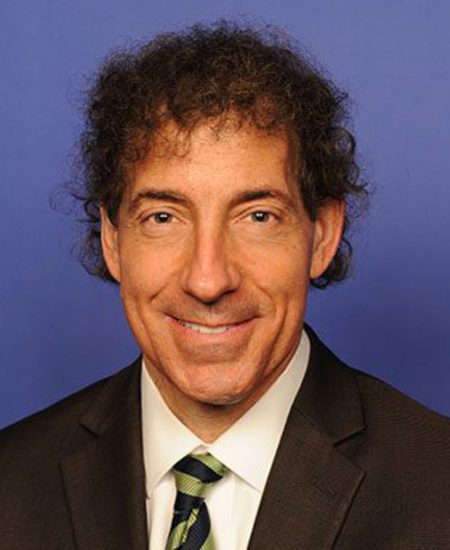
Rep. Jamie Raskin
Sponsored bills
Maddy summaryHR 10310, the Free Speech Protection Act, creates a legal process to quickly dismiss "strategic lawsuits against public participation" (SLAPPs) - frivolous lawsuits meant to silence individuals speaking on public issues. It allows defendants to file a "special motion to dismiss" within 60 days of a lawsuit, requiring courts to rule within 90 days if the case involves constitutional speech on matters of public concern (like politics, health, or community safety). If the motion succeeds, defendants automatically recover legal fees unless the court finds it unreasonable. The law excludes commercial disputes, government actions in official capacity, and certain employment or whistleblower claims. It directly affects journalists, activists, and community members targeted by lawsuits over public discourse.
Maddy summaryHR 6751 authorizes the U.S. Mint to produce commemorative coins honoring Roberto Clemente, a Hall of Fame baseball player and humanitarian, including 50,000 $5 gold coins, 400,000 $1 silver coins, and 750,000 half-dollar coins. The coins must feature Clemente's image and inscriptions like "Roberto Clemente" and "2027," with all sales including a surcharge ($5-$35 per coin) paid to the Roberto Clemente Foundation. The foundation, which supports youth sports, education, and disaster relief programs, will use these funds for its mission, while the U.S. Treasury must recover all production costs. The coins will be sold exclusively in 2027, with no net cost to the government.
Maddy summaryHRES 1604 designates December 3 as National Chemical Disaster Awareness Day to commemorate the 40th anniversary of the 1984 Bhopal chemical disaster and promote public awareness of chemical safety risks. This non-binding resolution does not create new laws but calls for the House to recognize Bhopal survivors' advocacy, urge the Department of Justice to address the Bhopal case (including actions related to Dow Inc. and India), and engage with survivors to improve understanding of chemical disaster prevention. The resolution highlights ongoing risks from hazardous facilities and disproportionate impacts on vulnerable communities, emphasizing human rights and anti-discrimination principles in U.S. foreign policy. It serves as a symbolic gesture to honor victims and encourage proactive safety measures, without imposing regulatory requirements.
Maddy summaryThe Working Dog Commemorative Coin Act (HR 807) directs the U.S. Treasury to mint three types of commemorative coins honoring working dogs' service: $5 gold coins, $1 silver coins, and half-dollar coins with specific weight and composition requirements. Each coin will carry a surcharge ($35 for $5 coins, $10 for $1 coins, $5 for half-dollars) that will be paid directly to America's VetDogs to support their programs providing service dogs for veterans, the disabled, and others. The coins will be issued in 2027 with designs reflecting working dogs' roles in military, detection, therapy, and assistance work. The legislation specifies that all surcharge revenue must fund America's VetDogs' operations without creating new government programs. This is a commemorative measure focused on honoring working dogs' contributions through coin sales, with all surcharge funds going to a specific nonprofit organization.
Maddy summaryThis bill establishes a Truth and Healing Commission to investigate the history and impacts of U.S. Indian Boarding School policies on Native American communities, including cultural, emotional, and physical effects on survivors, descendants, and tribal communities. The Commission will document these impacts through research, public meetings, and testimony, working with two advisory committees focused on Native American perspectives and Federal agency coordination. The Commission will operate for six years, with annual reports to Congress and a final report containing recommendations for Federal action. The bill also includes provisions for managing burial sites related to boarding schools and ensures the Native American Graves Protection and Repatriation Act applies to remains found on Federal lands related to these schools.
Maddy summaryThis bill establishes the Justice Thurgood Marshall National Historic Site at Public School 103 in Baltimore, Maryland - the elementary school attended by Justice Thurgood Marshall (the first Black U.S. Supreme Court Justice). The site, owned and managed by the nonprofit Beloved Community Services Corporation, will be designated as an "affiliated area" of the National Park System. Management will be handled by the nonprofit under a cooperative agreement with the National Park Service, which will provide technical assistance but not acquire the property or take over operations. The site aims to preserve and interpret Marshall's early life and legacy for public education.
Maddy summaryHR 5658, the Vote by Mail Tracking Act, requires that all mail-in ballots for federal elections be sent in envelopes containing a Postal Service barcode for tracking. This applies to every ballot mailed for federal office elections after the bill becomes law. The envelope must also meet Postal Service design standards for ballot envelopes, be machineable, and display the Official Election Mail Logo. The bill directly affects voters using mail-in ballots for federal races and mandates this tracking system to be implemented by the Postal Service.
Maddy summaryThe Federal Acquisition Security Council Improvement Act of 2024 updates the structure and procedures of the Federal Acquisition Security Council, which oversees security risks in federal procurement. It clarifies definitions of "covered source of concern" (foreign entities posing security risks) and establishes a new Council with members from key agencies including the National Cyber Director, Department of Defense, Homeland Security, and intelligence agencies. The bill creates a Program Office within the Office of the National Cyber Director to support the Council and sets specific timelines for issuing "recommended orders" (90 days) and "designated orders" (30 days) to exclude or remove covered sources of concern from federal contracts. It also establishes a process for waiving these orders with congressional notification and requires annual reporting to Congress on security risks related to covered articles.
Maddy summaryThis resolution (HRES 1558) is a symbolic House of Representatives measure supporting October as "National Domestic Violence Awareness Month." It does not create new laws or allocate funding but formally expresses the House's support for raising awareness about domestic violence and its impacts, and urges continued backing for existing programs that address domestic violence. The resolution cites statistics on domestic violence prevalence (e.g., 24 people per minute affected by intimate partner violence) to underscore the importance of the observance. It directly affects public awareness efforts but does not change policies or directly impact individuals.