

Metastatic Breast Cancer Access to Care Act This bill expedites payment of Social Security Disability Insurance (SSDI) benefits and eligibility for Medicare coverage for those with metastatic breast cancer (i.e., breast cancer that has spread to other sites in the body). Specifically, the bill eliminates the 5-month waiting period for SSDI benefits and the subsequent 24-month waiting period for Medicare coverage for individuals with metastatic breast cancer. Under current law, individuals generally must wait 5 months after the onset of disability to begin receiving SSDI benefits and an additional 24 months to become eligible for Medicare.
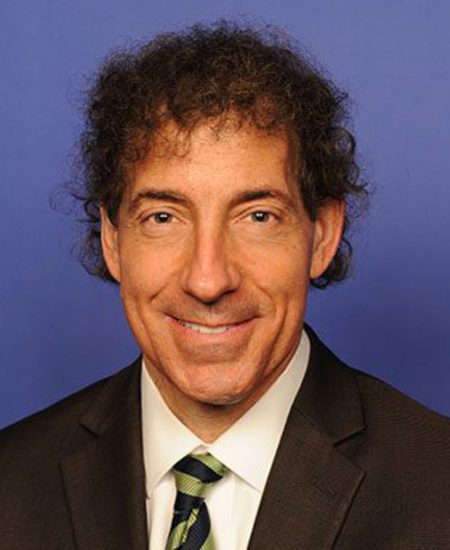
Rep. Jamie Raskin
Sponsored bills
Maddy summaryHR 2081, the Donut Dollies Congressional Gold Medal Act, authorizes a Congressional Gold Medal to honor the 627 women who served as Red Cross volunteers in the Supplemental Recreation Activities Overseas (SRAO) program during the Vietnam War. The bill directs the Treasury Secretary to design and strike the medal, which will be presented by Congress and then given to the Smithsonian Institution for display. It also allows the sale of bronze duplicates to cover costs, with proceeds going to the U.S. Mint fund. This commemorative act recognizes the volunteers' service supporting over 280,000 troops through recreation programs across Vietnam from 1965 to 1973.
Maddy summaryThis bill requires the Transportation Security Administration (TSA) to transition its workforce from a special personnel management system to the standard federal personnel system under Title 5 of the U.S. Code by December 31, 2025. It protects TSA employees by ensuring no reduction in pay, benefits, or retirement rights during the transition, while preserving collective bargaining rights for screening agents. The legislation also mandates consultation with labor unions during the process and requires several reports on workforce issues including recruitment, harassment policies, and workplace safety.
Maddy summaryThis bill would expand Medicare to cover dental, vision, and hearing services for beneficiaries 65 and older (and some younger people with disabilities), effective January 1, 2026. It would provide 100% coverage for preventative dental services in 2026, with basic and major dental services gradually increasing to 80% coverage by 2029. Vision benefits would include 80% coverage for annual eye exams and specific limits on eyeglasses, frames, and contact lenses ($100 per year for lenses, $100 every two years for frames, $200 every two years for contacts). Hearing services would include 80% coverage for hearing exams and hearing aids, with a limit of one hearing aid per ear every 48 months. The bill also adds oral health professionals to the United States Preventive Services Task Force to help guide coverage decisions.
Maddy summaryHR 2033, the Military Spouse Hiring Act, expands the Work Opportunity Tax Credit to include spouses of active-duty military personnel. It adds "qualified military spouse" as an eligible category for the tax credit, meaning employers who hire such spouses can claim the credit. A "qualified military spouse" is defined as someone certified by a local agency as married to an active-duty service member at the time of hire. The credit applies to hires occurring after the bill's enactment date. This directly affects military spouses seeking employment and employers hiring them, providing a tax incentive to encourage their hiring.
Maddy summaryThis bill increases federal funding for projects improving safety for pedestrians and cyclists. It allows states and local governments to use highway funds for connecting existing bike/pedestrian infrastructure (clause xxix) or reducing safety risks to vulnerable road users (clause xxx), with federal funding covering up to 100% of costs for these projects. The bill also creates flexible financing options, letting local safety plans (like Complete Streets or Vision Zero plans) count toward required local funding shares. It directly affects state transportation agencies and local governments administering federal highway safety programs. The key change is making 100% federal funding available for qualifying pedestrian and cyclist safety projects.
Maddy summaryThis bill adjusts probationary periods for certain federal employees who were involuntarily separated between January 20, 2025, and January 20, 2029. It allows eligible employees (those separated while on probation in an Executive agency) to count their prior service time toward a new probationary period when rehired into a similar position with their former agency. Specifically, the new probation period equals the original required duration minus the time already served in their previous federal role. The law expires on January 20, 2029, and applies only to appointments matching the employee’s prior position.
American Teacher Act This bill establishes grants to increase the minimum salary of public elementary and secondary school teachers. It also authorizes a national campaign regarding the value of the teaching profession. First, the bill directs the Department of Education (ED) to award four-year grants to state educational agencies (SEAs) and, through them, subgrants to local educational agencies to establish a minimum annual salary of $60,000 (to be adjusted annually for inflation) for these teachers. Second, the bill directs ED to award grants to eligible SEAs to provide cost-of-living adjustments to the annual base salary of teachers. Finally, the bill authorizes ED to carry out a national campaign to (1) increase awareness about the importance of teachers and the value of the teaching profession, (2) encourage secondary school and college students to consider teaching as a professional career, and (3) diversify the pool of individuals who enter the teaching profession.
Maddy summaryThe JUDGES Act of 2025 authorizes the creation of 66 new district court judgeships across multiple federal judicial districts to address rising caseloads. It specifies phased additions of judges to districts in California, Florida, Texas, New York, and other states from 2029 through 2039, with the total number of new judges increasing over time. The bill also establishes temporary judgeships in Oklahoma, authorizes funding for these positions, and requires the Judicial Conference's judgeship recommendations to be made publicly available. The legislation directly affects federal courts in the specified districts by increasing judicial staffing to reduce case backlogs.
Maddy summaryHR 1918, the Farewell to Foam Act of 2025, prohibits the sale of most foam food containers, packaging peanuts, and foam coolers starting January 1, 2028. It directly affects restaurants, grocery stores, food vendors, manufacturers, and retailers who sell these items, excluding medical coolers used for drugs or medical products. The bill imposes escalating civil penalties for violations: $250 for the second offense, $500 for the third, and $1,000 for fourth or subsequent violations, with reduced penalties for small businesses under specific revenue thresholds. Enforcement is led by the EPA Administrator, with states allowed to enforce under federal guidelines.