

Maddy summaryThis bill adds Medicare coverage for multi-cancer early detection screening tests (blood or biological tests analyzing cell-free DNA) starting January 1, 2028. It directly affects Medicare beneficiaries aged 68 and older (starting in 2028, with the age limit increasing by 1 year annually), requiring tests to be FDA-cleared and deemed reasonable/necessary by the Secretary for early cancer detection across multiple organ sites. Payment will initially match current stool DNA test rates before 2031, then shift to a lower rate or new payment system after 2031, with limits preventing more than one test per year. The bill explicitly states it does not alter coverage for existing cancer screenings like breast, colorectal, or prostate cancer tests.
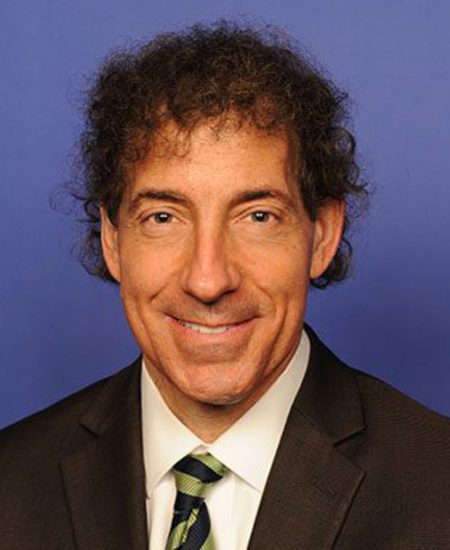
Rep. Jamie Raskin
Sponsored bills
Maddy summaryHR 744, the Disaster Management Costs Modernization Act, amends the Robert T. Stafford Disaster Relief Act to allow state and local governments receiving federal disaster funds to reuse "excess" management funds. Specifically, it permits the President to redirect unused funds - defined as the difference between authorized and actual management costs - to support future disaster preparedness, recovery, or mitigation activities. The bill also requires a GAO study within 180 days of enactment to review historical management costs for major disasters over the past five years. No new federal funding is authorized for these changes.
Maddy summaryHRES 773 is a symbolic resolution (not a law) honoring the principle of separation of church and state. It commemorates the 65th anniversary of President John F. Kennedy’s 1960 speech to the Houston Ministerial Association and the 150th anniversary of President Ulysses S. Grant’s 1875 speech, both emphasizing government neutrality in religious matters. The resolution affirms the constitutional separation of church and state as a core American value and opposes "extreme right-wing Christian nationalism," though it does not create new policies or affect any specific group. As a non-binding statement, it has no legal effect but expresses the House’s position on religious freedom.
Maddy summaryHRES 781 is a symbolic resolution designating October 1, 2025, as "National Animal Rescue Day" to raise public awareness about animal adoption and spaying/neutering. It does not create new laws or allocate funds but encourages nationwide events like adoption drives and educational campaigns to support shelters and reduce pet overpopulation. The resolution directly aims to benefit animal shelters, rescue organizations, and potential adopters by promoting the importance of adopting pets and responsible pet ownership. As a non-binding gesture, it focuses on awareness rather than policy change.
Fair Pay for Federal Contractors Act of 2025 This bill provides back pay to employees of federal contractors who lost pay due to a lapse in appropriations (i.e., government shutdown) in FY2026. Specifically, the bill provides appropriations for federal agencies that are subject to a lapse in appropriations in FY2026 to adjust the price of contracts to compensate federal contractors for providing back pay to employees who were affected by the lapse in appropriations. The agencies must adjust the price of any contract for which the contractor stopped, suspended, delayed, or interrupted all or part of the work under the contract due to the lapse in appropriations. The price adjustment must compensate the contractor for reasonable costs incurred to (1) compensate employees who were furloughed or laid off, were not working, or experienced a reduction of hours or compensation due to the lapse in appropriations; or (2) restore paid leave taken by employees during the lapse in appropriations if the contractor required or permitted employees to use paid leave as a result of the lapse in appropriations. The maximum amount of weekly compensation of an employee for which an adjustment may be made under this bill may not exceed the lesser of (1) the employee's actual weekly compensation, or (2) $1,442 (or a lesser amount pro-rated for an employee who works less than 40 hours per week). The bill also requires the Office of Federal Procurement Policy to submit a report to Congress on the adjustments made under this bill.
Maddy summaryHR 5572, the Help FEDS Act, ensures federal employees who must work during government shutdowns (but aren't paid due to the shutdown) can access unemployment benefits through their state's program. The bill requires states to allow these "excepted" employees to apply for and receive unemployment compensation during fiscal years 2026-2027, while also mandating repayment if they later receive pay under a separate federal provision. The federal government will reimburse states 100% of the unemployment benefits paid to these employees plus related administrative costs, funded from the Unemployment Trust Fund. This directly affects federal workers performing emergency work during shutdowns and state unemployment systems managing these claims.
Maddy summaryThis bill prevents federal agencies from terminating employees during a government shutdown caused by a lapse in discretionary funding. It prohibits removals of civil service employees at any agency affected by a funding gap, and if an employee is wrongfully removed, they can return to their job with back pay once funding resumes. The law directly protects all federal employees covered by the civil service system during shutdowns. It applies automatically to any funding lapse, requiring automatic reinstatement without needing separate legal action.
Maddy summaryThis bill requires home medical devices like blood pressure monitors and sleep apnea machines to include nonvisual accessibility features (such as screen readers or audio feedback) so blind or low-vision users can operate them independently and safely. It sets a standard that devices must be as effective for these users as for sighted individuals, applying to Class II/III devices cleared under FDA's 510(k) process for home use. The FDA must issue proposed regulations within one year and final rules within two years of enactment, with manufacturers needing to comply one year after the final rule takes effect. Devices may qualify for waivers only if compliance would cause a "fundamental alteration" or "undue hardship" for the manufacturer, though the bill emphasizes accessibility can often be integrated without extra cost during design.
Maddy summaryThis bill requires the Secretary of Defense to restore access to all curricula, books, and learning materials previously available at Department of Defense Education Activity (DODEA) schools by 30 days after enactment, and prohibits new restrictions until the 2026-2027 school year. It adds new procedural requirements for future directives affecting DODEA schools, mandating advisory committee reviews and congressional notice before changes to curricula or materials. The bill also nullifies specific executive orders (including those restricting "radical indoctrination" or "gender ideology") that impacted DODEA schools and directs a study on creating an independent body to oversee DODEA curricula. It directly affects military-connected students and schools operated by the Department of Defense Education Activity.
Maddy summaryThis bill requires health plans and insurers to create a clear, timely process for patients or doctors to request exceptions when step therapy protocols (which force patients to try cheaper drugs first) might harm them. It mandates approval for exceptions in six specific cases, such as when prior treatments failed, delaying care risks severe harm, or the required drug causes adverse reactions. Plans must respond within 72 hours (24 hours for emergencies) and cover the requested drug for at least one year if approved. Additionally, health plans must report annual data on exception requests, approvals, denials, and reasons to the government for transparency.