

Strengthen Kids' Mental Health Now Act of 2022 This bill establishes several requirements to support the provision of behavioral health services under Medicaid and other programs, particularly for children. For example, the bill temporarily requires payment for pediatric mental, emotional, and behavioral health services under Medicaid to align with Medicare payments to providers. The bill provides for a 100% Federal Medical Assistance Percentage (i.e., federal matching rate) for any associated additional expenditures. The Centers for Medicare & Medicaid Services must issue guidance on how state Medicaid programs may expand the availability of telehealth services and mental, emotional, and behavioral health services. In addition, the Health Resources and Services Administration must award grants to support (1) pediatric behavioral health care integration in communities, (2) pediatric mental health and substance use disorder workforce training, and (3) the infrastructure of pediatric hospitals and rural health clinics with respect to behavioral health services.
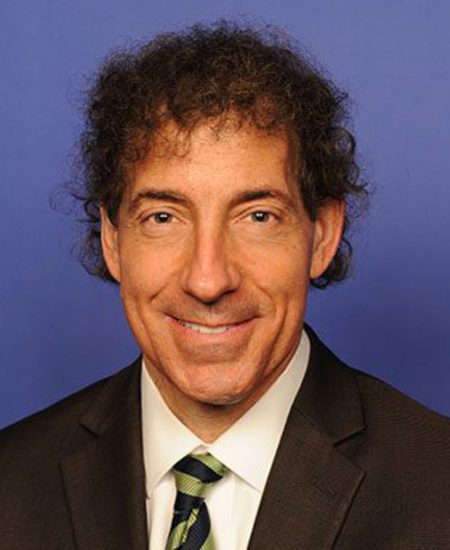
Rep. Jamie Raskin
Sponsored bills
Emmett Till Antilynching Act This bill makes lynching a federal hate crime offense. Specifically, the bill imposes criminal penalties—a fine, a prison term of up to 30 years, or both—on an individual who conspires to commit a hate crime offense that results in death or serious bodily injury or that includes kidnapping or an attempt to kidnap, aggravated sexual abuse or an attempt to commit aggravated sexual abuse, or an attempt to kill.
9-8-8 Implementation Act of 2022 This bill modifies provisions to increase access to behavioral health services, with a focus on crisis services and the 9-8-8 telecommunication system. (The 9-8-8 system provides callers with mental health or suicide crisis support and resources through the existing National Suicide Prevention Lifeline and is scheduled to take effect by July 16, 2022.) The bill reauthorizes through FY2027 and revises the National Suicide Prevention Lifeline program and requires a national suicide prevention media campaign. In addition, the Substance Abuse and Mental Health Services Administration (SAMHSA) must establish standards for a behavioral health crisis continuum of care that health care providers and communities may use in responding to individuals experiencing a behavioral health crisis. The continuum must include emergency treatment, stabilization, and related services. The bill expands Medicaid and other insurance coverage for such services. The bill further expands Medicaid coverage for behavioral health services. This includes permanently allowing coverage of certain community-based mobile crisis services and exempting some short-term stabilization services from coverage restrictions that apply to institutions for mental diseases. Additionally, the bill establishes (1) an office within SAMHSA to coordinate behavioral health activities; and (2) various grants, including a pilot program for mobile crisis care teams that respond to behavioral health crises rather than law enforcement and a capital improvement program for certain behavioral health facilities. The bill also reauthorizes through FY2027 and expands certain workforce programs for behavioral health providers. It also addresses training for emergency services dispatchers and coordination of the 9-1-1 system with the 9-8-8 system.
Creating a Respectful and Open World for Natural Hair Act of 2022 or the CROWN Act of 2022 This bill prohibits discrimination based on a person's hair texture or hairstyle if that style or texture is commonly associated with a particular race or national origin. Specifically, the bill prohibits this type of discrimination against those participating in federally assisted programs, housing programs, public accommodations, and employment. Persons shall not be deprived of equal rights under the law and shall not be subjected to prohibited practices based on their hair texture or style. The bill provides for enforcement procedures under the applicable laws.
Forced Arbitration Injustice Repeal Act of 2022 or the FAIR Act of 2022 This bill prohibits a predispute arbitration agreement from being valid or enforceable if it requires arbitration of an employment, consumer, antitrust, or civil rights dispute.
Dr. Lorna Breen Health Care Provider Protection Act This bill establishes grants and requires other activities to improve mental and behavioral health among health care providers. Specifically, the Department of Health and Human Services (HHS) must award grants to hospitals, medical professional associations, and other health care entities for programs to promote mental health and resiliency among health care providers. In addition, HHS may award grants for relevant mental and behavioral health training for health care students, residents, or professionals. Additionally, HHS must conduct a campaign to (1) encourage health care providers to seek support and treatment for mental and behavioral health concerns, and (2) disseminate best practices to prevent suicide and improve mental health and resiliency among health care providers. HHS must also study and develop policy recommendations on improving mental and behavioral health among health care providers, removing barriers to accessing care and treatment, and identifying strategies to promote resiliency. Furthermore, the Government Accountability Office must report on the extent to which relevant federal grant programs address the prevalence and severity of mental health conditions and substance use disorders among health care providers.
This resolution urges the government of Argentina to bring the perpetrators of the March 17, 1992, terrorist attack on the Embassy of Israel in Buenos Aires to justice (in 1999 the Supreme Court of Argentina found that the transnational terrorist organization Hezbollah was responsible for the attack). The resolution commends the Argentinian government for designating Hezbollah as a terrorist organization and urges other U.S. allies and partners in Latin America and the Caribbean to do the same. The resolution urges these allies and partners to condemn and counter regional governments in the hemisphere that aid and abet Iran and Hezbollah. The resolution also commends the Argentinian government for adopting the International Holocaust Remembrance Alliance working definition of antisemitism and encourages other partners and allies to do the same. Finally, the resolution commends the Secretary General of the Organization of American States for appointing a Commissioner to Monitor and Combat Anti-Semitism in the Western Hemisphere.
Maddy summaryHRES 984 is a symbolic resolution recognizing the importance of sleep health and supporting the designation of March 13-19, 2022, as "Sleep Awareness Week." It does not create new laws or policies but expresses congressional support for raising public awareness about sleep health, citing CDC data on sleep deprivation and racial disparities in sleep quality. The resolution encourages public health officials, healthcare providers, and individuals to prioritize sleep health and discuss it with medical professionals. As a non-binding resolution, it has no direct impact on legislation or affected populations but aligns with existing efforts by the National Sleep Foundation.
Supporting Children's Mental Health Care Access Act of 2022 This bill reauthorizes through FY2027 two grant programs that support pediatric mental and behavioral health services and interventions. First, it reauthorizes and makes changes to a grant program for states, localities, and Indian tribes for statewide or regional telehealth access programs to promote the integration of behavioral health in pediatric primary care. Specific changes include allowing a nonprofit organization to receive the grant if the state (1) does not apply for the grant, and (2) supports the nonprofit's receipt of it. Additionally, recipients may use grant funds to support schools and emergency departments. Second, the bill reauthorizes a grant program for human services agencies and nonprofits to develop and maintain infant and early childhood mental health promotion, intervention, and treatment programs.
Elijah E. Cummings Family Asthma Act This bill expands various public health activities and related requirements concerning asthma. Specifically, the Centers for Disease Control and Prevention (CDC) must collaborate with state and local health departments to (1) conduct activities regarding asthma, including deterring the harmful consequences of uncontrolled asthma, and disseminating health education and information regarding prevention of asthma episodes and strategies for managing asthma; and (2) develop state plans incorporating public health responses to reduce the burden of asthma, particularly regarding disproportionately affected populations. Additionally, the bill revises and expands requirements for asthma surveillance activities and requires the CDC to coordinate data collection activities to maximize the comparability of results. Further, the Department of Health and Human Services must submit an assessment of current activities related to asthma prevention, management, and surveillance that includes recommendations for the future direction of asthma activities.