

Small Business Advocacy Improvements Act of 2022 This bill expands the primary functions and additional duties of the Office of Advocacy of the Small Business Administration to include (1) examining the role of small businesses in the international economy, and (2) representing the views and interests of small businesses before foreign governments and international entities to contribute to regulatory and trade initiatives that may affect small businesses.
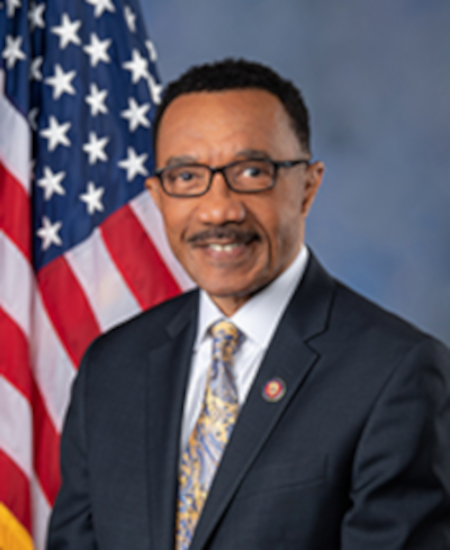
Rep. Kweisi Mfume
Sponsored bills
Women's Business Centers Improvement Act of 2022 This bill reauthorizes the Women's Business Center Program through FY2025, raises the cap on individual center grants, establishes an accreditation program for grant recipients, and revises the duties of the Office of Women's Business Ownership. Specifically, the bill modifies the Women's Business Center Program to enable the Small Business Administration (SBA) to provide initial and continuation grants to eligible entities to operate women's business centers for the benefit of women-owned small businesses. The SBA must also publish standards for a program to accredit entities that receive grants from the Women's Business Center Program, and such entities' receipt of continuation grants shall be contingent upon their obtaining accreditation.
SCORE for Small Business Act of 2022 This bill reauthorizes through FY2023 the Service Corps of Retired Executives (SCORE) program, outlines the duties of the SCORE Association, and requires the Small Business Administration (SBA) to cooperate with the association to carry out the program. Specifically, the bill requires the association to manage nationwide chapters of the program to enable volunteers participating in the program to provide personal, cost-free business expertise and facilitate education workshops to small businesses. The association must also offer online counseling through web-based platforms to small businesses. In consultation with the association, the SBA must ensure that the program (1) recruits diverse volunteers for each chapter of the program, and (2) provides services to rural and underserved communities.
Russian Digital Asset Sanctions Compliance Act of 2022 This bill allows additional sanctions against Russia and creates specified reporting requirements regarding digital assets. Specifically, the President must periodically identify foreign persons who facilitate evasion of Russian sanctions using digital assets. The bill authorizes sanctions against such persons. The bill requires a U.S. taxpayer engaged in offshore digital asset transactions greater than $10,000 to file an annual Report of Foreign Bank and Financial Accounts with the Financial Crimes Enforcement Network. The bill allows the Department of the Treasury to prohibit U.S. digital asset trading platforms and transaction facilitators from transacting with Russian digital asset addresses. Additionally, Treasury must report on its progress in implementing the bill and must annually identify foreign digital asset trading platforms that are a high risk for sanctions evasion, money laundering, and other illicit activities.
Federal Contracting for Peace and Security Act This bill requires executive agencies to terminate their contracts with companies conducting business operations in Russia. This requirement ends when Russia takes steps to restore the safety, sovereignty, and condition of Ukraine. The bill shall not apply to the procurement of products or services for (1) the benefit, either directly or through the efforts of regional allies, of Ukraine; or (2) humanitarian purposes to meet basic human needs. The bill provides for a waiver where in the national interest of the United States.
Ensuring Lasting Smiles Act This bill requires private health insurance plans to cover diagnosis and treatment of congenital anomalies and birth defects, such as reconstructive services and items. Coverage must include services and items that functionally improve, repair, or restore any body part that is medically necessary for normal bodily functions or appearance, as determined by the treating physician. Coverage limits and cost-sharing requirements for such services and items may not be more restrictive than those applicable to all medical and surgical benefits under the plan.
Securing a Strong Retirement Act of 2022 This bill makes various changes with respect to employer-sponsored retirement plans, including providing for the automatic enrollment of employees in certain plans and increasing the age at which participants are required to begin receiving mandatory distributions.
Emmett Till Antilynching Act This bill makes lynching a federal hate crime offense. Specifically, the bill imposes criminal penalties—a fine, a prison term of up to 30 years, or both—on an individual who conspires to commit a hate crime offense that results in death or serious bodily injury or that includes kidnapping or an attempt to kidnap, aggravated sexual abuse or an attempt to commit aggravated sexual abuse, or an attempt to kill.
Protect Lifesaving Anesthesia Care for Veterans Act of 2022 This bill prohibits the Department of Veterans Affairs (VA) from modifying its policy relating to anesthesia care in a manner that would provide any medical professional other than a physician anesthesiologist with full practice authority for the furnishment of anesthesia care to veterans under VA health care laws. The VA is also prohibited from finalizing, implementing, or enforcing the provisions relating to anesthesia care of the proposed rule titled Advanced Practice Registered Nurses (81 Fed. Reg. 33155), or any substantially similar rule.
Creating a Respectful and Open World for Natural Hair Act of 2022 or the CROWN Act of 2022 This bill prohibits discrimination based on a person's hair texture or hairstyle if that style or texture is commonly associated with a particular race or national origin. Specifically, the bill prohibits this type of discrimination against those participating in federally assisted programs, housing programs, public accommodations, and employment. Persons shall not be deprived of equal rights under the law and shall not be subjected to prohibited practices based on their hair texture or style. The bill provides for enforcement procedures under the applicable laws.