

Maddy summaryHJRES 53 proposes a constitutional amendment to ban slavery and involuntary servitude as a criminal punishment. Currently, the 13th Amendment to the U.S. Constitution permits such punishments for crimes, creating a legal loophole. If ratified by 3/4 of state legislatures, this amendment would eliminate that exception nationwide, making it unconstitutional to impose forced labor or slavery as part of criminal sentences. The change would directly affect all states' criminal justice systems, particularly prison labor practices, by prohibiting these punishments for any offense.
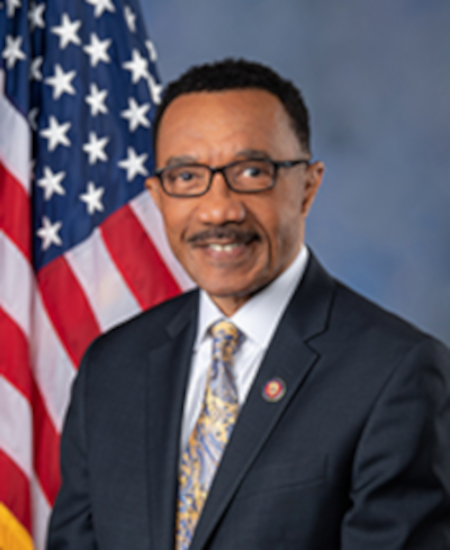
Rep. Kweisi Mfume
Sponsored bills
Maddy summaryHRES 1392 is a non-binding congressional resolution recognizing "Banned Books Week" and expressing concern about widespread book bans in U.S. schools and libraries. It cites data showing over 1,600 unique books were banned in K-12 schools during the 2021-2022 school year, including works addressing race, LGBTQ+ themes, and historical topics. The resolution urges educational institutions to follow best practices for handling book challenges, protect students' access to diverse materials, and avoid censorship based on political or ideological preferences. It does not create new laws but formally condemns book bans as threats to free expression and democratic discourse.
This resolution expresses the sense of the House of Representatives that the proposed constitutional amendment known as the Equal Rights Amendment has been duly proposed by Congress and ratified by the states and is therefore valid as the Twenty-Eighth Amendment to the Constitution. (The proposed amendment prohibits the United States or any state from denying or abridging equal rights under the law on account of sex.)
Leading Against White Supremacy Act of 2022 This bill establishes a standard for determining whether a person engaged in a white supremacy inspired hate crime. The bill also sets forth the elements of related conspiracies. Specifically, the bill states that a person engaged in a white supremacy inspired hate crime when white supremacy ideology motivated the actions that constituted a crime or were undertaken in furtherance of activity that would have constituted a crime. Additionally, the bill sets forth the elements of an offense involving the conspiracy to engage in a white supremacy inspired hate crime. Finally, the bill authorizes the Department of Justice to investigate, prosecute, and maintain records of white supremacy inspired hate crimes and related conspiracies.
Latonya Reeves Freedom Act of 2022 This bill prohibits government entities and insurance providers from denying community-based services to individuals with disabilities that require long-term service or support that would enable such individuals to live in the community and lead an independent life. Specifically, these entities may not discriminate against such individuals in the provision of community-based services by such actions as imposing prohibited eligibility criteria, cost caps, or waiting lists or failing to provide a specific community-based service. Additionally, community-based services must be offered to individuals with such disabilities prior to institutionalization. Institutionalized individuals must be notified regularly of community-based alternatives. The bill requires the Department of Justice to issue regulations requiring government entities and insurance providers to offer community-based long-term services to individuals with such disabilities who would otherwise qualify for institutional placement. Government entities must ensure sufficient availability of affordable, accessible, and integrated housing that is not a disability-specific residential setting or a setting where services are tied to tenancy. Regulations shall also (1) require government entities and insurance providers to perform self-evaluation on current services, policies, and practices and concerning compliance with requirements of this bill; and (2) require government entities to submit a transition plan. The bill provides funds for FY2022 for the Department of Health and Human Services to provide technical assistance with respect to transition plans. The bill allows civil actions by individuals subjected to, or about to be subjected to, a violation of its requirements.
Comprehensive Addiction Resources Emergency Act of 2021 This bill establishes programs, grants, and other activities to address substance use disorders. Specifically, the Department of Health and Human Services (HHS) must establish a program for purchasing and distributing opioid overdose reversal drugs for states and Indian tribes. HHS must also award grants for and otherwise support addressing substance use, particularly in states, tribes, territories, and localities with disproportionately high drug overdose rates; increasing access to preventive, medical, recovery, and related services; developing innovative models of delivering treatment and harm reduction services; and expanding the treatment capacity of Medicaid providers. In addition, HHS must issue model standards of care for treatment services and recovery residences and may award grants for training health care professionals. The bill also supports prevention and treatment services for workers, addiction and pain management research, and data collection on substance use disorders. Further, dispensers, distributors, and manufacturers of schedule II controlled substances (e.g., oxycodone), with the exception of opioid treatment programs, must certify that they maintain effective drug diversion controls. Violators are subject to specified civil and criminal penalties. Collected penalties shall be used for the grant programs and other substance use disorder activities established under the bill.
Protect Black Women and Girls Act of 2021 This bill establishes an Interagency Task Force to examine the conditions and experiences of Black women and girls to identify and assess the efficacy of policies and programs of federal, state, and local governments designed to improve outcomes for such individuals and to make recommendations to improve such policies and programs. The task force shall (1) cover issues involving Black women and girls in education, economic development, health care, justice and civil rights, and housing; and (2) submit recommendations at specified intervals to Congress, the President, and each state or local government on policies, practices, programs, and incentives that may be adopted to improve outcomes. The U.S. Commission on Civil Rights shall conduct a comprehensive study and collect data with respect to the effects on Black women and girls of a wide range of specified economic, health, criminal justice, and social services factors.
Federal Firearm Licensee Act This bill makes various changes related to federal firearms licensees, including by establishing physical security requirements and increasing licensing fees. It also amends several appropriations laws to remove limitations on the authority of the Bureau of Alcohol, Tobacco, Firearms and Explosives to conduct activities related to the administration of federal firearms laws.
Court Legal Access and Student Support Act of 2021 or the CLASS Act of 2021 This bill prohibits institutions of higher education (IHEs) that participate in federal student-aid programs from restricting students' ability to pursue claims against IHEs in court. In addition, the bill makes mandatory arbitration agreements inapplicable to enrollment agreements between students and IHEs.
Bringing an End to Harassment by Enhancing Accountability and Rejecting Discrimination in the Workplace Act or the BE HEARD in the Workplace Act This bill expands protections against discrimination and harassment in the workplace and raises the minimum wage for tipped employees. Specifically, the bill (1) makes it an unlawful employment practice to discriminate against an individual in the workplace based on sexual orientation, gender identity, pregnancy, childbirth, a medical condition related to pregnancy or childbirth, or a sex stereotype; and (2) provides a statutory definition for what constitutes workplace harassment. Further, these protections apply to all workplaces, regardless of size, and to all workers, including independent contractors, interns, volunteers, and trainees. The bill prohibits employers from entering into contracts or agreements with workers that contain certain nondisparagement or nondisclosure clauses and prohibits certain predispute arbitration agreements and postdispute agreements. It also establishes grant programs to (1) prevent and respond to workplace discrimination and harassment, (2) provide legal assistance for low-income workers, and (3) establish a system of legal advocacy in states to protect the rights of workers. The bill further provides employees the right to retain their tips and it increases, in specified annual increments, the minimum wage for tipped employees to match the federal minimum wage for nontipped employees. Additionally, the bill requires the Equal Employment Opportunity Commission to provide specified training and resource materials, establish and convene a harassment prevention task force, and establish an Office of Education and Outreach with regard to prohibited discrimination and harassment in employment. The bill also requires specified studies, reports, and research on prohibited workplace harassment.