

Maddy summaryThis bill establishes the Dr. Percy and Dr. Anna Julian Home in Oak Park, Illinois, as a National Historic Site within the National Park System. It requires the Secretary of the Interior to finalize an agreement with the Julian Home for public access, interpretation, and maintenance before designation, and mandates a map of the site boundaries. The site aims to preserve and interpret the Julian family's achievements in chemistry and medicine, their history of overcoming racial discrimination, and their home's resilience against firebomb attempts. The National Park Service will manage the site under existing park system laws, with a management plan due within one year of funding. This designation directly affects the Julian Home property and future visitors, not policy or citizens.
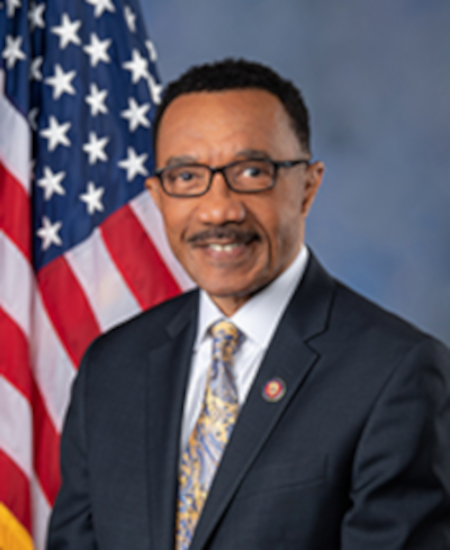
Rep. Kweisi Mfume
Sponsored bills
Maddy summaryHR 7474, the Robert E. Lee Monument Removal Act, directs the Secretary of the Interior to remove and destroy the statue of Confederate General Robert E. Lee at Antietam National Battlefield. The bill requires the monument to be removed from National Park Service property for destruction by a private contractor, with scrap materials sold to offset costs. The Secretary must submit a removal plan to Congress within one year of the bill's enactment, including a timeline. Site restoration must align with preserving the battlefield's historical interpretation. The law clarifies that the statue's materials are not considered surplus property under federal law.
Maddy summaryHR 7129, the "Put America on Commission Act of 2024," creates an Office of Whistleblower Awards within the Small Business Administration (SBA) to incentivize reporting of fraud in pandemic relief loans. It directly affects whistleblowers who provide original information about financial misconduct by SBA loan recipients and the recipients themselves who face penalties. The bill establishes a Whistleblower Award Fund, paying 10% (U.S. entities) or 15% (foreign entities) of recovered funds from convictions or settlements related to "COVID loan actions" (defined as fraud cases under CARES Act provisions). It includes anti-retaliation protections for whistleblowers and requires annual reports to Congress on award distributions. The program sunset provisions end its authority once all related cases are resolved.
Maddy summaryHRES 1014 is a symbolic House resolution commemorating the Ukrainian people's sacrifices two years after Russia's February 24, 2022, invasion. It recognizes the war's devastating toll, including over 10,000 civilian deaths, 19,000 abducted children, and 10 million displaced people, while condemning Russia's actions. The resolution reaffirms U.S. support for Ukraine, condemns Vladimir Putin's regime, and stands in solidarity with Ukraine's defense of democratic values. As a commemorative resolution, it has no binding effect but formally acknowledges Ukraine's struggle and resilience. It directly honors Ukrainian civilians, soldiers, and those displaced by Russia's war of aggression.
Maddy summaryHR 7378, the Frederick Douglass Congressional Gold Medal Act, authorizes Congress to posthumously award a gold medal to honor Frederick Douglass's legacy as a pivotal abolitionist, writer, and advocate for civil rights. The medal, designed by the Treasury Secretary, will be presented to the National Museum of African American History and Culture for display, with bronze duplicates available for sale to cover costs. This ceremonial bill does not create new laws or affect current policies - it solely commemorates Douglass's historical contributions to ending slavery and advancing equality.
Maddy summaryThis bill requires the Small Business Administration (SBA) to conduct a study and report on challenges faced by for-profit child care providers operating across multiple states. The report must assess provider needs, describe current SBA support, identify gaps in that support, and recommend legislative changes. The SBA must also designate a full-time employee as a dedicated point of contact for these providers to improve resource delivery. The bill uses existing SBA funding and does not authorize new appropriations, focusing solely on gathering data and improving existing services for for-profit child care businesses.
Maddy summaryHR 7184, the Congressional Budget Office Data Access Act, amends the Privacy Act of 1974 to allow federal agencies to disclose certain personal data to the Congressional Budget Office (CBO). This change directly affects federal agencies that collect personal information under the Privacy Act, enabling them to share data with the CBO when performing its budget analysis duties. The key provision adds a new exception (paragraph (11)) to the Privacy Act, explicitly permitting disclosures to the CBO Director or their authorized representatives for the CBO's official budgetary work. This streamlines data access for the CBO without altering privacy protections for individuals.
Maddy summaryHR 7127, the FAIR Act, establishes pay adjustments for federal employees in 2025. It increases base pay by 4% for most federal workers under statutory pay systems and for "prevailing rate" employees (like those in specific geographic areas), while raising locality pay rates by 3.4%. The bill directly affects all federal employees receiving pay under these systems, as it modifies their 2025 salary calculations. These changes are based on statutory formulas under Title 5 of the U.S. Code, with no new policy mechanisms beyond the specified percentage increases. The adjustments apply to pay rates in effect as of the end of fiscal year 2024.
Maddy summaryHR 7056, the Access to Family Building Act, establishes federal rights for individuals to access assisted reproductive technology (ART) like IVF without unreasonable restrictions, directly affecting patients seeking fertility treatments and health care providers offering ART services. The bill prohibits states from imposing limitations on ART that are more burdensome than those for comparable medical procedures, fail to advance safety, or unduly restrict access, while allowing health and safety regulations that are necessary and least restrictive. It creates federal enforcement mechanisms, including lawsuits by the Attorney General or affected individuals to challenge violating state laws, and preempts conflicting state regulations. The bill explicitly preserves state authority over health/safety regulations and does not alter existing state insurance coverage laws for ART.
Maddy summaryThe Stronger Communities through Better Transit Act establishes a new federal grant program to improve public transportation service. It provides funding to urban areas, states, and Indian tribes to cover up to 50% of public transit operating costs (up to 80% in persistent poverty areas and 100% for Indian tribes), with requirements to report on service frequency, access to jobs, and conduct community surveys. The program mandates that a majority of funds must benefit underserved communities and areas of persistent poverty, defined as census tracts with high poverty rates or minority populations. Recipients must maintain their transit funding levels and report on improvements in access to essential services. The bill authorizes $20 billion annually for fiscal years 2024-2027.