

Washington, D.C. Admission Act This bill provides for the establishment of the State of Washington, Douglass Commonwealth, and its admission into the United States. The state is composed of most of the territory of the District of Columbia (DC), excluding a specified area that encompasses the U.S. Capitol, the White House, the U.S. Supreme Court building, federal monuments, and federal office buildings adjacent to the National Mall and the U.S. Capitol. The excluded territory shall be known as the Capital and serve as the seat of the government of the United States, as provided for in Article I of the Constitution. The state may not impose taxes on federal property except as Congress permits. The bill provides for the DC Mayor to issue a proclamation for the first elections to Congress of two Senators and one Representative of the state. The bill eliminates the office of Delegate to the House of Representatives. The bill applies current DC laws to the state. DC judicial proceedings and contractual obligations shall continue under the state’s authority. The bill also provides for specified federal obligations to transfer to the state upon its certification that it has funds and laws in place to assume the obligations. These include maintaining a retirement fund for judges and operating public defender services. The bill establishes a commission that is generally comprised of members who are appointed by DC and federal government officials to advise on an orderly transition to statehood.
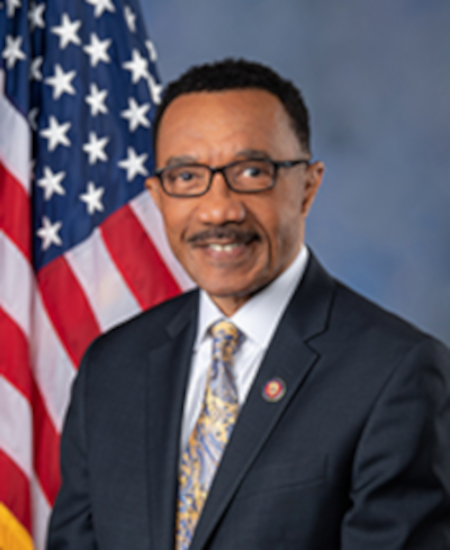
Rep. Kweisi Mfume
Sponsored bills
Maddy summaryThe REPORTS Act requires federal agencies to analyze how new significant regulations affect people living near or below the poverty line and racial inequity when proposing rules. It also mandates annual reports from the Government Accountability Office (GAO) examining government programs' impacts on poverty and racial inequity over the past five years. Agencies must include these analyses with proposed rules, and GAO reports must cover two to five programs annually. The law applies to major federal regulations and programs, focusing on transparency about equity impacts without altering policy outcomes.
Maddy summaryThis bill (HR 6826) renames the visitor and education center at Fort McHenry National Monument in Baltimore, Maryland (located at 2400 E Fort Ave) as the "Paul S. Sarbanes Visitor and Education Center." It directly affects the physical location and all official references to the center in government documents, maps, or regulations. The bill makes no substantive policy changes - its sole purpose is to honor former U.S. Senator Paul S. Sarbanes through this permanent naming designation. The resolution was passed by Congress and signed into law on December 23, 2024.
Maddy summaryThis bill, HR 1097 (Everett Alvarez, Jr. Congressional Gold Medal Act of 2023), authorizes the award of a Congressional Gold Medal to Everett Alvarez, Jr., in recognition of his service as a U.S. Navy pilot and Vietnam War prisoner of war. It directly honors Alvarez, who was the first U.S. pilot shot down in the Vietnam War, spent over 8.5 years in captivity, and later served in the Peace Corps and Veterans Administration. The bill’s key mechanism is directing the U.S. Mint to strike a gold medal bearing his name and image, with bronze duplicates available for sale to cover costs. It does not create new policies or affect any group beyond the honoree.
Maddy summaryThe Blind Americans Return to Work Act of 2024 creates a 20-year demonstration project to help blind individuals receiving Social Security disability benefits return to work. It modifies how benefits are calculated for eligible participants - those with blindness-related disability benefits who earned income during the first 10 years of the program - by removing standard work-income limits. Specifically, benefits are reduced by $1 for every $2 earned above a threshold (including a set exempt amount and work-related expenses), but never below $0, and benefits won’t terminate due to earnings. Participants may also opt out after 10 years, and the program excludes standard trial work and termination rules.
Maddy summaryHR 8390, the Mental Health and MAMA Act of 2024, eliminates cost-sharing (like copays or deductibles) for mental health and substance use disorder services during pregnancy and for one year after birth. It applies to people enrolled in group health plans, individual insurance, or federal employee health plans, covering services provided by in-network providers. The bill requires insurers to waive these costs starting two years after enactment, explicitly including telehealth services. It specifically targets care for pregnant and postpartum individuals, ensuring coverage from pregnancy diagnosis through the 12 months following birth.
Maddy summaryThis bill, the EMPSA Act (Eliminating the Marriage Penalty in SSI Act), changes Social Security Income (SSI) rules for married adults with intellectual or developmental disabilities. It directly affects married individuals aged 18+ who have these disabilities and meet income and resource limits. The key change removes the "marriage penalty" by ensuring their spouse’s income and resources no longer count against their SSI eligibility or benefit amount, allowing them to receive the full individual benefit rate. This update modifies specific sections of the Social Security Act to eliminate the previous disadvantage faced by married couples under these disability conditions.
Maddy summaryHR 6407, the Medical Nutrition Therapy Act of 2023, expands Medicare coverage to include medical nutrition therapy for more chronic conditions beyond current limits. It directly affects Medicare beneficiaries with conditions like obesity, hypertension, dyslipidemia, eating disorders, and others not previously covered under Part B. The bill amends Medicare rules to allow coverage for prevention, management, or treatment of these conditions by a wider range of providers, including registered dietitians and clinical psychologists. This change would make medically necessary nutrition services available for conditions listed in the bill, such as diabetes, cardiovascular disease, and HIV, as determined by the Secretary.
Maddy summaryThe MORE Act (HR 5601) would federally decriminalize cannabis by removing it from the Schedule I list of controlled substances under the Controlled Substances Act. It requires federal courts to expunge non-violent cannabis convictions and associated arrests, with a focus on addressing racial disparities in cannabis enforcement. The bill creates an Opportunity Trust Fund that would allocate 50% of funds to criminal justice programs, 20% to small business assistance for minority cannabis entrepreneurs, and 20% to community reinvestment grants for individuals impacted by the War on Drugs. It also prohibits federal agencies from denying benefits or security clearances based on cannabis use or past cannabis convictions, and establishes a Cannabis Justice Office to administer these programs.
Maddy summaryThe HOPE for Haitian Prosperity Act extends duty-free access for Haitian goods to the U.S. market until 2035, with specific extensions for apparel and other exports. It requires Haitian producers to meet labor standards on minimum wages, working hours, and safe conditions to maintain this trade benefit. The bill also creates a new U.S. technical assistance program to help Haiti diversify exports, focusing on agriculture, apparel, and services, while requiring collaboration with Haitian government, businesses, and labor groups. Annual reports to Congress will track progress on these efforts.