

Maddy summaryHR 6989, the Public Health Nursing Act, provides $5 billion annually (2026-2035) to expand the public health nursing workforce through grants to state, local, and territorial health departments. It directly affects underserved communities by funding the recruitment, hiring, and training of registered nurses in areas with high chronic disease rates, maternal mortality, low-income populations, or rural settings. Key provisions require grant recipients to use funds for nurse wages, medical supplies (like PPE), and administrative costs, while prioritizing services for medically underserved groups and culturally appropriate care. The bill also mandates maintaining pre-grant funding levels and defines public health nurses as those providing preventive care, maternal health services, and chronic disease management.
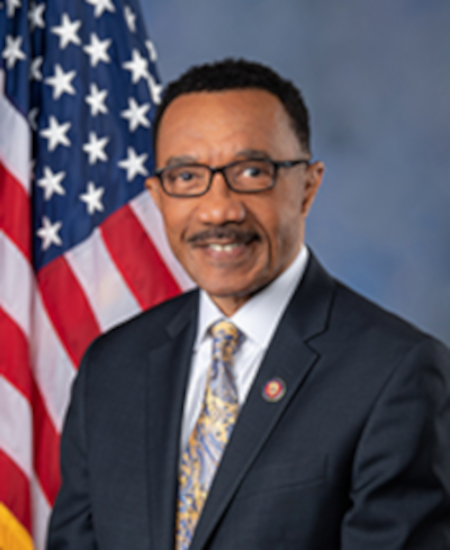
Rep. Kweisi Mfume
Sponsored bills
Maddy summaryHR 4611 (EACH Act of 2025) requires all federally funded health programs - including Medicaid, Medicare, military health plans, and the Indian Health Service - to cover abortion services without restrictions, repealing the Hyde Amendment's long-standing ban on federal funding for most abortions. This directly affects millions of people enrolled in these programs, particularly low-income women, women of color (including 25% of Black women and 22% of Hispanic women on Medicaid), and young people. The bill mandates coverage in all federally administered health plans and prohibits state or private insurers from restricting abortion coverage in health insurance. It aims to eliminate current federal and state barriers that deny abortion access to people who rely on government health programs.
Maddy summaryHCONRES 64 is a congressional resolution directing the President to withdraw U.S. military forces from any hostilities against Venezuela that lack explicit congressional authorization. It applies to ongoing military operations in Venezuela not approved by Congress through a declaration of war or specific law authorizing force. The resolution invokes the War Powers Resolution (50 U.S.C. 1544(c)), requiring the removal of troops within the timeframe specified by that law. This bill does not affect military actions already authorized by Congress but mandates the end of unapproved operations.
Maddy summaryHCONRES 61 directs the President to withdraw U.S. military forces from hostilities against any terrorist organization designated by the president in the Western Hemisphere. This bill specifically applies to military operations involving U.S. armed forces in the region targeting such groups. The key provision requires the withdrawal unless Congress has passed a formal declaration of war or specific authorization for that military action. The resolution invokes Section 5(c) of the War Powers Resolution to compel this change in military deployment.
Maddy summaryThis bill establishes a Diversity and Inclusion Administrator at the Department of Labor to increase African American participation in apprenticeships. It requires all new and renewing registered apprenticeship programs to submit plans boosting African American enrollment and creates competitive grants for programs targeting underserved communities in fields like construction, healthcare, and tech. The grants fund outreach, mentoring, and support services to help African American youth access and complete apprenticeships. The bill directly affects African American young people and apprenticeship programs nationwide, with $2 million authorized for fiscal year 2026.
Maddy summaryThe Protect America's Workforce Act cancels an executive order issued on March 27, 2025, that excluded certain groups from federal labor-management relations programs, making it legally unenforceable. It also ensures that all collective bargaining agreements between federal agencies and labor unions, which were active as of March 26, 2025, remain fully effective until their agreed terms expire. This directly affects federal agencies, labor unions, and the employees covered by these agreements. The bill prevents federal funds from being used to implement the canceled executive order while preserving existing labor agreements.
Maddy summaryHR 6579, the Justice for Breonna Taylor Act, requires federal, state, and local law enforcement officers to provide notice of their authority and purpose before entering a premises with a warrant. This applies to all officers serving warrants, including those at the federal level and state/local agencies receiving Department of Justice funding. The law mandates this notice requirement starting in the first fiscal year after enactment, directly affecting law enforcement agencies that receive federal funding for policing. It changes the process for executing warrants by eliminating the ability to conduct no-knock entries without first informing occupants.
Maddy summaryThis bill designates the Museum of the Blind People’s Movement (currently located at the National Federation of the Blind Jernigan Institute in Baltimore, Maryland) as the National Museum of the Blind People’s Movement. It formally recognizes the museum, operated by blind individuals, as the first national institution dedicated to preserving and showcasing the history of blind people’s contributions and struggles in the U.S. The museum already collects artifacts, documents, and literature documenting the blind community’s collective achievements and civil rights efforts since the 1940s. The bill’s key provision is this official congressional designation, elevating the existing museum as a national platform for education and awareness about blind people’s movement.
Maddy summaryThe Dignity for Detained Immigrants Act establishes minimum standards for detention facilities operated by the Department of Homeland Security, requiring them to follow the American Bar Association's Civil Immigration Detention Standards. It mandates annual unannounced inspections by the DHS Inspector General, with penalties including fines for noncompliant private facilities and transfers of detainees from noncompliant facilities. The bill requires DHS to publicly report on facility compliance, phase out private detention facilities over three years, and prohibit solitary confinement. It also ensures detainees have access to legal orientation, counsel, and more frequent custody review hearings. The bill directly affects all individuals detained in DHS custody, including immigrants, asylum seekers, and refugees held in facilities operated by or contracted to DHS.
Maddy summaryThe Artificial Intelligence Civil Rights Act of 2025 requires developers and deployers of AI systems that make decisions affecting "consequential actions" (such as employment, housing, healthcare, education, and credit) to conduct pre-deployment evaluations and annual impact assessments by independent auditors. The bill mandates transparency requirements including clear disclosures to individuals about how AI is used in decision-making, establishes a right to human alternatives for significant AI-driven decisions, and prohibits discrimination based on protected characteristics like race, gender, or disability. It creates enforcement mechanisms through the Federal Trade Commission, state attorneys general, and private lawsuits, with penalties including civil penalties of up to 4% of annual revenue. The act also requires developers to provide explanations for AI-driven decisions and sets standards for data collection to prevent harm and ensure fairness in critical life areas.