

Maddy summaryThe Richard L. Trumka Protecting the Right to Organize Act of 2023 strengthens workers' rights to organize unions by making it harder for employers to interfere with organizing efforts. Key provisions include changing the definition of "employee" to make it more difficult to classify workers as independent contractors, prohibiting employers from threatening to permanently replace striking workers, and requiring employers to provide voter lists for union elections. The bill also creates a new electronic voting system for union elections, strengthens whistleblower protections for workers reporting labor violations, and increases penalties for unfair labor practices. These changes directly affect workers seeking to form unions, employers who may interfere with organizing, and labor organizations. The bill aims to make it easier for workers to exercise their right to collective bargaining under the National Labor Relations Act.
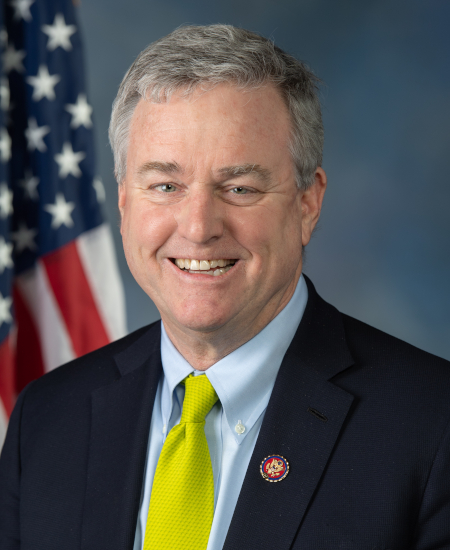
Rep. David J. Trone
Sponsored bills
Maddy summaryThis is a non-binding resolution expressing the House of Representatives' symbolic support for designating February 27-March 3, 2023, as "Public Schools Week." It does not create new laws, allocate funding, or directly affect any individuals or institutions. The resolution highlights the importance of public schools to democracy, equity, and student success through a series of supporting statements. As a procedural resolution, it has no legal effect beyond acknowledging the significance of public education.
Maddy summaryThe Net Price Calculator Improvement Act requires colleges and universities to update their online cost calculators within one year to provide clearer, more detailed information about actual college expenses after financial aid. These tools must prominently display the net price (after aid), break down costs like tuition, room, board, and books, show estimated grant aid, and use recent data (within two academic years). The law also mandates privacy protections - prohibiting the sale of personal information - and requires calculators to include details about veterans' benefits when applicable. This directly affects all institutions required to provide net price calculators and helps prospective students and families better understand true college costs.
Maddy summaryHR 1218, the Expediting Israeli Aerial Refueling Act of 2023, requires the U.S. Air Force to train Israeli pilots and ground personnel to operate KC-46 aircraft within 60 days of enactment, including participation in the U.S. Military Personnel Exchange Program. The bill mandates the rotational deployment of U.S. KC-46 aircraft to Israel for up to five years or until Israel commissions its own KC-46s, with each deployment lasting at least 270 days annually. It directly affects the Israeli Air Force by enabling their use of U.S. refueling capabilities and the U.S. military through specific training and deployment obligations. The law expires ten years after enactment.
Collecting and Analyzing Resources Integral and Necessary for Guidance for Social Determinants Act of 2023 or the CARING for Social Determinants Act of 2023 This bill requires the Centers for Medicare & Medicaid Services to periodically update specified guidance to help states address social determinants of health (e.g., socioeconomic factors) under Medicaid and the Children's Health Insurance Program (CHIP).
Maddy summaryThe EQUAL Act (HR 1062) eliminates the unequal sentencing disparity between crack cocaine (cocaine base) and powder cocaine offenses under federal law. It repeals specific provisions in the Controlled Substances Act and Import/Export Act that previously imposed harsher penalties for cocaine base, directly affecting individuals convicted of federal cocaine offenses involving cocaine base. The bill applies to all future cases and allows courts to reduce sentences for people already convicted of such offenses before the law's enactment. This change removes a key legal distinction that historically led to significantly longer sentences for crack cocaine offenses compared to powder cocaine.
Maddy summaryThe COMPOST Act (HR 651) makes composting a recognized conservation practice under federal farm programs, directly affecting farmers, local governments, and community organizations. It creates a new $200 million annual grant and loan program (2024-2033) to fund projects like composting facility construction, food waste collection systems, and onsite composting programs. Priority is given to projects serving low-income communities, supporting minority-owned businesses, and using distributed infrastructure (e.g., home, farm, or community-scale composting). The bill requires projects to demonstrate waste processing capacity, high-quality compost production, and environmental justice considerations.
Maddy summaryHRES 150 is a ceremonial House resolution honoring the late civil rights leader John Robert Lewis (1940-2020). It formally recognizes his lifelong commitment to nonviolent activism, including his leadership in the Civil Rights Movement, the 1965 Selma voting rights march ("Bloody Sunday"), and his 30+ years serving as a U.S. Representative from Georgia. The resolution specifically commends his "towering achievements in the nonviolent struggle for civil rights" and his dedication to building the "Beloved Community" through justice and equality. As a commemorative resolution, it has no policy impact but serves as an official tribute to Lewis's legacy for the public and Congress.
Maddy summaryThe RISEE Act of 2023 creates a National Oceans and Coastal Security Fund to support coastal communities and ecosystems. It allocates 37.5% of offshore wind revenue directly to eligible coastal states using a formula based on tidal shoreline length, coastal population density, and distance from offshore wind projects. States must use these funds for coastal protection, habitat restoration, infrastructure, or fisheries research, with strict annual reporting requirements to the Department of the Interior. The bill prohibits using these funds for litigation or creating marine monuments, ensuring resources directly support coastal community needs.
Maddy summaryHR 724, the Arctic Refuge Protection Act, repeals the existing oil and gas program for the Arctic National Wildlife Refuge in Alaska and designates approximately 1.56 million acres of the refuge's coastal plain as federal wilderness. This bill directly affects the Arctic Refuge by permanently prohibiting oil and gas leasing and development in that specific area. The key mechanism is adding the designated land to the National Wilderness Preservation System under the Wilderness Act, requiring it to be managed for its natural conditions. This change legally protects the area from future fossil fuel extraction activities.