

American Innovation and R&D Competitiveness Act of 2023 This bill eliminates the five-year amortization requirement for research and experimental expenditures, thus allowing continued expensing of such expenditures in the taxable years in which they are incurred.
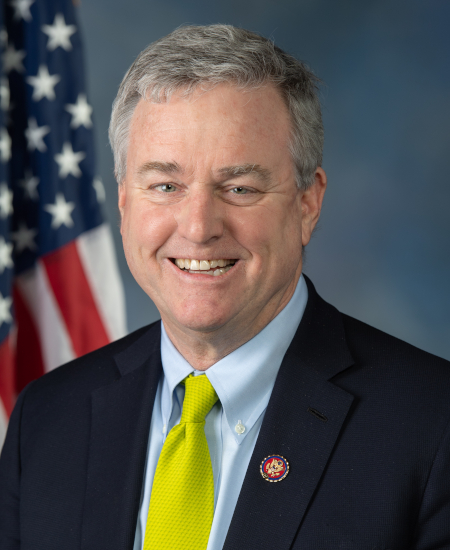
Rep. David J. Trone
Sponsored bills
Maddy summaryHRES 269 is a non-binding resolution passed by the U.S. House of Representatives on March 30, 2023. It recognizes the federal government's duty to develop and implement a Transgender Bill of Rights to protect transgender and nonbinary people. The resolution outlines key provisions, including ensuring access to gender-affirming medical care, ending discrimination in employment and housing, and improving legal recognition of gender identity on government documents. It also calls for addressing systemic barriers in education, safety, and economic security faced by transgender and nonbinary individuals.
Maddy summaryHR 2715, the Keep Our PACT Act, mandates increased federal funding for two key education programs. It requires specific annual funding levels for Title I of the Elementary and Secondary Education Act (which supports high-poverty schools) and the Individuals with Disabilities Education Act (IDEA), guaranteeing students with disabilities access to a high-quality education. The bill sets mandatory funding amounts that rise each year, with IDEA funding gradually increasing to reach 40% of the national average per-pupil expenditure for students with disabilities by fiscal year 2033. This directly affects school districts receiving Title I funds and states administering IDEA services for students with disabilities. The bill fulfills a prior commitment made under the Individuals with Disabilities Education Improvement Act of 2004.
Maddy summaryHR 2725, the "Do No Harm Act," amends the Religious Freedom Restoration Act (RFRA) to clarify that RFRA does not apply when federal laws protect against discrimination or promote equal opportunity. It specifically exempts protections under the Civil Rights Act, Americans with Disabilities Act, workplace benefits like leave, child labor safeguards, and healthcare access from RFRA challenges. The bill also clarifies that RFRA does not block private lawsuits between individuals, applying only to cases involving government entities. This amendment ensures that existing federal civil rights and workplace protections remain enforceable under RFRA.
Maddy summaryThe Latonya Reeves Freedom Act of 2023 strengthens the Americans with Disabilities Act's requirement that individuals with disabilities receive long-term services and supports in community settings rather than institutions. It defines "community-based" services to include specific housing options where individuals with disabilities can live independently with maximum control over their lives, including access to integrated housing, employment, and community participation. The bill requires states to develop transition plans to move people from institutional settings to community-based services within 12 years, with measurable annual targets for reducing institutionalization. It establishes enforcement mechanisms through the Department of Justice and Department of Health and Human Services to ensure compliance with these requirements.
Maddy summaryThis bill establishes a federal grant program to help states fund child care for the minor children of police officers during their irregular work schedules. It provides competitive grants to states, with 20% reserved for jurisdictions employing fewer than 200 officers, to support law enforcement agencies in creating or expanding child care services. States must match federal funds (10-33% over three years) and use grant money for startup costs, provider training, sick child care, extended hours, or facility construction. The program runs through 2028, requiring annual audits and two federal studies to assess its effectiveness.
Maddy summaryThis bill establishes a 10-member Commission to study how U.S. federal laws and policies affect citizens living abroad. The Commission will examine specific issues including tax reporting requirements, access to financial institutions, voting procedures, Social Security/Medicare interactions, and immigration processes for family members. It must submit an initial report within one year of enactment, detailing findings and recommendations for improving these systems. The Commission will terminate after submitting a follow-up report one year later, with no direct policy changes enacted by the bill itself.
Maddy summaryHR 2693, the Pay Our Coast Guard Parity Act of 2023, ensures Coast Guard members, civilian staff, and qualifying contractors receive pay and benefits during specific funding gaps. It requires Congress to appropriate funds for Coast Guard personnel pay, allowances, and key benefits (like death gratuities and housing allowances) if a Coast Guard-specific funding lapse occurs - when Coast Guard funding isn’t approved before a fiscal year starts but Department of Defense funding is. The bill mandates these payments continue until a full appropriation is enacted or for up to two weeks after the lapse begins, with costs charged to future appropriations. This addresses a gap in funding continuity for Coast Guard personnel during government shutdowns affecting only the Coast Guard.
Maddy summaryThe Puppy Protection Act of 2023 sets new standards for businesses that sell dogs (dealers), directly affecting pet stores and breeders operating under the Animal Welfare Act. It requires specific housing with space allowances based on dog size (e.g., 12-30 square feet per dog), temperature control (45-85°F), clean food twice daily, and daily exercise or socialization with humans/dogs for at least 30 minutes. The bill also mandates annual veterinary exams including dental care, strict breeding limits (e.g., age restrictions, maximum 2 litters in 18 months), and efforts to place retired breeding dogs in homes instead of selling them to other breeders. Regulations must be finalized within 18 months of enactment.
Maddy summaryThe Ending PUSHOUT Act of 2023 aims to reduce discriminatory school discipline practices that disproportionately push students of color, particularly girls of color, out of school. It requires schools to collect detailed data on disciplinary actions disaggregated by race, ethnicity, gender identity, disability status, and other factors to identify patterns of overuse and discrimination. The bill provides grants to schools to implement trauma-informed practices, restorative approaches, and mental health supports instead of exclusionary discipline, while prohibiting out-of-school suspensions for minor infractions in early grades and banning practices like corporal punishment and certain restraints. It also establishes a joint task force with diverse representation to study discipline disparities and recommend solutions to prevent students from being pushed out of schools. The legislation seeks to create safer school environments by addressing the root causes of discipline issues rather than relying on punitive measures.