

Maddy summaryThe GLOBE Act of 2023 requires the U.S. Department of State to document and report on violence and discrimination against LGBTQI people worldwide in annual country reports, with specific requirements to identify countries criminalizing LGBTQI status. It establishes a Special Envoy for LGBTQI Human Rights to coordinate U.S. government efforts internationally and creates targeted sanctions against foreign officials responsible for human rights violations against LGBTQI individuals, including denying visas and imposing financial penalties. The bill also includes provisions to improve U.S. foreign assistance programs to better support LGBTQI communities, reform immigration processes to better protect LGBTQI asylum seekers, and ensure inclusive policies in diplomatic and consular settings. These measures aim to advance LGBTQI rights globally through diplomatic, financial, and policy mechanisms.
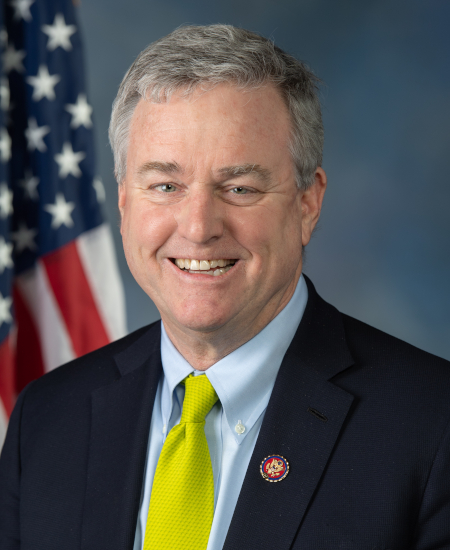
Rep. David J. Trone
Sponsored bills
Woman on the Twenty Act of 2023 This bill bars the printing of any $20 note after December 31, 2026, which does not prominently feature a portrait of Harriet Tubman on the front face of the note. The Department of the Treasury shall release to the public the preliminary design of the $20 note prominently featuring a portrait of Harriet Tubman no later than December 31, 2024.
Maddy summaryHRES 476 designates June 6, 2023, as National Naloxone Awareness Day to highlight naloxone's role in reversing opioid overdoses. The resolution recognizes that naloxone saves lives by reversing opioid effects during emergencies and encourages public education about its use and access barriers. It urges federal, state, local governments, and organizations to collaborate on increasing naloxone distribution and reducing stigma around substance use disorder. This non-binding resolution does not create new laws but supports existing efforts to combat the opioid crisis through awareness and education.
Maddy summaryHR 3985 establishes a new Office within the U.S. Department of State to monitor and combat Islamophobia abroad. The bill requires the State Department to appoint a Special Envoy who will coordinate efforts to track Islamophobic incidents globally and mandate specific reporting in three key State Department documents. These reports must detail physical violence against Muslims or Muslim institutions, hate propaganda in media, government responses, religious freedom protections, and anti-bias education efforts in foreign countries. The provisions apply to annual human rights, foreign assistance, and religious freedom reports, requiring detailed descriptions of Islamophobia occurrences and governmental actions. The new reporting requirements become effective 180 days after the bill's enactment.
Maddy summaryThis bill requires federal agencies collecting demographic survey data to begin including questions on sexual orientation, gender identity, and variations in sex characteristics (intersex traits) within 360 days of enactment. Agencies must review existing surveys to identify gaps, develop privacy-protective methods for collecting this data (including anonymization and data destruction protocols), and incorporate it into relevant reports within three years. The law applies to all federal surveys that collect standard demographic data (like race, ethnicity, and age), such as the census or health surveys, but does not compel individuals to disclose their status. It emphasizes maintaining confidentiality, allows limited agency waivers if standards can't be met, and mandates a congressional report on implementation within two years.
Maddy summaryThe Neighborhood Homes Investment Act creates a new tax credit for developers who rehabilitate or build affordable homes in distressed communities. The credit is calculated based on the difference between rehabilitation costs and the sale price, with homes required to be sold at affordable prices to qualified homeowners with incomes up to 140% of the local median family income. The bill targets specific "qualified census tracts" defined by high poverty rates, low homeownership, and below-average home values. Developers must ensure homes are sold to qualified homeowners who use them as primary residences for at least five years, with additional safeguards to prevent program abuse and ensure fair housing practices.
Maddy summaryHR 3850, the Pride In Mental Health Act of 2023, establishes a federal grant program to improve mental health and substance abuse services for LGBTQ+ youth (including nonbinary, intersex, and Two Spirit individuals). The bill directs the Health and Human Services Secretary to fund eligible organizations to provide trauma-informed care, cultural competency training for caregivers, school bullying prevention guidelines, and family support resources. It explicitly prohibits grant funds from being used for conversion therapy or advertising related to such therapy. The bill also requires data collection on LGBTQ+ youth mental health and a federal survey to measure psychological distress.
Maddy summaryHR 3879, the Supporting Families through Addiction Act of 2023, provides federal grants to nonprofit organizations that support families with members struggling with substance use disorder. The bill authorizes $5 million annually (2024-2028) to fund community-based family support services, including education, stigma reduction, and connecting families to treatment resources. Grants cover up to 85% of costs and require organizations to be led by experts, including families with lived experience. This directly affects families navigating addiction in their households by expanding access to evidence-based support programs and improving provider knowledge about family impacts.
Maddy summaryHR 3860, the Humane Correctional Health Care Act, removes the exclusion that previously prevented incarcerated individuals under 65 from receiving Medicaid or CHIP health care coverage. The bill amends the Social Security Act to allow states to provide Medicaid, CHIP, or pregnancy-related assistance to incarcerated people starting January 1, 2024. It requires the Comptroller General to report annually on health care access, quality, and outcomes for incarcerated people, including post-release enrollment in community health programs. The legislation also states Congress' view that incarceration should not be used to provide health care unavailable in communities, and federal funds should not replace community-based health investments. This is a policy change directly affecting incarcerated individuals' health care eligibility and state program administration.
Maddy summaryHR 3817, the Mental Health Workforce and Language Access Act of 2023, creates a federal grant program to help community health centers hire bilingual mental health staff who can communicate directly with patients who have limited English proficiency. The bill allocates up to $10 million annually (2024-2029) to fund these grants, prioritizing health centers where at least 10% of patients primarily speak a language other than English. Health centers receiving grants must use funds to recruit qualified staff - such as licensed counselors or supervised trainees - who speak both English and another language fluently, and to report on program effectiveness to Congress. This directly affects patients with limited English proficiency seeking behavioral health services at participating community health centers.