

Maddy summaryThe FACTS Act (HR 5625) creates a pilot program to fund partnerships between schools and public health agencies to prevent synthetic opioid misuse among students. It authorizes $50 million annually to support evidence-based prevention programs, including professional development for school staff, student workshops, and community outreach. The bill requires schools to collect data on synthetic opioid prevalence and mandates that school health centers stock naloxone. It also amends national surveys to track youth opioid use patterns and establishes an interagency task force to coordinate prevention efforts. These provisions aim to address the growing crisis of synthetic opioid misuse among young people through education, data collection, and prevention programs.
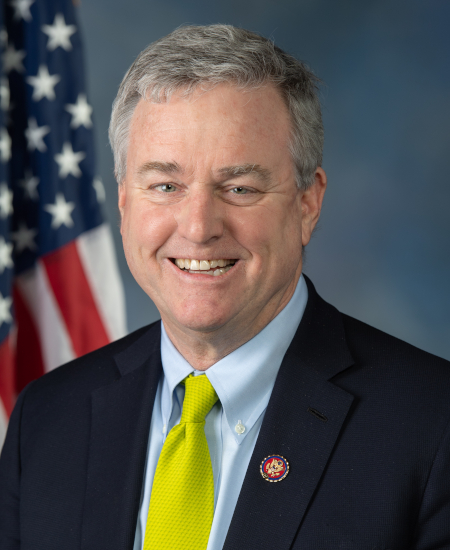
Rep. David J. Trone
Sponsored bills
Maddy summaryThis bill provides federal retirement benefits to educators at tribal schools. It makes employees of tribally controlled schools eligible for the same federal retirement pension (FERS) and Thrift Savings Plan (TSP) as other federal employees. The Bureau of Indian Affairs will pay the government's share of these contributions. This directly affects educators working at tribal schools operating under specific federal contracts or grants, such as those under the Indian Self-Determination Act or Tribally Controlled Schools Act.
Maddy summaryThis House resolution (HRES 701) symbolically supports expanding the Abraham Accords on their third anniversary by urging the U.S. government to encourage more countries to normalize relations with Israel and deepen economic cooperation among existing signatories. It recommends promoting regional collaboration in areas like clean energy, security, and trade, while linking expanded ties to progress on Israeli-Palestinian peace efforts. The resolution has no legal effect - it expresses congressional support but does not create new laws or obligations. It directly affects U.S. diplomatic strategy toward Middle East relations, emphasizing symbolic endorsement over concrete policy changes.
Maddy summaryHR 5569, the Child Care Nutrition Enhancement Act of 2023, increases funding for child care nutrition programs. It adds a 10-cent per meal reimbursement for providers participating in the Child and Adult Care Food Program (CACFP), applying to all meals and supplements served. This change directly affects child care centers, family day care homes, and group day care homes that receive CACFP funding. The additional reimbursement is calculated alongside existing payment rates and applies to all meals served after the bill's enactment. The bill modifies specific sections of the Richard B. Russell National School Lunch Act to implement this funding increase.
Maddy summaryHR 5566, the *Supreme Court Tenure Establishment and Retirement Modernization Act of 2023*, establishes an 18-year term limit for all Supreme Court justices. It requires the President to nominate one new justice every two years (during first and third years after presidential elections), with Senate confirmation within 90 days, and prohibits lifetime appointments. Current justices are automatically retired in order of service length as new justices are appointed, while retired justices may temporarily fill vacancies through a randomized process. The bill directly affects all sitting and future Supreme Court justices by restructuring appointments and retirement timelines.
Maddy summaryThis bill would establish the Civilian Climate Corps, a national workforce program that would employ and train 50,000 to 400,000 young adults annually through 2028 to work on climate-related projects. The program would provide participants with a minimum living allowance of $17 per hour, health care benefits, and $25,000 in educational benefits per term of service. It would require 50% of projects to be located in under-resourced communities (with 10% specifically in Indian country) and ensure at least 50% of participants come from these communities. The Corps would focus on climate resilience, clean energy infrastructure, environmental remediation, and creating career pathways in the growing clean economy sector.
Maddy summaryThe Reuniting Families Act reduces family-based visa backlogs by reclassifying spouses, permanent partners, and minor children of legal permanent residents as immediate relatives, allowing them to be processed more quickly. The bill recaptures unused visa numbers from previous years, increasing the total number of available family-based visas without changing the overall annual caps. It expands rights for permanent partners (not just married spouses) and provides relief for orphans, widows, and widowers with pending applications. The legislation also prohibits removal of aliens with pending applications and prioritizes family reunification in refugee resettlement processes.
Maddy summaryHR 5492, the Veteran Families Health Services Act of 2023, provides fertility treatment, counseling, and adoption assistance to military members and veterans with infertility conditions. The bill requires the Department of Defense to offer fertility preservation services like cryopreservation before deployment or hazardous assignments, and to cover fertility treatments including in vitro fertilization for current service members. For veterans, it adds fertility treatment and counseling to VA medical services, allows adoption assistance up to the cost of three adoptions, and mandates coordination between military and VA health systems. These provisions apply regardless of sex, gender identity, sexual orientation, or marital status, and are designed to support military families affected by service-related infertility.
Maddy summaryThe Better CARE for Animals Act of 2023 amends the Animal Welfare Act to strengthen enforcement of animal welfare standards. It gives the Attorney General authority to bring civil cases for violations, including seeking penalties up to $10,000 per day per violation and injunctions to remove or relocate animals. The bill also requires the Secretary of Agriculture and Attorney General to coordinate through a new Memorandum of Understanding, focusing on repeat violators. These changes directly affect dealers, exhibitors, and enforcement agencies by expanding civil enforcement tools and clarifying jurisdiction over rule violations.
Maddy summaryThis bill extends existing programs that provide payments to counties and states with federal land, primarily to support local schools and communities. It updates key deadlines, extending secure payments through 2026, special project authorities through 2029, and county fund expenditure authority through 2028. A new pilot program allows regional foresters to appoint resource advisory committee members directly, with this authority ending October 1, 2028. These changes directly affect rural counties and states managing federal lands, maintaining current funding mechanisms without altering eligibility or payment amounts.