United States-Israel PTSD Collaborative Research Act This bill establishes a grant program for collaborative efforts between the United States and Israel to advance research on post-traumatic stress disorders. The Department of Defense, in coordination with the Department of Veterans Affairs and the Department of State, shall award grants to eligible academic institutions or nonprofit entities in the United States. Work shall be conducted by the eligible entity and an entity in Israel under a joint research agreement.
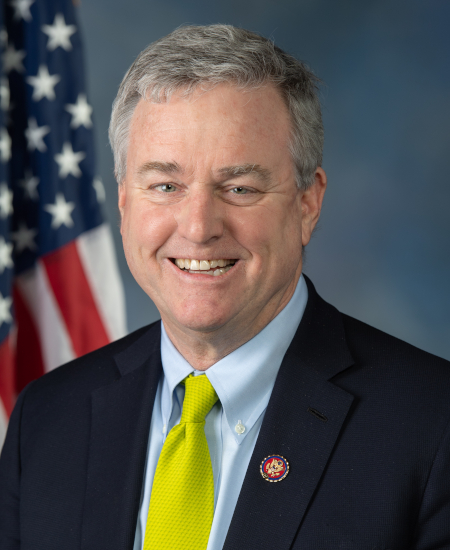
Rep. David J. Trone
Sponsored bills
Supporting State and Local Leaders Act This bill repeals the prohibition against granting state and local governments a tax credit for paid sick and paid family and medical leave.
Family and Medical Insurance Leave Act or the FAMILY Act This bill entitles every employee to a family and medical leave insurance (FMLI) monthly benefit payment of two-thirds of the employee's regular pay, limited to a maximum of $4,000, for not more than 60 days of qualified caregiving. The bill establishes the Office of Paid Family and Medical Leave within the Social Security Administration to administer the FMLI program. An FMLI benefit payment must be coordinated with any periodic benefits received under a state or local temporary disability insurance or family leave program. The bill imposes a tax on employers, employees, and self-employed individuals to fund FMLI benefits. It also establishes the Federal Family and Medical Leave Insurance Trust Fund to hold tax revenues.
Scientific Integrity Act This bill revises provisions regarding the release of scientific research results by federal agencies. Each agency that funds, conducts, or oversees scientific research must (1) adopt and enforce a scientific integrity policy that includes requirements such as that scientific conclusions are not based on political considerations, and (2) submit such policy to the Office of Science and Technology Policy (OSTP) for approval. Each agency must make such policy available to the public and submit such policy to Congress. Agencies and the OSTP must periodically review the policies. The Government Accountability Office shall review implementation of the policies. Each agency shall (1) appoint a Scientific Integrity Officer, (2) establish a process for dispute resolution consistent with the scientific integrity policy, and (3) establish a specified training program for current and new employees.
Metro Accountability and Investment Act This bill reauthorizes for FY2022-FY2031 authority for the Department of Transportation (DOT) to provide grants to the Washington Metropolitan Area Transit Authority (WMATA) to finance in part the capital and preventive maintenance projects included in its Capital Improvement Program. It conditions the availability of funds, in part, on the WMATA Board of Directors certifying to DOT that it has adopted and will keep certain resolutions in effect for the entire funding period, including (1) establishing an independent budget authority, procurement authority, and hiring authority for its Office of the General Inspector; (2) ensuring its Inspector General (IG) can obtain legal advice from a counsel reporting directly to the IG; (3) requiring the IG to submit recommendations for corrective action to the General Manager and the Board of Directors of WMATA; (4) requiring the IG to publish such recommendations on its website; (5) requiring the WMATA Board of Directors to provide written notification to Congress at least 30 days in advance of the removal of an IG; and (6) prohibiting the WMATA Board of Directors from removing its Inspector General without a 30-day written notification that documents specific reasons for removal, including an abuse of authority.
Innovation Centers Acceleration Act This bill establishes a program to advance economic development by designating nine cities as innovation centers and providing and modifying certain related grants. It also establishes the Innovation Center Selection Committee to designate these cities. The innovation center designation entitles selected cities—and the businesses, research institutions, and other organizations that operate within them—to various federal funding and benefits for research activities, business and workforce development, and transportation infrastructure projects. These benefits include expanding various tax credits and incentives for businesses. The bill also makes it easier for those businesses to access loans and other financial instruments to raise capital. In addition, the bill establishes a grant program for local and tribal governments that partner with innovation centers to develop and preserve affordable housing. It also modifies existing grants, loans, and other programs that support transportation infrastructure to specifically target initiatives in innovation centers.
This resolution identifies women's cardiovascular health as an important health care issue and supports gender-specific cardiovascular health research, prevention, and treatment.
Marriage Access for People with Special Abilities Act or the MAPSA Act This bill excludes a spouse's income and resources when determining eligibility for Supplemental Security Income (SSI), and disregards marital status when calculating the SSI benefit amount, for an adult who has a diagnosed intellectual or developmental disability. SSI is a federal income supplement program designed to help aged, blind, and disabled individuals with limited income and resources meet basic needs.
Transformational Reforms and Updates to Ensure Educational Quality and Urgent Investments in Today's Youth Act of 2021 or the TRUE EQUITY Act This bill establishes various grant programs to address educational inequities in elementary and secondary schools. Specifically, the bill creates grant programs related to (1) early childhood education, (2) high-quality and diverse teachers and leaders, (3) college and career readiness pathways, and (4) additional resources for at-risk students. For each grant program, the Department of Education (ED) must award a single grant to an eligible state. To be eligible for a grant, a state must establish an independent state oversight board. The oversight board must, among other duties (1) determine whether the state and its local educational agencies (LEAs) have met state educational equity goals, and (2) hold them accountable for failing to meet those goals. ED may renew a grant if the oversight board determines the state has met its goals. In addition, for each grant program, the bill outlines the activities authorized under the program, maintenance-of-effort requirements, and matching fund requirements. Finally, the bill permits ED to enter into a local flexibility demonstration agreement, through which a state educational agency may use funds to develop and implement a school funding system based on weighted per-pupil allocations for low-income and disadvantaged students. (Currently, ED may enter into these agreements with LEAs.)

Medical Debt Relief Act of 2021 This bill modifies requirements related to the reporting of medical debt. Specifically, a consumer reporting agency is prohibited from adding medical debt information to a consumer credit report if the debt was fully paid or settled, or is less than a year old. Additionally, a debt collector must notify the consumer prior to reporting medical debt to a consumer reporting agency.