Ellie Helton, Lisa Colagrossi, Kristen Shafer Englert, Teresa Anne Lawrence, and Jennifer Sedney Focused Research Act or Ellie's Law This bill authorizes appropriations for the National Institute of Neurological Disorders and Stroke to conduct or support research on unruptured brain aneurysms in a patient population diversified by age, sex, and race.
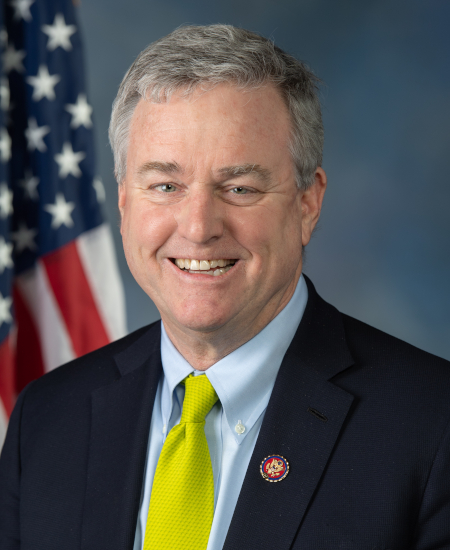
Rep. David J. Trone
Sponsored bills
Nutrition Counseling Aiding Recovery for Eating Disorders Act of 2021 or the Nutrition CARE Act of 2021 This bill provides for Medicare coverage of medical nutrition therapy services for individuals with eating disorders. Such services must be furnished by a registered dietitian or nutrition professional pursuant to a referral from a physician, psychologist, or other authorized mental health professional.
Crisis Counseling Act This bill provides for immediate approval of any request by a state, local, or tribal government for crisis counseling and training after the President declares a major disaster under the Robert T. Stafford Disaster Relief and Emergency Assistance Act.
Treat and Reduce Obesity Act of 2021 This bill expands Medicare coverage of intensive behavioral therapy for obesity. Specifically, the bill allows coverage for therapy that is provided by (1) a physician who is not a primary care physician; or (2) other health care providers (e.g., physician assistants and nurse practitioners) and approved counseling programs, if provided upon a referral from, and in coordination with, a physician or primary care practitioner. Currently, such therapy is covered only if provided by a primary care practitioner. The bill also allows coverage under Medicare's prescription drug benefit of drugs used for the treatment of obesity or for weight loss management for individuals who are overweight.
Federal Death Penalty Prohibition Act This bill prohibits the imposition of a death penalty sentence for a violation of federal law. A person sentenced to death before enactment of this bill must be resentenced.
Preventing Future Pandemics Act of 2021 This bill establishes measures to address global public health risks posed by wildlife markets, which are commercial markets that sell or slaughter wildlife for human consumption as food or medicine in communities where alternative nutritional or protein sources are available. Specifically, the bill prohibits importing, exporting, purchasing, or selling live wild animals in the United States for human consumption as food or medicine. The Department of the Interior must hire, train, and deploy at least 50 new U.S. Fish and Wildlife Service law enforcement attachés around the world, and the U.S. Agency for International Development must increase specified activities to address the threats and causes of zoonotic (animal-to-human transmission) disease outbreaks. Additionally, the United States must work with other United Nations member states to urge a global ban on commercial wildlife markets and enforcement of laws to end wildlife trafficking. Further, the President may impose sanctions against a foreign country or foreign nationals that the Department of State has determined are taking certain actions that enable or facilitate commercial wildlife markets. Among other reports required by the bill, the National Academies of Sciences, Engineering, and Medicine must conduct a study and submit a report that includes an evaluation of (1) the impact that consumption of terrestrial wildlife as food or medicine has on the transmission of novel viral and other pathogens, (2) the role of consuming terrestrial wildlife as food or medicine in the transmission of microbes from animals to humans, and (3) the conditions at live wildlife markets that lead to this transmission.

Protecting Consumer Access to Generic Drugs Act of 2021 This bill prohibits the manufacturer of a brand-name, generic, or biosimilar drug from entering into certain agreements to resolve or settle a patent infringement claim in connection with the sale of a drug or biological product. Specifically, such an agreement shall, with some exceptions, be a violation of the bill if the filer of a subsequent application to market a drug or biological product receives anything of value and agrees to limit or forego research, development, manufacturing, marketing, or sales of the subsequent drug or biological product. (Typically, a subsequent application seeks to market a generic or biosimilar version of a patented drug or biological product.) Penalties for violations of the bill include civil penalties and loss of the 180-day exclusivity period for a generic drug. The Federal Trade Commission (FTC) shall have exclusive authority to litigate to enforce the bill. When a generic or biosimilar drug manufacturer enters into an agreement with another drug manufacturer related to the manufacturing, marketing or sale of a drug, the manufacturers shall certify that the material they have given the FTC concerning the agreement contains (1) the complete agreement; and (2) any agreements related to the main agreement, including descriptions of any oral agreements or representations.
This resolution supports the designation of National Small Business Workplace Solutions Week in recognition of the essential services provided by the workplace solutions industry and its efforts to promote safety and support for our communities.
Build America's Libraries Act This bill establishes and provides funds through FY2024 for the Build America's Libraries Fund, from which the Institute of Museum and Library Services (IMLS) must allocate funding to states and, through them, need-based grants to libraries to make long-term improvements to library facilities. The IMLS must also award grants to Indian tribes and organizations that primarily serve and represent Native Hawaiians. Specifically, the bill requires each state that receives an allocation, and each library that receives a grant, to carry out certain activities to improve library facilities. These activities include constructing and renovating library facilities, investing in infrastructure projects to improve internet access and connectivity, improving indoor air quality, and making facilities accessible to individuals with disabilities. The bill also outlines administrative and oversight provisions, including by requiring library projects to use iron and steel products that are produced in the United States.
Berta Caceres Human Rights in Honduras Act This bill prohibits U.S. assistance to the police or military of Honduras. The Department of the Treasury shall instruct U.S. representatives of multilateral development banks to vote against providing loans to the Honduran police or military. The prohibition shall be lifted if the Department of State certifies to Congress that various conditions have been met, including that the Honduran government has (1) pursued all legal avenues to reach verdicts in specified crimes, such as the killings of indigenous land-rights activist Berta Caceres and of 100 small-farmer activists in the Aguan Valley; (2) investigated and prosecuted members of the military and police who have violated human rights; and (3) taken effective steps to establish the rule of law.