This resolution supports the designation of Community School Coordinators Appreciation Week.
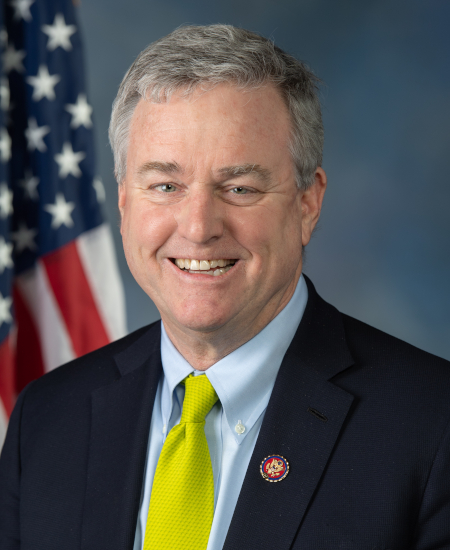
Rep. David J. Trone
Sponsored bills
Securing the Rights our Veterans Earned Act or the SERVE Act This bill provides eligibility for specified Department of Veterans Affairs benefits to former members of the Armed Forces who were separated or discharged (honorably or otherwise) by reason of sexual orientation or gender identity.
September 11 Day of Remembrance Act This bill designates September 11 Day of Remembrance as a legal public holiday.
John R. Lewis Voting Rights Advancement Act of 2021 This bill establishes new criteria for determining which states and political subdivisions must obtain preclearance before changes to voting practices may take effect. Preclearance is the process of receiving preapproval from the Department of Justice (DOJ) or the U.S. District Court for the District of Columbia before making legal changes that would affect voting rights. A state and all of its political subdivisions shall be subject to preclearance of voting practice changes for a 10-year period if 15 or more voting rights violations occurred in the state during the previous 25 years; 10 or more violations occurred during the previous 25 years, at least 1 of which was committed by the state itself; or 3 or more violations occurred during the previous 25 years and the state administers the elections. A political subdivision as a separate unit shall also be subject to preclearance for a 10-year period if three or more voting rights violations occurred there during the previous 25 years. States and political subdivisions that meet certain thresholds regarding minority groups must preclear covered practices before implementation, such as changes to methods of election and redistricting. Further, states and political subdivisions must notify the public of changes to voting practices. Next, the bill authorizes DOJ to require states or political subdivisions to provide certain documents or answers to questions for enforcing voting rights. The bill also outlines factors courts must consider when hearing challenges to voting practices, such as the extent of any history of official voting discrimination in the state or political subdivision.
Preventing Overdoses and Saving Lives Act of 2021 This bill establishes a grant program for states, Indian tribes, and territories to respond to the opioid crisis. In awarding the grants, the Department of Health and Human Services (HHS) must give priority to recipients with the highest opioid dispensing rates. Recipients must use at least 20% of grant funds to implement a program that requires a prescription for an opioid overdose reversal drug along with an opioid prescription if (1) a patient is prescribed benzodiazepines, medication-assisted treatment, or high-dose opioids; or (2) the prescriber has reason to know of the patient's history with substance use disorders. As part of this program, recipients must also require continuing education on opioid-prescribing practices for prescribers and on recognizing opioid overdose fatalities for coroners. Recipients must use the remaining funds to develop a strategic plan for the jurisdiction's response to the opioid crisis.
Collaborate in an Orderly and Cohesive Manner Act This bill requires the Department of Health and Human Services (HHS) to award grants for implementing and evaluating specified models of care that integrate the delivery of behavioral health and primary care services. Specifically, HHS must award grants to primary care providers for the initial costs (e.g., hiring staff) of implementing such models. In awarding the grants, HHS must prioritize recipients that provide care to medically underserved populations and in areas where the prevalence of behavioral health conditions exceeds the national average. HHS must also provide additional incentive payments to recipients that use appropriate billing codes and quality measures for behavioral health services. In addition, HHS must award grants to national and regional organizations for providing technical assistance to health care providers and systems to improve implementation of integrated behavioral health and primary care models. Furthermore, HHS may direct its agencies to expand efforts to evaluate current and emerging integrated behavioral health and primary care models.
This resolution expresses the sense of the House of Representatives that the United States shall recognize kind actions in our country, encourage kindness, spread love, and foster a culture of being kind to one another.
Working Dog Commemorative Coin Act This bill directs the Department of the Treasury to mint and issue 50,000 $5 gold coins, 500,000 $1 silver coins, and 750,000 half-dollar clad coins in commemoration of the service that working dogs provide to society. The designs of the coins minted under this bill shall be emblematic of the contributions of working dogs to society, including in detection, military service, therapy and assistance. Treasury may issue coins only during the one-year period beginning on January 1, 2023. All sales of coins shall include a surcharge, which shall be paid to America's VetDogs for general expenses associated with the fulfillment of its mission.

Schools Preventing Hunger in At-Risk Kids Act or the SPARK Act This bill expands automatic eligibility for free school lunches and breakfasts to include children who have been placed in kinship care with a relative or family friend with the involvement of the state child welfare agency. To enroll in the program, a family must document the child's status to the appropriate local educational agency.
Prohibition of Medicaid Funding for Conversion Therapy Act This bill prohibits state Medicaid programs from covering conversion therapy. The bill defines conversion therapy as any practice or treatment that seeks to change a person's sexual orientation or gender identity in exchange for monetary compensation.