This resolution recognizes the opportunity for Black Maternal Health Week to raise national awareness of the state of Black maternal health in the United States.
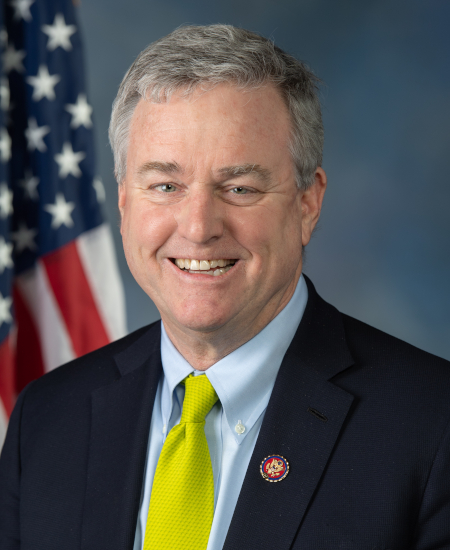
Rep. David J. Trone
Sponsored bills
This bill extends the deadline, from 270 days to 390 days, for the Commission on Combating Synthetic Opioid Trafficking to submit the final report on its activities and recommendations to combat the flow of synthetic opioids into the United States.
Sara's Law and the Preventing Unfair Sentencing Act of 2021 This bill modifies federal sentencing options for individuals who commit criminal offenses as juveniles. Specifically, the bill authorizes federal sentencing courts to do the following: impose a sentence below the mandatory minimum for a juvenile who was convicted of a violent offense against a person who engaged in certain conduct (e.g., trafficking, abuse, or assault) against the juvenile, impose a sentence below the mandatory minimum by up to 35% to reflect the juvenile's age and prospect for rehabilitation, and reduce a prison term imposed on a defendant convicted as an adult for an offense committed as a juvenile if the defendant has served at least 20 years in custody and is not a danger to public safety.
Protecting Miranda Rights for Kids Act This bill establishes procedural requirements related to the custodial interrogation of a minor. Among the requirements, the custodial interrogation of a minor must comply with the following: an arresting officer must notify the minor's parent, guardian, or legal custodian of the arrest and provide the location where the minor is being detained; and a minor who is subject to a custodial interrogation must consult with legal counsel in person before waiving the privilege against self-incrimination or the right to counsel. If a custodial interrogation does not comply with the requirements, then a statement by a minor during the custodial interrogation and any evidence derived from that statement are inadmissible.
Protecting the Rights Of Towns against federal Enforcement contrary to Constitutional Tenets for Immigration Act of 2021 or the PROTECT Immigration Act of 2021 This bill establishes that the authority to investigate, apprehend, or detain aliens for the purposes of immigration enforcement is limited to immigration officers and authorized Department of Homeland Security employees, except when such authority is provided to other individuals under specified statutes. Specifically, this restriction does not apply in certain instances involving (1) an actual or imminent mass influx of aliens, (2) persons bringing in and harboring aliens in violation of immigration laws, or (3) an alien illegally present in the United States who had previously left or was deported after being convicted of a felony. The bill repeals the authority allowing the Department of Justice to enter into agreements authorizing state or local government employees to perform immigration enforcement functions.
Support, Treatment, and Overdose Prevention of Fentanyl Act of 2021 or the STOP Fentanyl Act of 2021 This bill addresses data collection, treatment, harm reduction, and other issues related to substance misuse and addiction. It particularly focuses on opioids, fentanyl, and related substances. Specifically, the bill expands surveillance of fentanyl and related substances. This includes establishing a pilot program to screen for contaminants in illicit drugs and a grant program to collect data on fentanyl-involved overdoses. The bill also specifies requirements concerning the collection and use of information about drugs seized by law enforcement. Additionally, the bill establishes and modifies requirements to increase access to treatment and prevention services. For example, the Bureau of Prisons must make certain services, including medication-assisted treatments, available to individuals in its custody. The bill also repeals a provision that requires dependence on opioids for at least one year before an individual may be admitted to certain treatment programs; allows providers to prescribe medications to treat substance use disorders following a telehealth evaluation; creates grant programs for treatment and harm reduction activities; and addresses issues pertaining to opioid overdose reversal drugs. Furthermore, the bill limits civil and criminal liability under specified laws for individuals who administer opioid overdose reversal drugs to an individual who reasonably appears to be experiencing an overdose, as well as for individuals who seek medical attention for themselves or on behalf of another for a drug overdose. The bill also requires multiple reports, including a report by the Department of State on foreign sources of certain drugs.

Camp Lejeune Justice Act of 2021 This bill allows certain individuals to sue and recover damages for harm from exposure to contaminated water at Camp Lejeune in North Carolina between August 1, 1953, and December 31, 1987. This action is available only to individuals who were exposed to contaminated water for at least 30 days. The bill prohibits the U.S. government from asserting specified immunity from litigation in response to such a lawsuit. The bill also prohibits an individual who brings such an action from bringing a separate tort action against the United States based on the same harm.
Healthcare Workforce Resilience Act This bill makes previously unused immigrant visas available to nurses and physicians who petition for such a visa before the date that is 90 days after the end of the declared national emergency relating to the COVID-19 (i.e., coronavirus disease 2019) outbreak. The number of visas available shall be the total number of unused employment-based immigrant visas from FY1992-FY2020, up to 40,000. Of such visas, 25,000 shall be reserved for nurses and 15,000 for physicians. Certain family members may accompany the principal beneficiary of a visa provided under this bill, and visas for such family members shall (1) be made available from the unused visas from FY1992-FY2020, and (2) not be counted against the 40,000 cap. Visas provided under this bill shall be exempt from per-country limitations.
Dignity for Detained Immigrants Act of 2021 This bill directs the Department of Homeland Security (DHS) to establish standards for facilities holding aliens in its custody, phases out using non-DHS facilities for such purposes, and contains other related provisions. The standards shall comply with the American Bar Association's Civil Immigration Detention Standards. The DHS Office of Inspector General (OIG) shall conduct periodic unannounced inspections of each facility and shall take various actions against noncompliant facilities, including imposing fines, cancelling contracts, and closing facilities. DHS shall report to Congress any death of an alien in its custody within 24 hours and conduct an investigation within 30 days that identifies policy changes that could reduce the likelihood of such a death. DHS is prohibited from entering into contracts for third parties to operate detention facilities or alternatives to detention programs and shall terminate existing contracts within three years of the bill's enactment. The bill establishes that OIG facility inspection reports and contracts for an outside entity to operate a detention facility are records available to the public under the Freedom of Information Act. DHS shall maintain certain information relating to detained aliens, including the alien's location and whether the alien was separated from family. The bill provides for various requirements and procedures related to detaining aliens, including (1) prohibiting DHS from detaining children, (2) imposing a presumption that an alien should be released, and (3) establishing that aliens in custody shall be subject to the least restrictive conditions. The bill also abolishes mandatory detention for asylum seekers.
Equal Access to Abortion Coverage in Health Insurance Act of 2021 or the EACH Act of 2021 This bill requires federal health care programs to provide coverage for abortion services and requires federal facilities to provide access to those services. The bill also permits qualified health plans to use funds attributable to premium tax credits and reduced cost sharing assistance to pay for abortion services.