

Marijuana Opportunity Reinvestment and Expungement Act or the MORE Act This bill decriminalizes marijuana. Specifically, it removes marijuana from the list of scheduled substances under the Controlled Substances Act and eliminates criminal penalties for an individual who manufactures, distributes, or possesses marijuana. The bill also makes other changes, including the following: replaces statutory references to marijuana and marihuana with cannabis , requires the Bureau of Labor Statistics to regularly publish demographic data on cannabis business owners and employees, establishes a trust fund to support various programs and services for individuals and businesses in communities impacted by the war on drugs, imposes an excise tax on cannabis products produced in or imported into the United States and an occupational tax on cannabis production facilities and export warehouses, makes Small Business Administration loans and services available to entities that are cannabis-related legitimate businesses or service providers, prohibits the denial of federal public benefits to a person on the basis of certain cannabis-related conduct or convictions, prohibits the denial of benefits and protections under immigration laws on the basis of a cannabis-related event (e.g., conduct or a conviction), establishes a process to expunge convictions and conduct sentencing review hearings related to federal cannabis offenses, directs the Government Accountability Office to study the societal impact of state legalization of recreational cannabis, directs the National Highway Traffic Safety Administration to study methods for determining whether a driver is impaired by marijuana, directs the National Institute for Occupational Safety and Health to study the impact of state legalization of recreational cannabis on the workplace, and directs the Department of Education to study the impact of state legalization of recreational cannabis on schools and school-aged children.
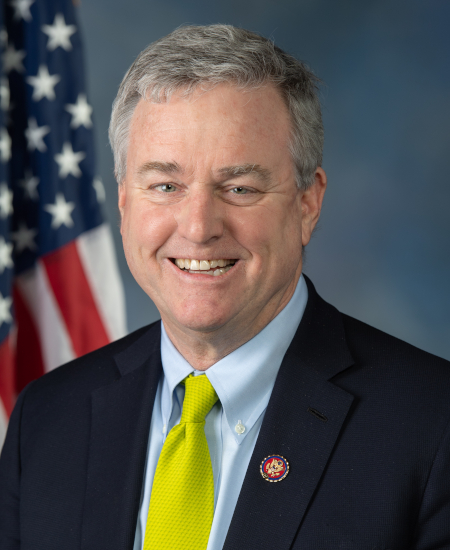
Rep. David J. Trone
Sponsored bills
Expanding Reentry Employment Assistance Act This bill provides statutory authority for the Department of Labor's Reentry Employment Opportunities program, which provides competitive grants to improve employment and training outcomes and reduce recidivism of justice-involved individuals.
Mental Health Research Accelerator Act of 2022 This bill allows a tax credit through 2031 for 25% of expenses for translational research regarding neurodegenerative diseases and psychiatric conditions. The credit amount is subject to limitations, including an aggregate national limitation of $1 billion in 2022, $2 billion in 2023-2027, and $1 billion in 2028.
This resolution supports the goals and ideals of National Women's History Month and recognizes the women and organizations that continue to promote the teaching of women's history.
9-8-8 Implementation Act of 2022 This bill modifies provisions to increase access to behavioral health services, with a focus on crisis services and the 9-8-8 telecommunication system. (The 9-8-8 system provides callers with mental health or suicide crisis support and resources through the existing National Suicide Prevention Lifeline and is scheduled to take effect by July 16, 2022.) The bill reauthorizes through FY2027 and revises the National Suicide Prevention Lifeline program and requires a national suicide prevention media campaign. In addition, the Substance Abuse and Mental Health Services Administration (SAMHSA) must establish standards for a behavioral health crisis continuum of care that health care providers and communities may use in responding to individuals experiencing a behavioral health crisis. The continuum must include emergency treatment, stabilization, and related services. The bill expands Medicaid and other insurance coverage for such services. The bill further expands Medicaid coverage for behavioral health services. This includes permanently allowing coverage of certain community-based mobile crisis services and exempting some short-term stabilization services from coverage restrictions that apply to institutions for mental diseases. Additionally, the bill establishes (1) an office within SAMHSA to coordinate behavioral health activities; and (2) various grants, including a pilot program for mobile crisis care teams that respond to behavioral health crises rather than law enforcement and a capital improvement program for certain behavioral health facilities. The bill also reauthorizes through FY2027 and expands certain workforce programs for behavioral health providers. It also addresses training for emergency services dispatchers and coordination of the 9-1-1 system with the 9-8-8 system.
Equitable Community Access to Pharmacist Services Act This bill expands Medicare coverage to permanently include services provided by a pharmacist, including incidental services and supplies, related to testing, drug regimens, and vaccines for COVID-19, influenza, and certain other illnesses. Specifically, the bill provides for continued coverage of pharmacist services relating to testing and vaccines for COVID-19 and influenza, as well as coverage of testing for respiratory syncytial virus and streptococcal pharyngitis (i.e., strep throat) and the initiation of drug regimens that are used to treat COVID-19, influenza, or strep throat. It also generally provides for coverage of pharmacist services during a public health emergency or to address health equity. A pharmacist, or the facility with which the pharmacist is contracted or employed, may present a claim for reimbursement of 85% (or 100% during a declared emergency) of the applicable amount. A pharmacist may not bill an individual for such a service other than for the applicable deductible or coinsurance amounts.
COI Elimination Act This bill limits U.S. contributions to the United Nations pertaining to the U.N. Independent International Commission of Inquiry on the Occupied Palestinian Territory, including East Jerusalem, and Israel. Current law imposes a cap on the annual U.S. contribution to the U.N. budget. The bill lowers that cap by 25% of the amount budgeted for the commission. The bill also states that it shall be U.S. policy to seek the abolition of the commission and combat systemic anti-Israel bias in international bodies.
Growing, Recruiting, and Obtaining Workers in Specialized Instructional Support Personnel Services Act or the GROW SISPS Act This bill requires the Department of Education to award competitive grants to eligible partnerships (e.g., partnerships between institutions of higher education, local educational agencies, and organizations that provide credentialing for specialized instructional support personnel) for expanding or establishing programs to increase specialized instructional support personnel in schools.
Rust to Revitalization Act of 2022 This bill sets forth a special rule for the certification and designation of a population census tract as a qualified opportunity zone. The population census tract must have a population of zero, was previously used for industrial purposes and is a brownfield industrial site, and is contiguous, including by water, to a population census tract that has been designated as a qualified opportunity zone. A qualified opportunity zone is an economically distressed community where new investments, under certain conditions, may be eligible for preferential tax treatment.
Creating a Respectful and Open World for Natural Hair Act of 2022 or the CROWN Act of 2022 This bill prohibits discrimination based on a person's hair texture or hairstyle if that style or texture is commonly associated with a particular race or national origin. Specifically, the bill prohibits this type of discrimination against those participating in federally assisted programs, housing programs, public accommodations, and employment. Persons shall not be deprived of equal rights under the law and shall not be subjected to prohibited practices based on their hair texture or style. The bill provides for enforcement procedures under the applicable laws.