

Maddy summaryHRES 1141 is a symbolic resolution designating the week of May 23-27, 2022, as "Educator Mental Health Awareness Week." It expresses congressional support for recognizing the mental health challenges faced by teachers and school staff, particularly during the pandemic. The resolution highlights statistics showing heightened stress, depression, and anxiety among educators, as reported in 2021 surveys. It urges awareness of educator well-being but does not create new programs, funding, or legal requirements. The resolution serves only as a non-binding statement of support.
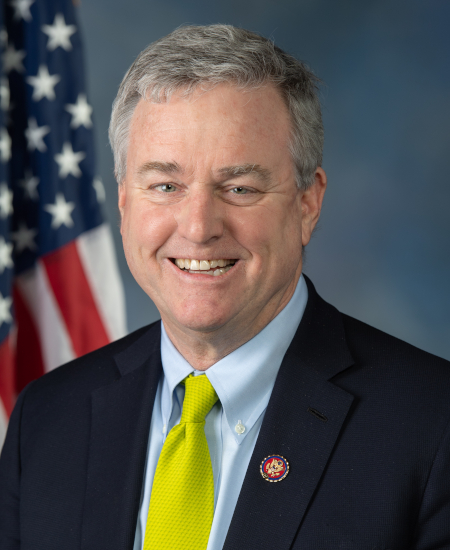
Rep. David J. Trone
Sponsored bills
This bill provides for the removal of certain statues and busts from display in the Capitol. The bill directs the Joint Committee on the Library to remove the bust of Roger Brooke Taney in the Old Supreme Court chamber of the Capitol and to obtain a bust of Thurgood Marshall with which to replace it. The Joint Committee on the Library must remove all Confederate statutes and busts, as well as the statues of Charles Brantley Aycock, John Caldwell Calhoun, and James Paul Clarke, from areas of the Capitol accessible to the public. Furthermore, the Architect of the Capitol (AOC) must store each removed statue. Additionally, the bill prohibits the display of statues in National Statuary Hall of persons who served voluntarily with the Confederate States of America or in the military forces or government of a state while it was in rebellion against the United States; requires the AOC to identify such statues and the Joint Committee on the Library to arrange for their removal; requires each statue to be returned to the providing state if the state requests and agrees to pay any transportation-related costs; and permits a state that has a statue removed to replace the statue.
Access to Baby Formula Act of 2022 This bill authorizes the Department of Agriculture (USDA) to take certain actions to address emergencies, disasters, and supply chain disruptions (particularly the shortage of infant formula in the United States) affecting participants of the Special Supplemental Nutrition Program for Women, Infants, and Children (WIC). The bill directs USDA to require each infant formula cost containment contract to include remedies in the event of an infant formula recall, including how an infant formula manufacturer would protect against disruption to WIC participants in the state. USDA must, within 30 days, ensure there is a memorandum of understanding with the Department of Health and Human Services that includes procedures for coordination and information sharing regarding any supply chain disruption, including a supplemental food recall. The bill also authorizes USDA to waive or modify any WIC qualified administrative requirement during emergencies, disasters, and supply chain disruptions. Specifically, USDA may waive or modify such a requirement for one or more state agencies if (1) the requirement cannot be met by state agencies during the emergency, disaster, or disruption; and (2) the modification or waiver is necessary to provide assistance to WIC participants and does not substantially weaken the nutritional quality of supplemental foods. For example, USDA may waive the maximum monthly allowance for infant formula. The bill establishes notification requirements for USDA and state agencies related to supply chain disruptions.
Maddy summaryHRES 1133 is a symbolic resolution recognizing May as National Foster Care Month. It raises awareness about challenges faced by children in foster care, such as instability, educational disruptions, and the high number aging out without permanent connections. The resolution encourages Congress to implement policies improving outcomes for these children and acknowledges the work of foster parents, social workers, and advocates. It does not create new laws but urges legislative action aligned with existing programs under the Social Security Act focused on prevention, reunification, and support for youth transitioning to adulthood.
Health Care Providers Safety Act of 2022 This bill authorizes the Department of Health and Human Services to award grants to health care providers for security services and other expenses related to physical security and cybersecurity.
Workforce Innovation and Opportunity Act of 2022 This bill reauthorizes through FY2028 and expands programs under the Workforce Innovation and Opportunity Act (WIOA). The bill also revises workforce investment, vocational rehabilitation, employment, training, and literacy programs for eligible individuals. For example, the bill increases workforce representation on state and local workforce investment boards from 20% to 30%; reworks one-stop center infrastructure funding by requiring costs to be covered by state allocations of WIOA funds; establishes subsidized youth employment programs that include work-readiness training and mentoring; allows states and localities to partner with educational institutions to address the skill needs for in-demand jobs; establishes grants to connect youth in communities disproportionately affected by gun violence with in-demand jobs; eliminates a requirement that the Department of Labor ensure that individuals participating in WIOA activities comply with Selective Service laws; modifies the allotment of youth workforce investment funds to states; requires Labor to prioritize providing access to certain services to girls and women and applications for assistance from minority-serving institutions; expands the Job Corps program, including by serving individuals in outlying areas and relaxing age requirements; establishes grants to expand training programs through industry or sector partnerships; expands grants for integrated English literacy and civics education to outlying areas; and expands Wagner-Peyser employment services to the Northern Mariana Islands and American Samoa. The bill also provides statutory authority for Labor to award competitive grants, contracts, and cooperative agreements to improve employment and training outcomes and reduce recidivism of justice-involved youth; and competitive grants for states to create workforce longitudinal administrative databases.
Military Spouse Licensing Relief Act of 2021 This bill provides for the portability of professional licenses of service members and their spouses who are relocated, because of military orders, outside of the jurisdiction that issued the license. Specifically, a professional license in good standing of a service member or spouse shall be considered valid at a similar scope of practice and in the discipline applied for in the new jurisdiction for the duration of such military orders. To establish and maintain eligibility, a service member or spouse must (1) provide a copy of the military orders to the licensing authority in the new jurisdiction; (2) remain in good standing with the licensing authority that issued the license; and (3) submit to the authority of the licensing authority in the new jurisdiction for the purposes of standards of practice, discipline, and fulfillment of any continuing education requirements. The bill also provides that if a service member or spouse is licensed to operate in multiple jurisdictions through an interstate licensure compact, the service member or spouse is subject to the requirements of the compact or the applicable provisions of the state law rather than the provisions of this bill.
This resolution recognizes that women's health is a critical issue for the U.S. economy and workforce and supports increased health research focused on women.
Community Services Block Grant Modernization Act of 2022 This bill reauthorizes the Community Services Block Grant program through FY2032 and otherwise modifies the program. The program supports various antipoverty activities, primarily through formula-based allotments to states, Indian tribes, and territories. In particular, the bill makes changes to the program's administration and leadership; performance measurement; and allotments to states and territories. The bill also expands eligibility for services and activities funded by the program to 200% of the federal poverty line (FPL). Under current law, eligibility is generally set at the FPL.
Rights for the Transportation Security Administration Workforce Act of 2022 or the Rights for the TSA Workforce Act of 2022 This bill modifies the workplace rights, protections, and benefits applicable to Transportation Security Administration (TSA) personnel. Specifically, the bill by December 31, 2022, eliminates personnel authorities of the Department of Homeland Security (DHS) and the Department of Transportation governing the conditions of employment for TSA employees, thus making TSA employees subject to the personnel management system applicable to other federal employees; sets forth transition rules that protect the pay rates, leave rights, and other rights of TSA employees; and requires DHS to consult with the exclusive representative of TSA screening employees to carry out the conversion of those positions. The bill also permits the TSA to consult with organizations representing federal air marshals to address concerns, including mental health and suicide rates; directs the TSA to ensure its employees are provided proper guidance regarding prevention and protections against COVID-19; requires the TSA to provide a one-time bonus payment of $3,000 to each TSA employee carrying out duties that require substantial contact with the public during the COVID-19 national emergency; and requires the Government Accountability Office to report on implementation of the bill, TSA recruitment efforts, and specified TSA personnel policies.