Visitor Visa Wait Time Reduction Act This bill requires the Department of State to report to Congress on the average waiting time to get a visitor visa interview at each diplomatic or consular post. For each post where the average waiting time is longer than 300 days, the State Department must temporarily reassign personnel at that post to shorten the waiting time.
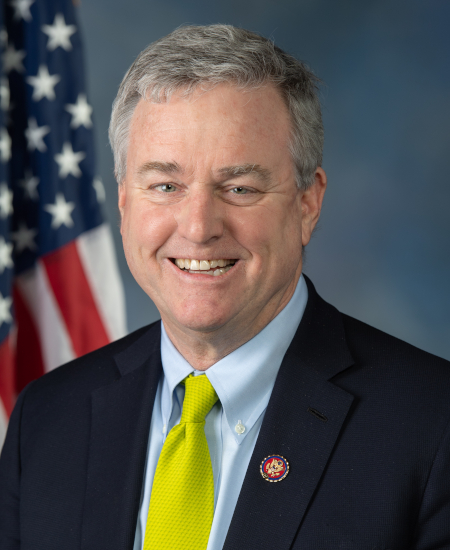
Rep. David J. Trone
Sponsored bills
Websites and Software Applications Accessibility Act This bill requires employers, public entities, and public accommodations that provide goods or services through a website or online application to make those websites and applications accessible to individuals with disabilities. The requirement applies even if the good or service is offered only digitally. The Department of Justice (DOJ) must issue standards of accessibility for applicable entities to meet this requirement. The bill provides for enforcement by DOJ, the Equal Employment Opportunity Commission, and individual civil action. It also establishes various review and reporting requirements.
Governing Unaccredited Representatives Defrauding VA Benefits Act or the GUARD VA Benefits Act This bill imposes criminal penalties and/or fines on individuals for directly or indirectly soliciting, contracting for, charging, or receiving any unauthorized fee or compensation with respect to the preparation, presentation, or prosecution of any claim for Department of Veterans Affairs benefits. The attempted commission of such offenses is also punishable by fine or imprisonment.
Afghan Adjustment Act This bill expands eligibility for special immigrant visas to certain Afghan nationals (and accompanying spouse and children) and addresses related issues. The Department of Homeland Security may provide such visas to Afghan nationals who provided qualifying service as a member of the Afghan Air Force or other specified entities and meet eligibility requirements, such as passing a background check. Currently, special immigrant visas for Afghan nationals are generally only available to those who were employed by or on behalf of the U.S. government in Afghanistan. Such visas shall also be available to an Afghan national who is a qualifying relative of a veteran or member of the U.S. Armed Forces. The bill also modifies procedures for providing lawful permanent resident status to certain classes of Afghan nationals, such as by (1) providing a streamlined process with specified vetting requirements for certain individuals, including those who provided support to the U.S. government in Afghanistan; and (2) preserving the eligibility of certain battered spouses whose eligibility for such status stemmed from a marriage that has terminated. Furthermore, the Department of State (1) must respond to inquiries from Members of Congress about specific applications from Afghan nationals seeking special immigrant or refugee status; and (2) establish an office in Afghanistan to perform certain tasks, such as issuing visas, if no U.S. embassies are operational in Afghanistan. The President must establish a task force to develop and implement a strategy to assist Afghan nationals who qualify for admission to the United States.

Law Enforcement De-Escalation Training Act of 2022 This bill directs the Department of Justice (DOJ) to develop scenario-based training curricula (or identify existing curricula) that includes topics such as alternatives to the use of force, de-escalation tactics, and safely responding to an individual experiencing a mental, behavioral health, or suicidal crisis. The bill also directs DOJ to make grants to states for costs associated with providing the training to law enforcement officers or mental health professionals.
Right to Trial Act This bill addresses the constitutional right to a jury trial, including by (1) outlining additional factors that a court shall consider when imposing a sentence, and (2) authorizing a court to impose a sentence below the mandatory minimum.
Solitary Confinement Study and Reform Act of 2022 This bill establishes the National Solitary Confinement Study and Reform Commission to study the impact of solitary confinement on governments, communities, and social institutions. Additionally, the bill (1) directs the Department of Justice to publish national standards to reduce solitary confinement in correctional facilities; and (2) authorizes grants for community-based prevention and education programs, community-based mental health care, or community-based drug treatment or harm reduction.
Stealthing Act of 2022 This bill establishes a civil action for the nonconsensual removal of a sexual protection barrier (e.g., a condom). A person may recover compensatory and punitive damages, injunctive and declaratory relief, and such other relief as a court may deem appropriate.
Consent is Key Act This bill directs the Department of Justice to increase a state's allocation of funds under the Sexual Assault Services Program if the state has in effect a law that authorizes civil damages and equitable relief against a person who engages in the nonconsensual removal of a sexual protection barrier (e.g., a condom).
Multiple Firearm Sales Reporting Modernization Act of 2022 This bill expands reporting requirements with respect to sales or dispositions of multiple firearms. Currently, a federal firearms licensee (e.g., a gun dealer) must report multiple sales or dispositions of pistols or revolvers to the same person within five business days. This bill requires a federal firearms licensee to report multiple sales or dispositions of any firearms to the same person within five business days.