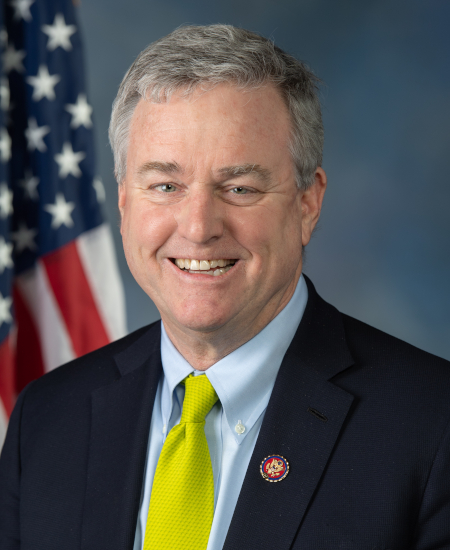
Photo of David J. Trone
D United States House · District 6 · Former member · Maryland

Rep. David J. Trone

Compare
Total votes
2,168
all sessions
Attendance
92%
175 missed
Lower than 96% of chamber peers
With party
97%
of cast votes
Higher than 78% of chamber peers
Bipartisan score
2%
crosses aisle rarely
Lower than 76% of chamber peers
Sponsored
1,817
bills & resolutions
Higher than 98% of chamber peers
Committees
0
assignments
1,817 bills and resolutions

Sponsored bills

Total
1,817
Primary
75
Co-sponsor
1,742
This page
1,817
matching current filters
Co-sponsor HR 211
In committee · United States House · Co-sponsor
COI Elimination Act

COI Elimination Act This bill limits U.S. contributions to the United Nations pertaining to the U.N. Independent International Commission of Inquiry on the Occupied Palestinian Territory, including East Jerusalem, and Israel. Current law imposes a cap on the annual U.S. contribution to the U.N. budget. The bill lowers that cap by 25% of the amount budgeted for the commission. The bill also states that it shall be U.S. policy to seek the abolition of the commission and combat systemic anti-Israel bias in international bodies.

In committee Jan 9, 2023 1 co-sponsor
Co-sponsor HR 51
In committee · United States House · Co-sponsor
Washington, D.C. Admission Act

Maddy summaryHR 51, the Washington, D.C. Admission Act, would admit Washington, D.C. as the 51st state, named "Washington, Douglass Commonwealth," granting its residents full representation in Congress with two Senators and one Representative. The bill establishes procedures for admission, including elections for state officials, with the state initially having one Representative until the next congressional apportionment. It would create a "Capital" area (including the White House, Capitol, and other key federal buildings) that remains under federal jurisdiction as the seat of the U.S. government, while the rest of the District becomes the new state. The bill also includes provisions to ensure continuity of federal services, property management, and legal procedures during the transition to statehood.

In committee Jan 9, 2023 1 co-sponsor
Co-sponsor HR 45
In committee · United States House · Co-sponsor
Small Business Tax Fairness and Compliance Simplification Act

Maddy summaryThis bill extends a tax credit for employer social security taxes paid on employee tips at beauty service businesses (including barbering, nail care, esthetics, and spa treatments), but only for tips customary in these services. It creates a "tip reporting safe harbor" requiring beauty businesses to implement quarterly employee training on tip reporting, monthly tip tracking, and proper tax filings to avoid IRS audits on tips. Additionally, it mandates businesses renting space to beauty service providers to report annual rental income over $600 to the IRS. These provisions directly affect beauty service establishments and landlords in this sector, applying to tax years beginning after 2022 or 2023.

In committee Jan 9, 2023 1 co-sponsor
Co-sponsor HR 40
In committee · United States House · Co-sponsor
Commission to Study and Develop Reparation Proposals for African Americans Act

Commission to Study and Develop Reparation Proposals for African Americans Act This bill establishes the Commission to Study and Develop Reparation Proposals for African Americans. The commission must (1) compile documentary evidence of slavery in the United States; (2) study the role of the federal and state governments in supporting the institution of slavery; (3) analyze discriminatory laws and policies against freed African slaves and their descendants; and (4) recommend ways the United States may recognize and remedy the effects of slavery and discrimination on African Americans, including through a formal apology and compensation (i.e., reparations). The commission consists of individuals from civil society and reparations organizations and individuals appointed by the President and congressional leadership; Members of Congress and governmental employees may not serve on the commission. The commission may hold hearings, subpoena witnesses and records, and contract with other entities to conduct its work. The commission must submit its final report within 18 months of its first meeting.

In committee Jan 9, 2023 1 co-sponsor
Co-sponsor HR 2021
In committee · United States House · Co-sponsor
Environmental Justice For All Act

Environmental Justice For All Act This bill establishes several environmental justice requirements, advisory bodies, and programs and modifies the scope of environmental review under the National Environmental Policy Act of 1969. The bill sets forth provisions to address the disproportionate adverse human health or environmental effects of federal laws or programs on communities of color, low-income communities, or tribal and indigenous communities. It also prohibits disparate impacts on the basis of race, color, or national origin as discrimination. Aggrieved persons may seek legal remedy when faced with such discrimination. In addition, the bill directs agencies to follow certain requirements concerning environmental justice. For example, agencies must prepare community impact reports that assess the potential impacts of their actions on environmental justice communities under certain circumstances. It also raises coal, oil, and gas royalty rates to create a funding source to support fossil fuel-dependent communities and displaced workers as they transition away from fossil fuel industries. Additionally, the bill creates a variety of advisory bodies and positions, such as the White House Environmental Justice Interagency Council. Among other things, the council must issue an environmental justice strategy. It also establishes requirements and programs concerning chemicals or toxic ingredients in certain products. For example, the bill (1) requires certain products (e.g., cosmetics) to include a list of ingredients or warnings; and (2) provides grants for research on designing safer alternatives to chemicals in certain consumer, cleaning, toy, or baby products that have an inherent toxicity or that are associated with chronic adverse health effects. Finally, it creates a variety of funding programs, such as a grant program to enhance access to park and recreational opportunities in urban areas.


In committee Dec 30, 2022 1 co-sponsor
Co-sponsor HR 8260
Signed into law · United States House · Co-sponsor
Faster Payments to Veterans' Survivors Act of 2022

Faster Payments to Veterans' Survivors Act of 2022 This act modifies policies and procedures related to the payment of benefits under certain life insurance programs administered by the Department of Veterans Affairs (VA). If a primary beneficiary has not made a claim for payment within one year (currently two years) after the death of the insured under the National Service Life Insurance (NSLI) program or the United States Government Life Insurance (USGLI) program, the VA is authorized to make payment to another designated beneficiary as if the primary beneficiary had predeceased the insured. If no designated beneficiary makes a claim within two years (currently four years) after the death of the insured, the VA is authorized to make a payment to a person the VA deems to be equitably entitled to such benefit. The act also modifies the beneficiary designation process under NSLI and USGLI. Specifically, if a person does not designate a beneficiary for insurance, or if the designated beneficiary predeceases the insured person, the VA must determine the beneficiary in a specified order of succession. Additionally, the act requires the VA to improve its processes and procedures with respect to identifying, locating, and paying hard-to-find beneficiaries of life insurance policies, including by improving its website search tools.

Signed into law Dec 27, 2022 1 co-sponsor
Co-sponsor HR 6961
Signed into law · United States House · Co-sponsor
Dignity for MST Survivors Act

This act modifies communications and procedures for the Department of Veterans Affairs (VA) and Board of Veterans' Appeals (BVA) regarding claims for compensation based on military sexual trauma (MST) experienced by veterans. The act requires the VA to ensure each member of the BVA is offered annual training on MST and proceedings that concern a claim for compensation based on MST. A proceeding that concerns a claim for compensation based on MST may not be assigned to a member of the BVA (or a panel of members) unless such persons have completed the annual training. When a notice of disagreement is filed, the BVA must promptly determine whether it is filed for a case that concerns a claim for compensation based on MST and for which the appellant has requested a hearing in the notice. The VA must audit the language used in letters sent to individuals to explain decisions denying claims for compensation based on MST. Letters must be modified to ensure (1) the use of trauma-informed language, and (2) veterans are not retraumatized through insensitive language. The VA must establish protocols for VA medical providers and contract medical providers to ensure that the medical providers use trauma-informed practices in conducting examinations in relation to claims for compensation based on MST.

Signed into law Dec 27, 2022 1 co-sponsor
Co-sponsor HRES 366
Passed · United States House · Co-sponsor
Promoting awareness of motorcyclist profiling and encouraging collaboration and communication with the motorcycle community and law enforcement officials to prevent instances of profiling.

This resolution promotes increased public awareness of motorcyclist profiling. The resolution also encourages the motorcyclist community and law enforcement to collaborate and communicate on efforts to end motorcyclist profiling.

Passed Dec 23, 2022 1 co-sponsor
Co-sponsor HR 1155
Passed · United States House · Co-sponsor
Uyghur Forced Labor Prevention Act

Uyghur Forced Labor Prevention Act This bill imposes various restrictions related to China's Xinjiang Uyghur Autonomous Region, including by prohibiting certain imports from Xinjiang and imposing sanctions on those responsible for human rights violations there. Goods manufactured or produced in Xinjiang shall not be entitled to entry into the United States unless U.S. Customs and Border Protection (1) determines that the goods were not manufactured by convict labor, forced labor, or indentured labor under penal sanctions; and (2) reports such a determination to Congress and to the public. The President shall periodically report to Congress a list of foreign entities and individuals knowingly facilitating (1) the forced labor of Uyghurs, Kazakhs, Kyrgyz, and members of other Muslim minority groups in Xinjiang; and (2) efforts to contravene U.S. laws regarding the importation of forced labor goods from Xinjiang. The President shall impose property-blocking sanctions on the listed individuals and entities and impose visa-blocking sanctions on the listed individuals. Securities issuers required to file annual or quarterly reports with the Securities Exchange Commission shall disclose in such reports instances in which the issuer knowingly engaged in certain activities related to Xinjiang, such as working with an entity building detention facilities or surveillance systems there. After such a disclosure, the President shall determine whether to investigate if sanctions or criminal charges are warranted. The Forced Labor Enforcement Task Force and the Department of State shall report to Congress strategies to address forced labor in Xinjiang or any other part of China. The State Department shall also report to Congress a determination of whether the treatment of Muslim groups in Xinjiang constitutes crimes against humanity or genocide under U.S. law.

Passed Dec 22, 2022 1 co-sponsor
Co-sponsor HR 8770
In committee · United States House · Co-sponsor
Expanding the VOTE Act

Expanding the Voluntary Opportunities for Translations in Elections Act or the Expanding the VOTE Act This bill expands access to voting materials for individuals with limited proficiency in the English language, including by establishing incentive grants for states and political subdivisions to provide translated voting materials. Additionally, the bill directs the Government Accountability Office to study the impact of (1) reducing the threshold requirement under Section 203 of the Voting Rights Act of 1965, and (2) expanding the definition of language minorities to include native speakers of additional languages.

In committee Dec 21, 2022 1 co-sponsor
Showing 991 to 1,000 of 1,817 bills
Previous 1 … 99 100 101 … 182 Next