

Maddy summaryHRES 771 is a non-binding resolution expressing the U.S. House of Representatives' support for Israel following Hamas' October 7, 2023, attack. It condemns Hamas' actions, affirms Israel's right to self-defense, and calls for the immediate release of hostages. The resolution also urges enforcement of existing laws restricting aid to terrorists and sanctions against Iran for supporting Hamas. It does not create new policies or allocate funds, as it is a symbolic statement of congressional support.
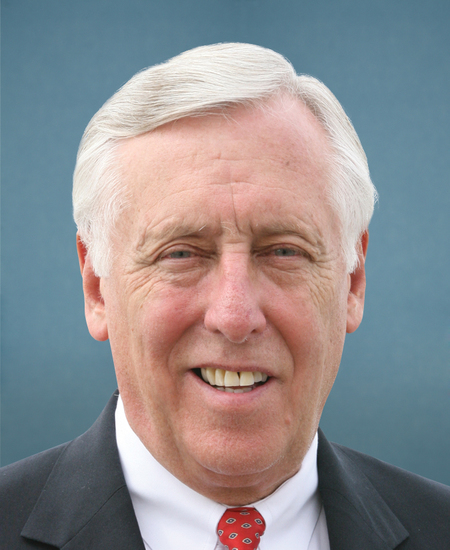
Rep. Steny H. Hoyer
Sponsored bills
Maddy summaryHRES 768 is a symbolic House Resolution expressing congressional support for Israel following Hamas' October 7, 2023 attacks. It condemns Hamas' actions, reaffirms Israel's right to self-defense, and calls for the immediate release of hostages. The resolution references the U.S. commitment to Israel's security through existing military aid programs, including the 2016 U.S.-Israel Memorandum of Understanding, and emphasizes enforcement of laws like the Taylor Force Act to prevent U.S. aid from reaching terrorist groups. As a symbolic resolution, it does not create new policy but serves as a statement of congressional support for Israel.
Maddy summaryThis bill requires websites and applications used by public entities, businesses, and employers to be accessible to people with disabilities. It directs the Department of Justice and Equal Employment Opportunity Commission to establish accessibility standards within 24 months, with special consideration for small businesses. The law defines accessibility as websites that are perceivable, operable, understandable, and robust for people with disabilities. It also creates a technical assistance center to help entities comply and provides grants to small businesses to fix inaccessible websites. The bill aims to ensure equal digital access for people with disabilities, building on existing ADA protections.
Maddy summaryThe Oleksander Ivanov Act of 2023 establishes U.S. sanctions authority targeting individuals and entities responsible for Russia’s forced displacement and illegal adoption of Ukrainian children. It authorizes the President to block property and deny visas to foreign persons involved in forcibly transferring Ukrainian children to Russia, illegally assimilating them, or facilitating trafficking. The bill also directs the U.S. to support Ukraine through programs for trauma care, rebuilding education systems, creating a multilingual registry for missing children, and establishing emergency call centers to combat trafficking. These measures aim to address documented violations of international law, including Russia’s detention of over 6,000 Ukrainian children in occupied territories, with sanctions set to expire after six years.
Maddy summaryHR 5097 establishes new federal funding programs to support the development of alternative proteins - foods that mimic animal meat using plants, cell cultivation, or fermentation. It allocates $15 million annually (2024-2028) for Centers of Excellence focused on research and workforce training, $10 million for USDA research, $50 million for manufacturing grants to U.S. companies and institutions, and $25 million for workforce development programs. The bill requires the USDA to create a national strategy coordinating multiple federal agencies to advance this sector. These provisions directly affect U.S. businesses, universities, and workers in the alternative protein industry by providing targeted funding for research, production, and job training.
Maddy summaryThe Better CARE for Animals Act of 2023 amends the Animal Welfare Act to strengthen enforcement of animal welfare standards. It gives the Attorney General authority to bring civil cases for violations, including seeking penalties up to $10,000 per day per violation and injunctions to remove or relocate animals. The bill also requires the Secretary of Agriculture and Attorney General to coordinate through a new Memorandum of Understanding, focusing on repeat violators. These changes directly affect dealers, exhibitors, and enforcement agencies by expanding civil enforcement tools and clarifying jurisdiction over rule violations.
Maddy summaryThe John R. Lewis Voting Rights Advancement Act of 2023 would strengthen the Voting Rights Act of 1965 by updating the criteria for which states and localities must obtain federal preclearance before changing voting practices. It would establish new standards for proving vote dilution and vote denial by requiring courts to consider historical discrimination, racial polarization in voting, and whether voting practices disproportionately burden minority voters. The bill would also require states and localities to provide public notice of voting changes and share demographic data about polling locations. These changes would primarily affect jurisdictions with a history of voting rights violations, aiming to prevent discriminatory voting practices before they take effect.
Maddy summaryThe Humane Cosmetics Act of 2023 bans cosmetic animal testing in the United States, prohibiting companies from conducting or contracting such testing after its enactment (effective 1 year later). It also bans selling or transporting cosmetics developed using animal testing conducted after that date within U.S. interstate commerce. The law directly affects cosmetic manufacturers, retailers, and suppliers operating in the U.S. market, requiring them to use non-animal testing methods for safety evaluations. Exceptions exist for foreign regulatory requirements or when no alternative testing methods are available for specific ingredients.
Maddy summaryHR 3152, the "Fight CRIME Act," aims to maintain international restrictions on Iran's missile-related activities by requiring diplomatic efforts to extend these restrictions before they expire in October 2023. The bill mandates annual reports detailing U.S. diplomatic strategies, potential impacts of expiration, and measures to deter missile technology transfers to Iran. It establishes sanctions against foreign individuals or entities that knowingly support Iran's missile or drone programs, including asset freezes and visa restrictions. These sanctions apply regardless of whether UN restrictions remain in effect after their expiration, directly affecting foreign entities involved in these activities.
Maddy summaryThe Fire Grants and Safety Act of 2023 reauthorizes and increases funding for key federal fire safety programs. It extends the Assistance to Firefighters Grants Program and Fire Prevention and Safety Grants Program through 2030 (from 2024) with $750 million annually for fiscal years 2024-2028. The bill also reauthorizes the United States Fire Administration at $95 million per year (including $3.42 million for specific activities) and mandates a GAO audit within three years to assess barriers to accessing federal funds and the U.S. Fire Administration's operations. These provisions directly affect state and local fire departments eligible for federal grants.