

Maddy summaryHR 6830, the "Books Save Lives Act," requires covered schools (elementary/secondary schools receiving federal funds) and public libraries receiving federal assistance to maintain staffed libraries with diverse book collections. These collections must include books written by, illustrated by, or about individuals from underrepresented communities - defined as racial/ethnic minorities, LGBTQ+ individuals, religious minorities, or people with disabilities. The bill states that excluding such "covered books" could be used as evidence of discrimination under civil rights laws like the Civil Rights Act of 1964. It also mandates a report on the impact of book-banning campaigns on these communities within 180 days of enactment.
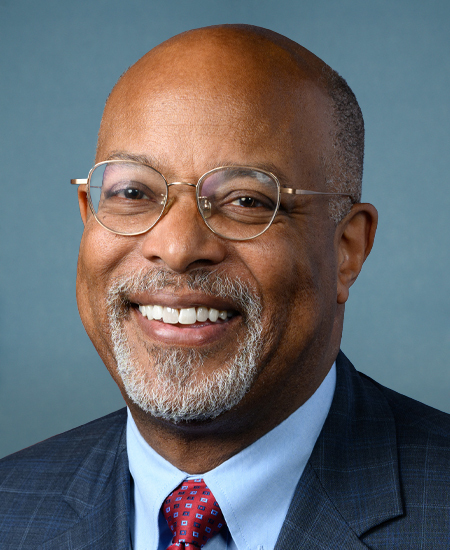
Rep. Glenn Ivey
Sponsored bills
Maddy summaryThe Brittany Clardy Missing and Murdered Black Women and Girls Act establishes a new Office within the Department of Justice to address the disproportionate rates of missing and murdered Black women and girls in the U.S. The Office will collect and analyze data on these cases - including case resolution times, Amber Alert usage, and trafficking links - and create a public dashboard for tracking. It also creates a grant program for community organizations to provide culturally appropriate prevention services, law enforcement training, and victim support. The Office must submit biennial reports to Congress with findings and recommendations to improve the criminal justice response to these cases. This bill directly affects Black women and girls facing violence, law enforcement agencies, and community organizations providing related services.
Maddy summaryHR 6654, the Farewell to Foam Act of 2023, bans the sale and distribution of expanded polystyrene foam food containers, packaging peanuts ("loose fill"), and coolers starting January 1, 2026. It directly affects food service providers (like restaurants and schools), manufacturers, distributors, and retailers who sell these foam products. The bill prohibits selling these items, with enforcement starting with a written warning for first violations, followed by escalating civil penalties ($250 for a second violation, up to $1,000 for fourth+ violations), while exempting small businesses with low annual revenue from repeated penalties within a 7-day period.
Maddy summaryHR 6592, the Fight Book Bans Act, provides federal grants to reimburse public school districts for legal costs when they choose to keep instructional or library materials after parental objections. It directly affects school districts (covered local educational agencies) that select materials for students and handle challenges to their removal. The bill authorizes up to $100,000 per case in grants to cover attorney fees and court costs, provided the district didn’t remove the materials and wasn’t reimbursed by the state. Funding of $15 million is authorized for fiscal years 2024-2028. The grants are strictly for legal challenges to decisions not to remove materials, not for the content of the materials themselves.
Maddy summaryHRES 793 is a resolution passed by the U.S. House of Representatives calling on Hamas to immediately release all 199 hostages taken during Hamas' October 7, 2023 attack on Israel. The resolution condemns Hamas for the attack, the taking of hostages, and threats against hostages, while stating that holding hostages violates international humanitarian law under the Geneva Conventions. It demands the immediate release of all hostages and expresses sympathy for victims and their families. As a symbolic resolution, it does not create legal obligations but formally expresses the House's position.
Maddy summaryThe Confronting Police Violence Against Children Act of 2023 requires the National Institute of Justice to study all incidents where children under 18 were seriously harmed or killed by law enforcement officers over the past 15 years. The report must analyze demographic details (like age, race, disability status), officer training, incident circumstances, and whether children were in mental health crises, while gathering input from legal experts, medical professionals, and community groups. It will provide recommendations for preventing excessive force, improving officer training for youth interactions, and ensuring children receive help from mental health professionals instead of police. The goal is to inform future policies and training practices, not to enact immediate legal changes.
Maddy summaryHR 6406, the "Last Servicemember Standing Medal Act," creates a new military service medal to honor specific service members. It authorizes the Secretary of Defense to award the medal to active-duty members who were the last surviving member of their unit after combat during a war or overseas operation, demonstrated extraordinary heroism in defense of the U.S., and received recommendations from their commanding officer and at least two peers. The medal is limited to one award per person, and if a recipient dies, the medal may be issued to their next-of-kin. The bill amends Title 10 of the U.S. Code to establish this recognition, with implementation to be expedited by Congress.
Maddy summaryHR 6404, the Disarming Cartels Act, requires the Department of Homeland Security to enhance border security efforts to disrupt the smuggling of U.S.-sourced firearms and related munitions into Mexico. Key provisions mandate increased collaboration between U.S. Customs and Border Protection, Immigration and Customs Enforcement, and Mexican authorities; establishing information-sharing mechanisms for firearm interdictions; analyzing recovered firearms in Mexico to trace U.S. sources; and expanding outbound inspections at the U.S.-Mexico border. The bill also requires annual reports to Congress detailing implementation progress, joint operations, and performance metrics for these efforts. This legislation directly affects DHS agencies, Mexican government partners, and aims to address cross-border firearm trafficking through concrete operational changes.
Maddy summaryHR 3578 is a technical correction bill that updates statutory references in the U.S. Code from Title 42 to Title 34. It corrects outdated references to provisions that were reclassified to Title 34 of the U.S. Code, which covers crime control and law enforcement programs. The bill amends references across numerous sections in Titles 2 through 50 of the U.S. Code, including provisions related to violence against women, juvenile justice, sex offender registration, and crime victim services. This bill does not change any substantive laws or create new policies, but rather ensures accurate references in the legal code. It's a routine technical update to maintain consistency in legal references as provisions are reorganized.
Veterans Service Organization Modernization Act of 202 3 This bill requires the Department of Housing and Urban Development to provide competitive grants to veterans service organizations for repairs or rehabilitation of existing facilities and for modernization of technologies.