

Ending Homelessness Act of 2021 This bill expands the housing choice voucher program and provides assistance to homeless individuals and families. Specifically, the bill provides FY2022-2025 funding for the expansion of the housing choice voucher program for certain extremely low income families. Furthermore, beginning in FY2026, the bill creates and funds an entitlement to housing choice vouchers for certain extremely low income families. Eligibility for the entitlement expands annually, extending to low-income families by FY2030. The bill also reduces the geographic area used to calculate an area's fair market rent for purposes of voucher payment standards and prohibits the use of criminal history in determining eligibility for certain housing assistance. Additionally, the bill prohibits housing discrimination on the basis of a renter's source of income or a renter's veteran status. The bill also provides additional FY2022-FY2026 funding for the Department of Housing and Urban Development (HUD) to assist the homeless, including to award emergency relief grants in jurisdictions with the highest need and award grants to provide outreach and coordinate services. Furthermore, the bill provides additional FY2022-FY2026 funding for the Housing Trust Fund, which provides affordable housing for extremely low-income and very low-income families. While this additional funding is available, HUD must ensure that priority for occupancy in assisted units is given to individuals and families who are homeless. Finally, the bill permanently reauthorizes certain homeless assistance grants and makes permanent the U.S. Interagency Council on Homelessness.
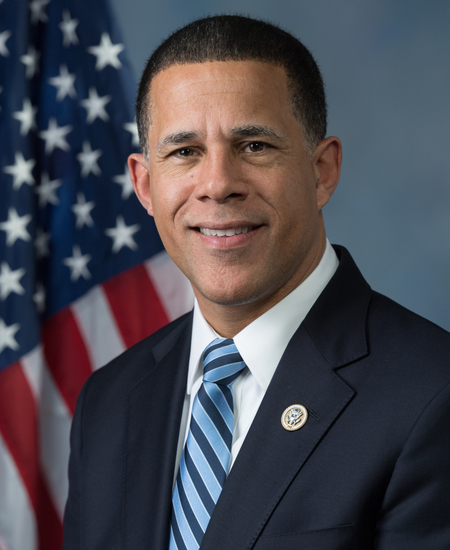
Rep. Anthony G. Brown
Sponsored bills
Housing is Infrastructure Act of 2021 This bill generally addresses housing affordability and infrastructure. The bill authorizes the Department of Housing and Urban Development (HUD) to provide grants, programs, and other support related to public housing, affordable housing preservation and construction, and mortgage access. The bill also establishes and funds the National Investment Authority (NIA) which must design, finance, and implement a strategy of long-term national economic growth and development. The NIA must select projects that coordinate investment of public and private capital in equitable, inclusive, and sustainable growth of the economy. Furthermore, the bill establishes the National Infrastructure Bank (NIB) to implement the strategy by engaging in credit market activities that support public and private investment in critical public infrastructure projects. The bill gives the NIA bond issuing authority and authorizes the Board of Governors of the Federal Reserve System to purchase these bonds. The Federal Reserve must lend funds on a short-term basis upon the request of the NIB and other subsidiaries. Additionally, the Department of the Treasury must provide for a line of credit not to exceed 100% of the NIA's total assets. Finally, the bill (1) authorizes HUD to provide support for fair housing organizations, and (2) requires consultation with a fair housing enforcement organization as part of an application for certain housing grants or funds.
Gun Theft Prevention Act This bill makes various changes to federal firearms laws related to detecting and deterring the theft of firearms from federally licensed gun dealers. Among the changes, the bill establishes security requirements for gun dealers; background check requirements for employees of gun dealers; inspection requirements for the Bureau of Alcohol, Tobacco, Firearms and Explosives; and reporting requirements for individual gun owners.
CARA 3.0 Act of 2021 This bill addresses substance use disorders by expanding access to treatment and recovery services, providing for housing protections, and requiring other activities. Specifically, the bill reauthorizes, establishes, and expands support for treatment and recovery services. This includes increasing access to treatment in the criminal justice system and other settings and for particular populations, such as pregnant and postpartum individuals and youth and young adults. Additionally, the bill expands Medicare and Medicaid coverage for treatment, including by expanding telehealth access to medication to treat substance use disorders. The bill also temporarily requires that non-opioid pain treatment options be reimbursed separately, instead of on a packaged basis, under Medicare. As a condition of receiving certain federal funding, states must mandate the use of prescription drug monitoring programs (PDMPs) by prescribers and dispensers and impose additional PDMP requirements. Moreover, prescribers of potentially addictive drugs must complete continuing education requirements. The bill also revises the registration process for providers who prescribe certain medications to treat substance use disorders, including by eliminating the provider's patient limit for such medications. In addition, the Substance Abuse and Mental Health Services Administration must carry out activities to promote access to high-quality recovery housing. The bill also sets out protections for individuals with substance use disorders who live in, or apply to live in, federally assisted housing. Furthermore, the bill requires other activities to address substance use, such as support for workforce education and training; public awareness campaigns and similar outreach; and research on prevention strategies, insurance coverage, and treatment modalities.
Disarm Hate Act The bill expands the categories of persons who are prohibited from receiving or possessing a firearm. Specifically, it prohibits firearm sale or transfer to and receipt, possession, shipment, or transport by a person (1) who has been convicted of a misdemeanor hate crime, or (2) who has received an enhanced hate crime misdemeanor sentence.
Keeping Our Promise Act This bill authorizes issuing visas to certain individuals who were previously refused a diversity immigrant visa or admission into the United States because of certain executive orders or the COVID-19 public health emergency. (Diversity immigrant visas are available to eligible immigrants from countries with relatively low rates of immigration to the United States.) Specifically, this bill applies to individuals who were refused such a visa solely due to certain executive orders from 2017 to 2020, including orders which suspended the entry of individuals from certain countries. The bill also applies to diversity visa applicants who, because of the COVID-19 emergency, were (1) unable to receive a visa interview despite requesting one, or (2) unable to be admitted into the United States despite being approved for a visa. The Department of State must notify each individual covered under this bill of the individual's visa eligibility. To retain eligibility, an individual must respond to the State Department's notice within one year of the notice. An individual may also lose eligibility if the State Department determines that the applicant fails to meet certain requirements. The bill also relaxes certain annual numerical limits for individuals obtaining a visa under this bill. An individual who was a child when initially selected for a visa shall be treated as a child for the purposes of a visa application under this bill.
Extreme Risk Protection Order Act of 2021 This bill establishes grants to support the implementation of extreme risk protection order laws at the state and local levels, extends federal firearms restrictions to individuals who are subject to extreme risk protection orders, and expands related data collection. Extreme risk protection order laws, or red flag laws, generally allow certain individuals (e.g., law enforcement officers or family members) to petition a court for a temporary order that prohibits an at-risk individual from purchasing and possessing firearms. Among its provisions, the bill directs the Office of Community Oriented Policing Services within the Department of Justice to establish a grant program to help states, local governments, Indian tribes, and other entities implement extreme risk protection order laws; extends federal restrictions on the receipt, possession, shipment, and transportation of firearms and ammunition to individuals who are subject to extreme risk protection orders; and requires the Federal Bureau of Investigation to compile (and later destroy) records from federal, tribal, and state courts and other agencies that identify individuals who are subject to extreme risk protection orders.
Tulsa-Greenwood Massacre Claims Accountability Act of 2021 This bill provides a cause of action for the victims of the 1921 race massacre that occurred in the Greenwood community of Tulsa, Oklahoma. Specifically, any person who acted under color of authority of the State of Oklahoma or the City of Tulsa to deprive a victim, on account of race, of any constitutional right secured to the victim at that time shall be liable to the victim or the victim's beneficiary or heir in a civil action for compensation.
Original National Domestic Violence Awareness Month Resolution of 2022 This resolution supports the goals and ideals of National Domestic Violence Awareness Month. Further, it expresses the sense of the House of Representatives that Congress should continue to raise awareness of and support programs to end domestic violence.
Major Richard Star Act This bill provides that combat-disabled uniformed services retirees with fewer than 20 years of creditable service may concurrently receive, without reduction, veterans' disability compensation and retired pay or combat-related special compensation.